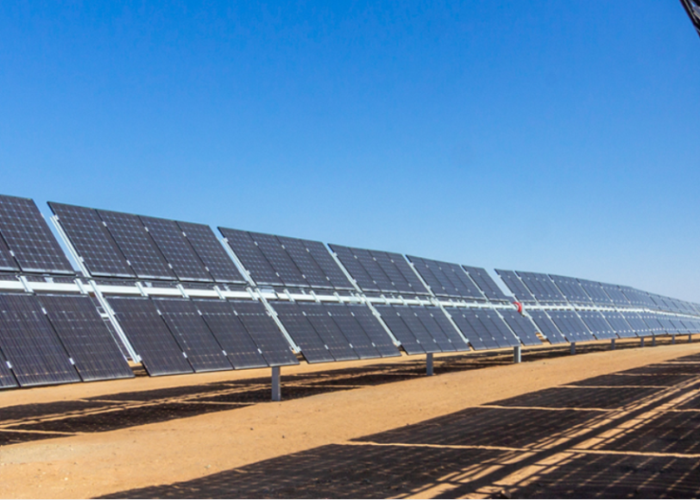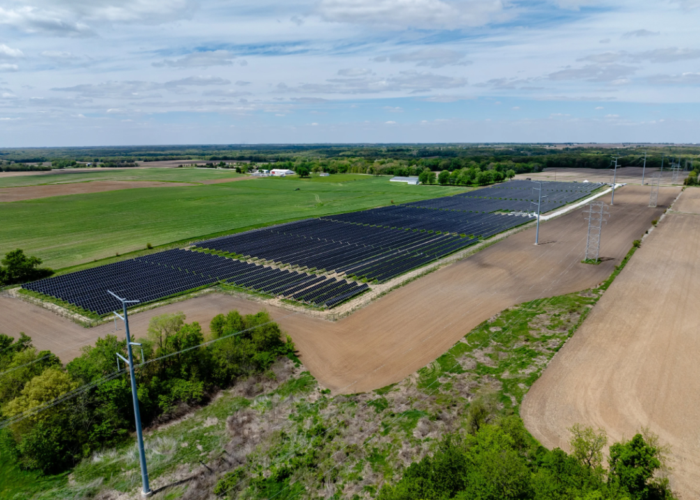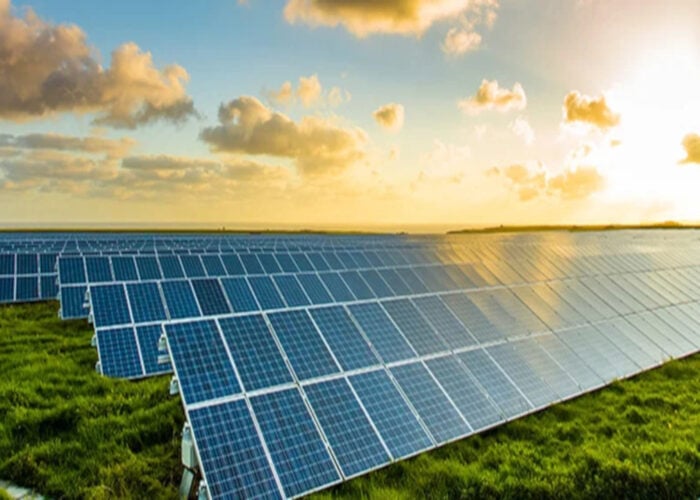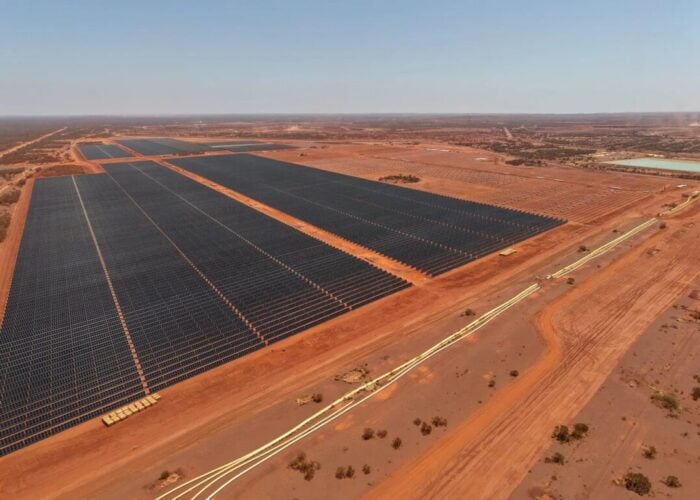
The European Investment Bank (EIB) has committed a loan of €250 million (US$271 million) to support the development of Austrian renewable power developer Burgenland Energie’s 2GW solar and wind portfolio, to be built in its home country.
The portfolio will consist of 40 projects, split between wind and solar plants, which will include agrivoltaics (agriPV) projects and co-located wind and solar hybrid plants. While Burgenland Energie has not specified the total wind and solar capacity of the portfolio as a whole, it noted that the portfolio is expected to reach commercial operation by 2030, at which point it will account for around one-fifth of Austria’s total solar and wind capacity.
Try Premium for just $1
- Full premium access for the first month at only $1
- Converts to an annual rate after 30 days unless cancelled
- Cancel anytime during the trial period
Premium Benefits
- Expert industry analysis and interviews
- Digital access to PV Tech Power journal
- Exclusive event discounts
Or get the full Premium subscription right away
Or continue reading this article for free
The EIB loan will be supported by an additional €100 million in loans from Swiss bank Erste Bank and German bank Landesbank Baden-Württemberg, with the EIB noting that the project will need around €200 million in equity investments, plus €500 million in loans, by next year. The bank also noted that the investment will benefit from other EU initiatives such as the InvestEU programme and the REPowerEU plan.
“Solar and wind energy are cornerstones of the energy transition,” said EIB vice-president Thomas Östros. “Large-scale projects like this one lead by example, proving that we can improve the energy supply of regions, countries, and even a whole continent in a remarkably brief period.”
New costs for solar developers
The project is a positive development for the Austrian solar sector, which has expressed concern at legislation being passed by the country’s new federal government. This week, the People’s Party, Social Democrats and Neos party formed a three-party coalition to rule, after all parties were defeated by the far-right Freedom Party in last year’s election, but with just 29% of the vote, the Freedom Party was unable to form a government itself.
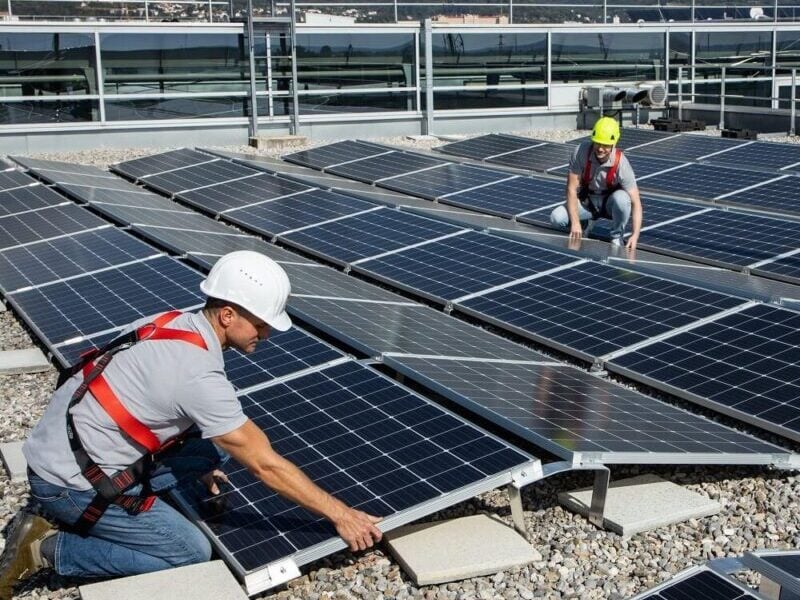
The ruling coalition has announced a number of new policies, including the re-introduction of value added tax (VAT) for PV systems smaller than 35KW, a move that could raise the installation prices for some of the most popular solar systems in Austria.
According to the latest International Energy Agency (IEA) Photovoltaic Power System Programme (PVPS) report, in 2023 Austria installed 2.3GW of “decentralised” PV capacity, as opposed to just 308MW of new utility-scale installations, so increasing the cost of residential and rooftop PV systems could have a significant impact for Austria’s solar sector as a whole.
“Although the laws that have been negotiated for months, such as the E-Economy Act or the Renewable Energy Expansion Acceleration Act, could finally be passed without additional financial burdens, the new federal government is instead concentrating on inventing new revenues and taxes—especially in the sensitive electricity sector,” said Herbert Paierl, CEO of trade body PV Austria.

“Instead of using the economic engine of renewables, they are damaging locations and engaging in anti-social activism.”
PV Austria also claimed that the new government is considering imposing a “completely new ‘pseudo-levy’” on the Austrian solar sector in the form of the Electricity Industry Transformation Contribution.
Securing Austria’s energy supply
These policies are perhaps surprising, considering Austria’s relatively strong renewable power sector in recent years. The percentage of Austria’s electricity to come from solar has exceeded the global average for solar contribution to electricity generation since 2021, and in 2024, solar accounted for 8% of Austria’s electricity generation, compared to the global average of 6.8%.
However, the new government may be motivated by a desire to shore up domestic energy supply, with Austria a net importer of electricity every year since 2001, save for 0.07TWh of net exports achieved in 2023, which was followed by an immediate return to net imports in 2024, with 4.56TWh of electricity imported. With this in mind, the new government has shifted focus to ‘green gas’, rather than renewable power, to meet electricity demand.
Austria aims to increase green gas generation by 6.5TWh each year until the end of the decade, and the previous government obligated gas suppliers to replace 7.7% of the natural gas used today with domestically-produced biogas by the end of the decade. The new government is considering replacing this minimum quota with a premium for green gas production, which could make gas investments more financially viable, while applying a new tax to technologies such as solar.
“Companies and the population are burdened with additional electricity costs,” added Pairel. “This will certainly not achieve an affordable energy supply—quite the opposite.”