European renewables mergers and acquisitions (M&A) activity is entering 2026 with no shortage of capital and no shortage of targets. What is becoming scarce is execution certainty: grid access that can be evidenced, permitting pathways that are realistic and revenue structures that survive lender scrutiny. As these constraints tighten, the market is moving away from “pipeline optimism” and toward proof-based transactions, where speed and credibility depend as much on documentation and process discipline as on the asset itself. Relationships still originate deals, but structure and process are now what protect value and keep timelines intact.
2025 set the tone: selectivity, not slowdown
In 2025, European deal activity remained material, but buyers became far more selective. Europe recorded approximately US$36.9 billion of renewables M&A value in 2025. The key message behind the number is how transactions cleared: investors increasingly used grid status, permitting credibility and documentation quality as early filters, and structured risk into contractual terms rather than relying on optimistic development timelines. In many markets, the theoretical pipeline is huge, but the executable pipeline is constrained by network bottlenecks, planning risk and financing requirements.
Try Premium for just $1
- Full premium access for the first month at only $1
- Converts to an annual rate after 30 days unless cancelled
- Cancel anytime during the trial period
Premium Benefits
- Expert industry analysis and interviews
- Digital access to PV Tech Power journal
- Exclusive event discounts
Or get the full Premium subscription right away
Or continue reading this article for free
That shift is already materialising into structural reforms. In Great Britain, NESO’s December 2025 connections reform prioritised deliverable, “shovel-ready” projects—a signal that grid readiness is now central to value and transaction timing. These dynamics are also why platform-driven dealmaking is gaining relevance in renewables. Not as a replacement for relationships, but as an execution layer that helps professional counterparties navigate a more demanding market. As buyers demand earlier proof on grid, permits and bankability, the cost of fragmented information rises.
Hottest markets in 2026 and factors shaping deals
In 2026, “hot markets” are not defined by installed capacity alone. They are defined by how efficiently transactions can clear under several factors that now shape every European renewables deal: grid constraints, financing discipline, revenue structure evolution and the rise of storage and hybrids.
Grid remains the common denominator—and increasingly the first screen. The EU is pushing faster grid buildout and permitting through its late-2025 “Grids Package”, while the UK and Poland are already implementing reforms that prioritise projects able to demonstrate readiness. The consequence is simple: markets where the grid path can be evidenced and assessed quickly will attract disproportionate attention in 2026.
Financing is still cautious. Lenders and investment committees are explicitly pricing merchant exposure, curtailment and connection timing, bringing M&A decisions and project finance closer together. Revenue structures are also being examined more closely: power purchase agreements (PPAs) still matter, but buyers are more sensitive to tenor, indexation, profile mismatch and capture risk, while auctions continue to highlight the gap between projects that look good on paper and those that can connect and finance. Against that backdrop, storage and hybrids are gaining strategic value— particularly in markets seeing more zero/negative-price hours, where PV + BESS can shift output away from weak-price periods, improve capture prices and stabilise cashflows.
Looking at markets, the UK remains one of Europe’s most liquid deal markets, helped by deep capital pools and a fast-growing storage pipeline—while connections reform is actively re-ranking projects based on readiness . Germany continues to attract activity through scale, repowering and increasing storage integration, even as permitting complexity and grid bottlenecks remain decisive locally. Italy continues to attract capital into utility-scale solar and platform consolidation, supported by an increasingly active PPA landscape—though permitting pace still varies by region. Spain remains highly liquid at portfolio level and continues to accelerate hybridisation, while curtailment and grid congestion assumptions move to the centre of diligence. France offers depth through auctions and corporate demand, with investor attention closely tied to permitting timelines and policy visibility. Poland’s wind pipeline continues to draw international capital, with transaction structures typically reflecting delivery and regulatory risk allocation.
Process is now part of the asset story
A second defining feature of 2026 is that process quality has become a differentiator in itself. Buyers are converging around a similar screening logic much earlier in the deal cycle. Grid evidence is typically the first gate—queue position, connection offer clarity and milestone readiness are examined up front, not left to late-stage diligence. Permitting follows immediately, with investors prioritising defensible pathways and constraints over optimistic schedules. Only then does the revenue model become decisive—whether PPA/CfD/merchant exposure remains bankable under realistic capture and curtailment assumptions—before drilling into technical studies and constraints.
This shift is mirrored in deal structuring. In 2026, more milestone-based pricing mechanics—step payments and earn-outs tied to grid and permitting progression—are being used as practical tools to bridge timing uncertainty. Closing conditions are tightening, long-stop dates are being drafted more carefully, and risk allocation around curtailment and connection is becoming more explicit.
Why platform-driven M&A is emerging
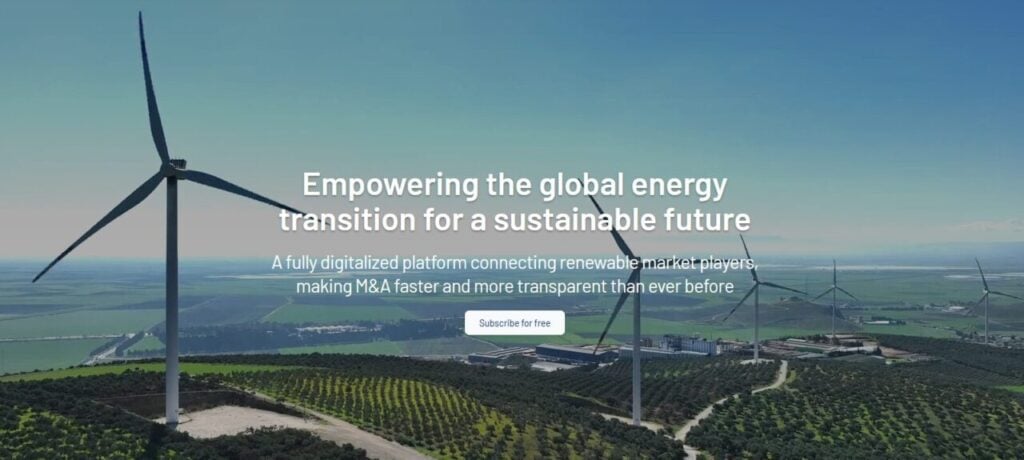
Platform-driven M&A is gaining traction in renewables because it addresses a familiar bottleneck: fragmented teasers, inconsistent documentation and long, unstructured Q&A cycles that slow diligence and increase transaction costs. Purpose-built M&A platforms are emerging as one route to reducing that friction by offering a structured, renewables-specific environment where sellers can publish opportunities in a consistent format and buyers can source and compare assets and portfolios more efficiently.
One example is Nrdeal, which hosts opportunities in solar PV, onshore wind and energy storage, with a growing share of hybrid PV + BESS structures. The platform reports activity across multiple European countries and around 1.4GW of opportunities on-platform.
By standardising documentation and milestone visibility, Nrdeal and similar platforms support the market’s shift toward proof-based screening—helping counterparties move faster from interest to diligence and execution. More broadly, these platforms reflect how the sector is professionalising execution: from relationship-only sourcing to structured dealflow, and from information chasing to diligence readiness by design. As 2026 intensifies the premium on execution certainty, platforms are likely to play a larger role as an alternative way to run renewables M&A, where quality, structure and speed are key features of the process.
The 2026 winners will not simply be the largest markets; they will be the markets where transactions can clear with fewer surprises and where counterparties can evidence readiness early. As grids, permitting and system integration constraints intensify, execution discipline becomes part of the asset value story. Platforms such as Nrdeal will increasingly matter not because they generate dealflow, but because they help turn dealflow into executed transactions—through structure, comparability and faster diligence.
Ksenia Dray is a senior renewables leader with 15+ years’ global experience in commercial strategy, procurement and market execution, and a recognised industry voice contributing thought leadership on solar and global market trends. She will be presenting at our Solar Finance & Investment Summit in London on 3-4 February. Click here for further details and booking.