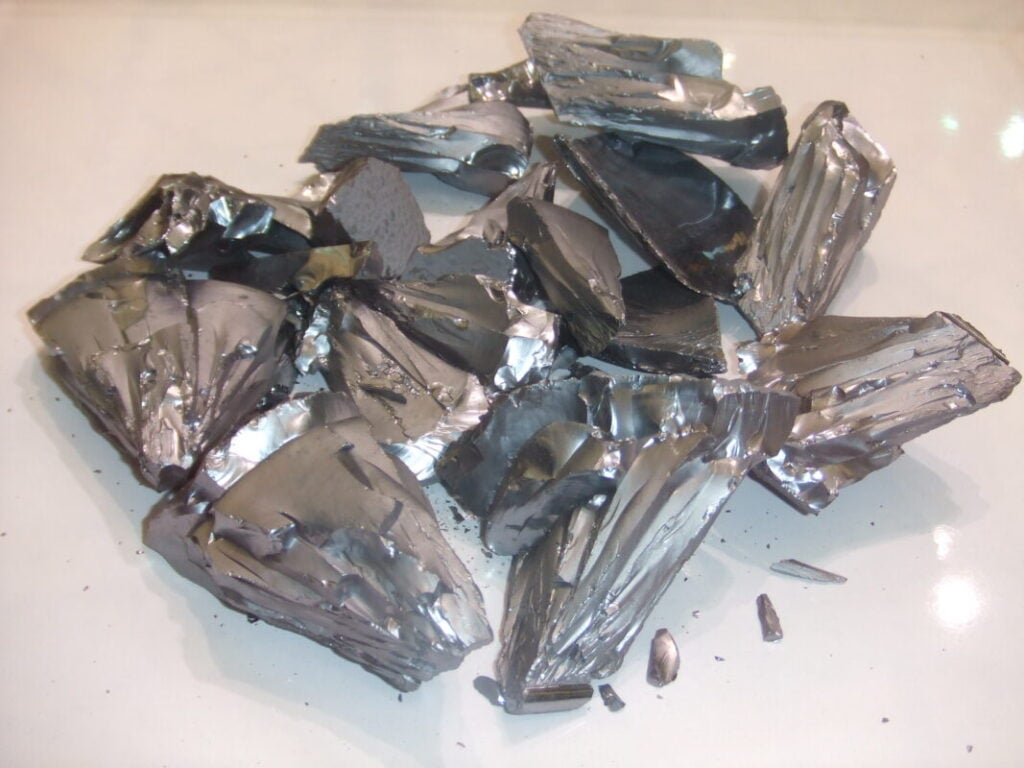
The latest domestic solar-grade polysilicon transaction prices from the Silicon Industry Branch of the China Nonferrous Metals Industry Association show that all domestic n-type solar-grade polysilicon products have plunged, with steep declines across the board.
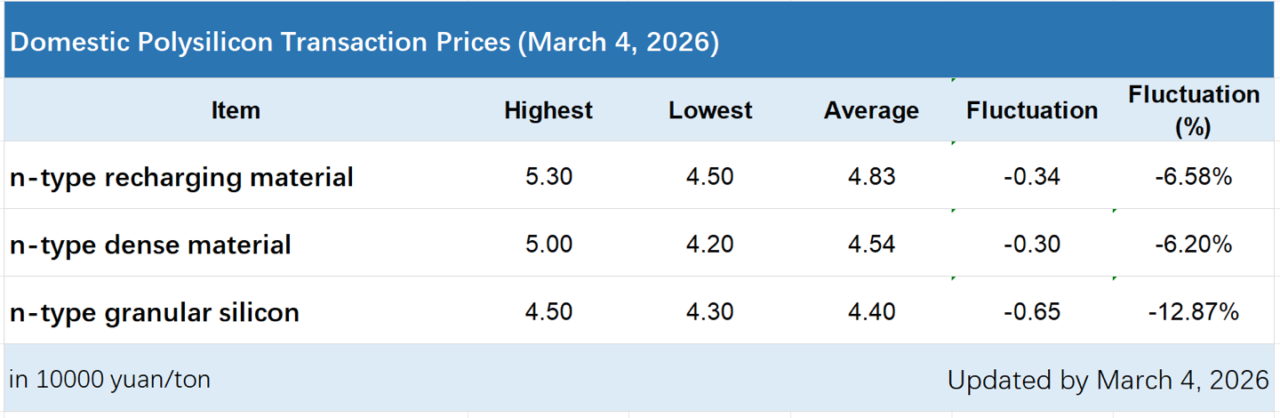
The latest price data from last week is a weighted average based on the output shares of nine leading domestic polysilicon producers. These nine enterprises accounted for 89.3% of China’s total polysilicon output in Q4 2025, with their n‑type product ratio reaching 91.6%. All quoted prices are tax-inclusive.
Try Premium for just $1
- Full premium access for the first month at only $1
- Converts to an annual rate after 30 days unless cancelled
- Cancel anytime during the trial period
Premium Benefits
- Expert industry analysis and interviews
- Digital access to PV Tech Power journal
- Exclusive event discounts
Or get the full Premium subscription right away
Or continue reading this article for free
The data shows that the trading price range for n-type recycled material this week stands at RMB45,000–53,000/ton, with an average price of RMB48,300/ton, down 6.58% month-on-month. For n-type granular polysilicon, the trading price range is RMB43,000–45,000/ton, with an average price of 44,000 yuan/ton, down 12.87% month-on-month.
The Silicon Industry Branch noted that the core market contradiction currently lies in lingering pressure from weak end-user demand and high inventory levels. The post-holiday recovery in operating rates of downstream module and cell sectors has fallen short of expectations, leading to weak silicon consumption. By the end of February, social inventory of polysilicon had surged to a high of 480,000 tons.
While domestic polysilicon output in February fell 17.3% month-on-month to 84,400 tons, production is projected to edge up to 87,000-89,000 tons in March, undermining the supply-side support seen previously. Overall, demand recovery is slower than expected, leaving the industry with immense pressure to destock. In the short term, without strong stimulus measures, the polysilicon market is likely to enter a downward adjustment phase.
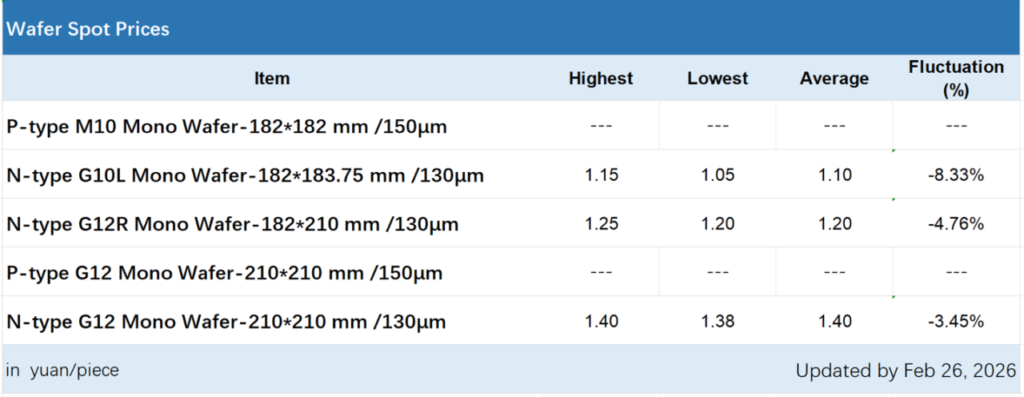
Before the decline in silicon prices, the Silicon Industry Branch’s wafer price quotes, released on 26 February, had already recorded a sharp drop. Wafer prices across different specifications and sizes fell by 3.45% to 8.33%.