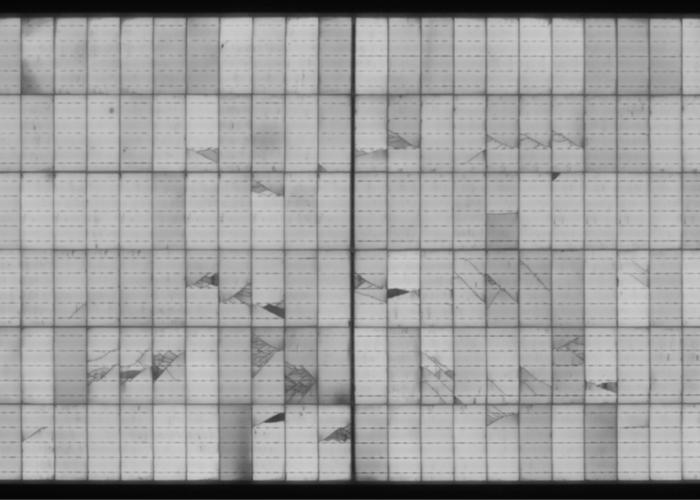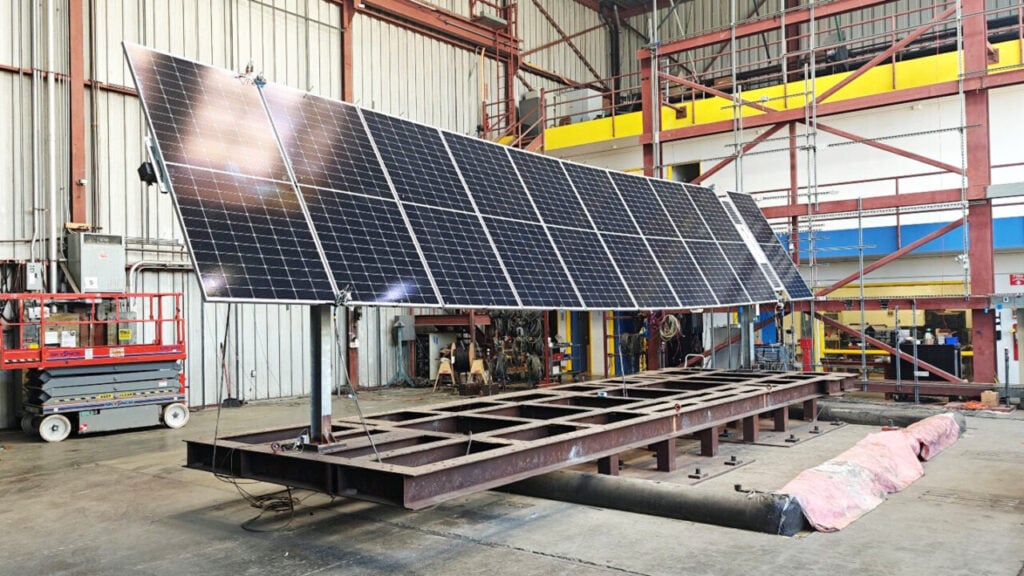
US tracker manufacturer GameChange Solar has completed testing of its Genius Tracker system, which included exposing modules and trackers to “extreme earthquake conditions” and yielded results of “no structural damage” to components and no “meaningful power loss”.
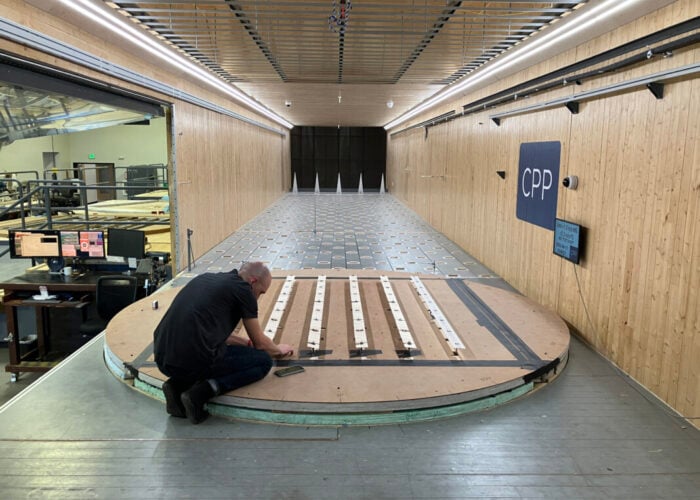
The testing was completed at UC Berkeley’s Pacific Earthquake Engineering Research (PEER) Center in California, and saw four module and tracker configurations subjected to shaking designed to replicate the effects of earthquakes.
Try Premium for just $1
- Full premium access for the first month at only $1
- Converts to an annual rate after 30 days unless cancelled
- Cancel anytime during the trial period
Premium Benefits
- Expert industry analysis and interviews
- Digital access to PV Tech Power journal
- Exclusive event discounts
Or get the full Premium subscription right away
Or continue reading this article for free
Each configuration was subjected to two intensities of shaking based on the strength of shaking needed to ensure a “high” qualification level in the Institute of Electrical and Electronics Engineers (IEEE) 693 standard, which assesses the ability of electrical infrastructure to withstand seismic impacts. One level of shaking was set at ‘100% PL’, meaning it replicates all of the conditions needed to secure the IEEE 693 qualification, while the other was set at 50% of these conditions; a third level of testing, which made use of white noise, was first used to calibrate sensors used in the upcoming test.
A total of four configurations were tested: two using conventional purlins as mounting systems, and two using GameChange Solar’s ‘SpeedClamp’ module clamping system; each configuration was tested at an incline of zero degrees and 60 degrees. All four configurations reported “no damage” to components or a “loosening of the hardware” during the white noise and 50% IEEE 693 testing.
GameChange Solar reported that the configurations using purlins “passed all their runs for all categories” and that “no issues or noteworthy events” were reported. Similarly, the configuration testing the SpeedClamp system at zero degrees also reported no issues, and was additionally tested at 25% of the IEEE 693 standard “to build confidence” among the testers.
However, the company noted that the SpeedClamp configuration at 60 degrees saw one of the modules separate from the structure eight seconds into the 100% IEEE 693 test, leading to the test being abandoned for safety reasons. There was no further damage to the module that came loose or the components and structures left behind.
“The tests used only two posts which caused the tracker to be a simply supported beam instead of the typical multi post continuous beam as deployed in the field,” wrote Scott Van Pelt and Jacob Wynne, GameChange Solar chief engineer and solar project engineering, in their report on the testing, ‘Seismic Shake Table Testing of Single-Axis Solar Trackers’.
“We suspect that the increased bending contributed to the PV module jumping out of the SpeedClamp during the 100% High PL test run. In other words, it may be that this test represented a far more conservative test condition than would be seen in the field.”
The report’s conclusion adds that the company’s trackers spend “a relatively small amount of time at high tilt angles such as 52 or 60 degrees,” suggesting that this failed experiment may not reflect on the performance of the company’s products in the field. Indeed, perhaps encouraged by the strong performances of the SpeedClamp configuration at zero degrees, Van Pelt was optimistic in his overall conclusions.
“We now have conclusive evidence that a solar tracking system, such as GameChange’s Genius Tracker, can be designed to withstand the forces associated with a meaningful earthquake.”
The news follows GameChange Solar’s signing of a 258MW tracker deal with Hassan Allan Constructions for a project in Egypt earlier this month.