German solar PV generation has continued to grow in the first half of 2026, reaching a new all-time high of 43.2TWh.
This is according to an analysis by the Fraunhofer Institute for Solar Energy Systems ISE, based on data from the energy-charts.info platform, which highlights a 10% year-on-year increase for solar PV generation in Germany.
Try Premium for just $1
- Full premium access for the first month at only $1
- Converts to an annual rate after 30 days unless cancelled
- Cancel anytime during the trial period
Premium Benefits
- Expert industry analysis and interviews
- Digital access to PV Tech Power journal
- Exclusive event discounts
Or get the full Premium subscription right away
Or continue reading this article for free
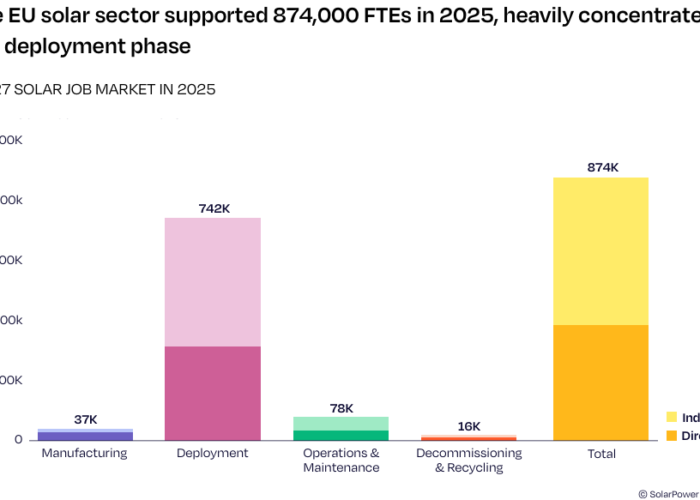
The European Union experienced a similar trend in the past decade, with solar PV generation rising by 254% since 2015, as shown in the chart below.
Solar PV’s share of electricity generation in H1 2026 reached 18.2% in Germany, a 1.3 percentage point increase from the same period last year.
During that period, total installed solar PV rose from 118GW to 124.9GW, with ground-mounted systems contributing the most to the growth of solar PV in H1 2026 with 3.5GW. Rooftop solar followed with 2.1GW of new capacity in H1 2026, and solar installations between 30-100kW accounted for 1.1GW of new installed capacity.
Despite the continued growth of solar PV by 7GW in the first six months of the year, a joint analysis by Fraunhofer ISE and German think tank Agora Energiewende the changes currently under discussion as part of the EEG amendment could make “smaller rooftop PV systems, in particular, less economically viable under current conditions.”
This could create incentives to design systems on a smaller scale or not to fully utilise available rooftop space. Residential solar systems had already been on the decline in the first quarter of 2026, and the German Solar Association (BSW-Solar) warned at the time that further subsidy cuts for PV systems could push installations even lower.
Increase in negative prices for solar PV and wind
Moreover, the high levels of solar PV and wind power generation have led to an increased number of hours during which the day-ahead market price for electricity is negative.
Solar curtailment reached nearly 3GWh in H1 2026, with the majority of the curtailed solar PV (58.2%) happening when day-ahead prices were negative.
This reinforces the need for intraday energy storage and flexibility, according to Fraunhofer ISE. It added that there remains a significant “storage gap” that needs to be closed in order to allow for the shift in surplus electricity to hours of low generation.
That is despite the fact that in H1 2026, there has been more large-scale battery storage systems commissioned that the entirety of 2025. At the end of June 2026, installed energy storage rose from 25.4GWh to 29.3GWh.
The expansion of battery storage for intraday storage could reduce negative electricity prices on the power exchange during the day and price spikes in evening hours, explained Fraunhofer ISE.
“The heat wave in June, which led to increased electricity demand for cooling while conventional power plants were operating at reduced capacity, resulted in particularly sharp price fluctuations during the evening hours,” wrote the German institution.