Global renewables capacity to double this decade but fall well short of targets: Fitch

Facebook
Twitter
LinkedIn
Reddit
Email
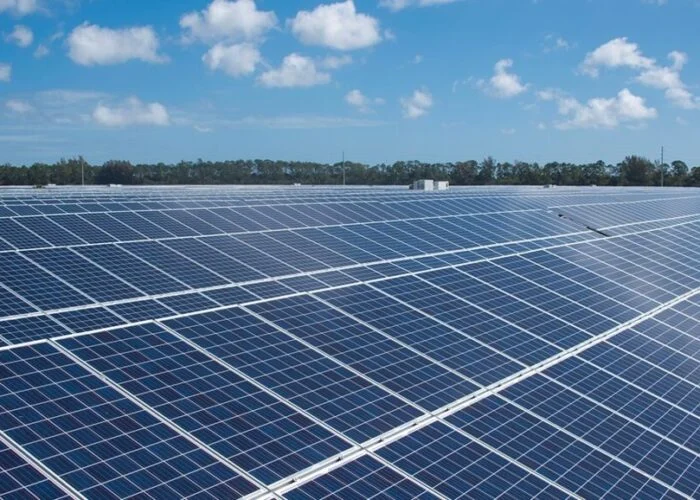
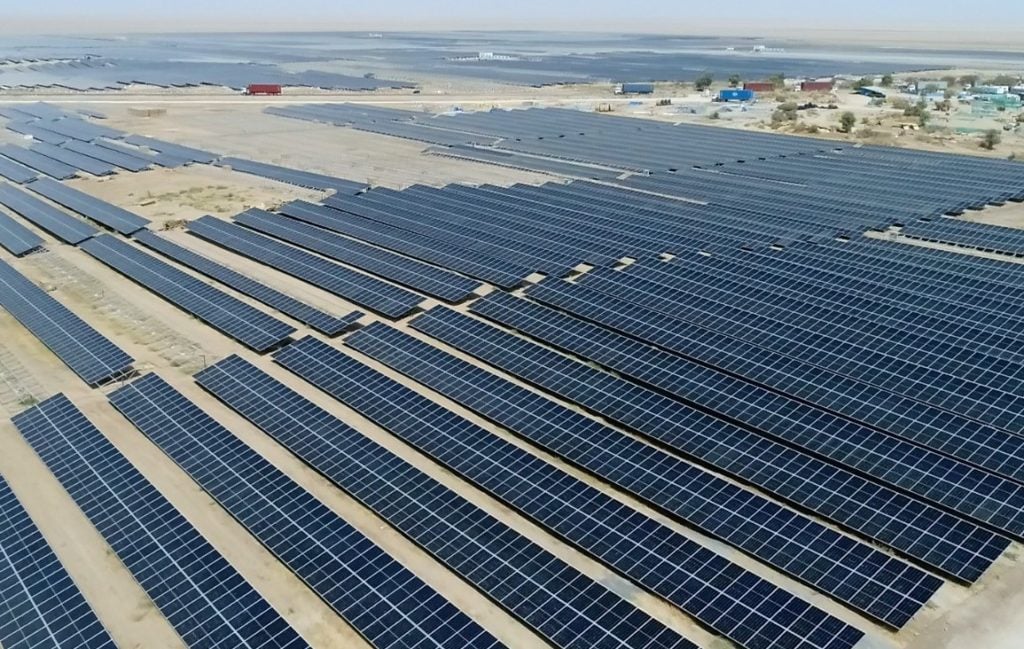
An operational project in the Indian state of Gujarat. Image: Engie.

Global renewables capacity will more than double this decade but almost every leading market will still miss deployment targets.

That is the conclusion of consultancy Fitch Solutions, which has warned that with the exception of mainland China, every leading renewables market will miss renewables targets set for this decade unless pipelines are expanded and policy strengthened.

This article requires Premium SubscriptionBasic (FREE) Subscription

Try Premium for just $1

  • Full premium access for the first month at only $1
  • Converts to an annual rate after 30 days unless cancelled
  • Cancel anytime during the trial period

Premium Benefits

  • Expert industry analysis and interviews
  • Digital access to PV Tech Power journal
  • Exclusive event discounts

Or get the full Premium subscription right away

Or continue reading this article for free

Fitch forecasts that generation from non-hydropower renewables will more than double from 3,686TWh in 2021 to 7,661TWh in 2031, driven by a more-than-doubling of installed capacity to 2.1TW within the same timeframe.

Government policies and commitments – the results of COP26 here being pivotal – are highlighted as core drivers for this growth, however the expansion of international green hydrogen markets will also play a supportive role.

But these growth expectations are insufficient to meet the net zero targets of world economies and will fall short of the requisite decarbonisation.

Fitch forecasts that only mainland China will meet its target of establishing a 1.2TW installed renewable capacity base by 2030, with other leading markets such as the US, European Union and India all set to miss such targets.

Fitch noted headwinds posed by a “volatile political environment” in the US, arguing that the nation will fall “well short” of its goal of an entirely clean power mix by 2035, while renewables auctions throughout Europe have faced challenges, not least of all in the permitting of renewables projects.

India, meanwhile, will struggle at the hands of policy “mismatches”, Fitch said, pointing in particular to the imposition of customs duties on solar panels which have made imports more expensive.
13 October 2026
San Francisco Bay Area, USA
PV Tech has been running an annual PV CellTech Conference since 2016. PV CellTech USA, on 13-14 October 2026 is our fourth PV CellTech conference dedicated to solar manufacturing in the USA. From polysilicon, wafers, ingots, cells and modules, to critical component suppliers including glass and frames, the event connects every stage of the value chain under one roof. PV CellTech USA also brings together investors, innovators, manufacturers and industry stakeholders to collaborate and strengthen domestic solar manufacturing across the United States.
3 November 2026
Málaga, Spain
Understanding PV module supply to the European market in 2027. PV ModuleTech Europe 2026 is a two-day conference that tackles these challenges directly, with an agenda that addresses all aspects of module supplier selection; product availability, technology offerings, traceability of supply-chain, factory auditing, module testing and reliability, and company bankability.

Read Next

July 3, 2026
The Asian Development Bank (ADB) has approved a US$160 million loan to support the deployment of at least 310MW of new solar capacity in Bhutan.
July 3, 2026
The US is reportedly drafting a ban on Chinese solar inverters over concerns that they pose a risk to the grid.
July 3, 2026
The state of New York has reached 8GW of cumulative installed distributed solar PV, putting the state ahead of its 10GW target by 2030.
July 3, 2026
German solar PV generation has continued to grow in the first half of 2026, reaching a new all-time high of 43.2TWh.
Premium
July 2, 2026
As the 4 July safe harbour deadline nears, VDE Americas’ Lisa Casey says US solar is at a decisive but nuanced turning point.
July 2, 2026
The LCOE for solar PV increased marginally in 2025, reaching US$44/MWh, up from US$43/MWh in the previous year.

Upcoming Events

Solar Media Events
October 13, 2026
San Francisco Bay Area, USA
Solar Media Events
November 3, 2026
Málaga, Spain
Solar Media Events
November 24, 2026
Warsaw, Poland
Solar Media Events
April 20, 2027
Istanbul, Türkiye