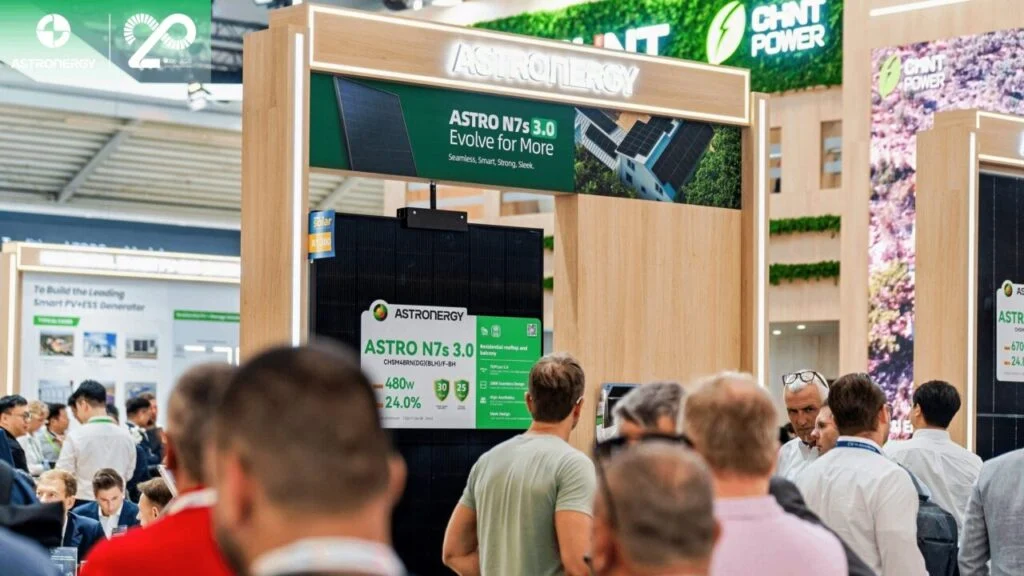
Astronergy has launched ASTRO N7s 3.0, its latest residential solar module, at Intersolar Europe 2026.
The Chinese solar manufacturer said the module combines larger wafers with half-cut cells and high-density encapsulation technologies to maximise cell spacing utilisation, increase the active area and improve power generation efficiency.
Try Premium for just $1
- Full premium access for the first month at only $1
- Converts to an annual rate after 30 days unless cancelled
- Cancel anytime during the trial period
Premium Benefits
- Expert industry analysis and interviews
- Digital access to PV Tech Power journal
- Exclusive event discounts
Or get the full Premium subscription right away
Or continue reading this article for free
The ASTRO N7s 3.0 is built on the company’s tunnel oxide passivated contact (TOPCon) 5.0 cell technology and incorporates a series of technology upgrades, including advanced surface passivation (ASP), poly-si formation (PF), surface nanotexturing & oxidation optimisation (SNOP), emitter passivation optimisation and hydrogen passivation.
According to Astronergy, these developments improve passivation performance, light absorption and bifacial energy generation in modules.
The company said the module can generate an additional 440kWh of electricity annually compared with a 455W super multi busbar (SMBB) module, enough to power household appliances each month.
Astronergy said the module also features high-density, low-stress flexible interconnection technology designed to create a larger active area, improve current collection capability and increase energy output. The technology is also intended to distribute stress more evenly across the module and significantly reduce the risk of microcracks.
Further optimisation of ribbon connections strengthens the bond between ribbons and cells, with encapsulation materials fully filling overlapping areas to improve long-term module reliability, the company said.
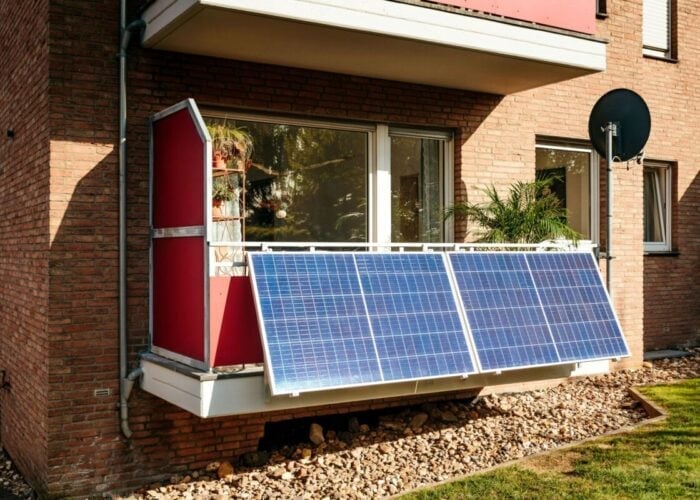
The ASTRO N7s 3.0 has been developed for the residential rooftop market and features an all-black design incorporating a 20BB layout, aesthetic glass, black light-redirecting film (LRF-B) and no visible PAD points.
Astronergy said the module’s lightweight and compact design enables single-person transportation and installation, making it suitable for residential rooftops with limited installation space.
The company added that the module offers enhanced damp heat durability, improved corrosion resistance and verified salt mist protection. It has also passed a 35mm hail test and achieved a mechanical load capacity of +6000Pa/-4000Pa.
The ASTRO N7s 3.0 is backed by a 25-year product warranty and a 30-year linear power warranty, with first-year degradation limited to 1% or less and annual degradation of 0.4% thereafter.
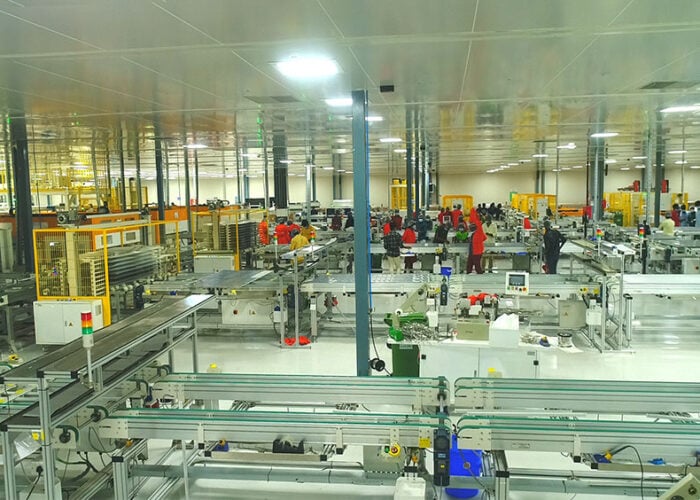
Astronergy said the module is manufactured using a low-temperature process with zero volatile organic compound (VOC) emissions and reduced energy consumption as part of its low-carbon manufacturing strategy.