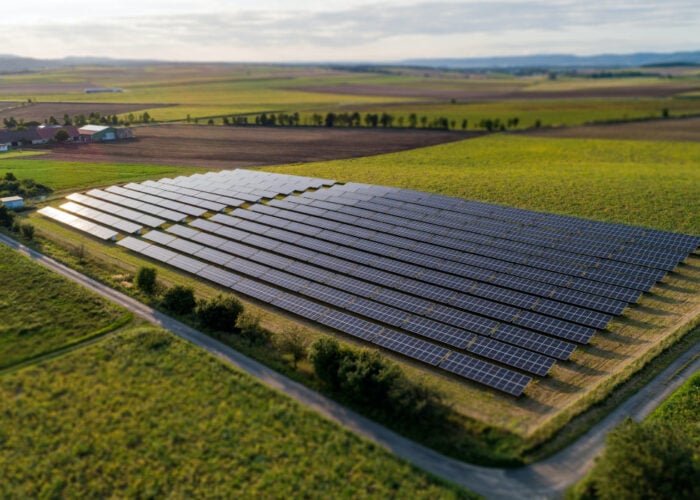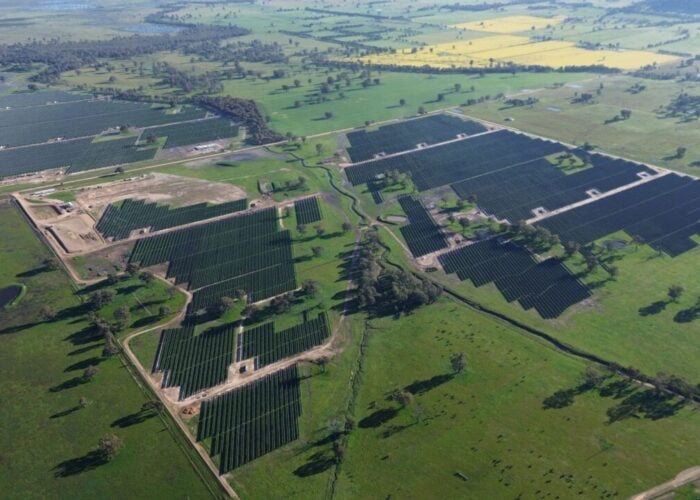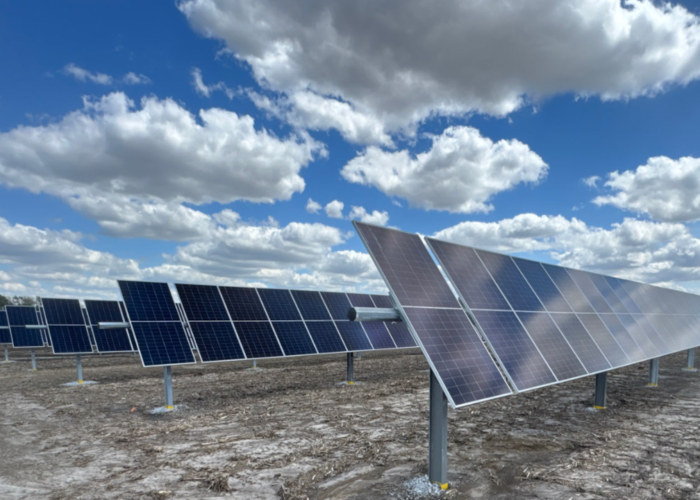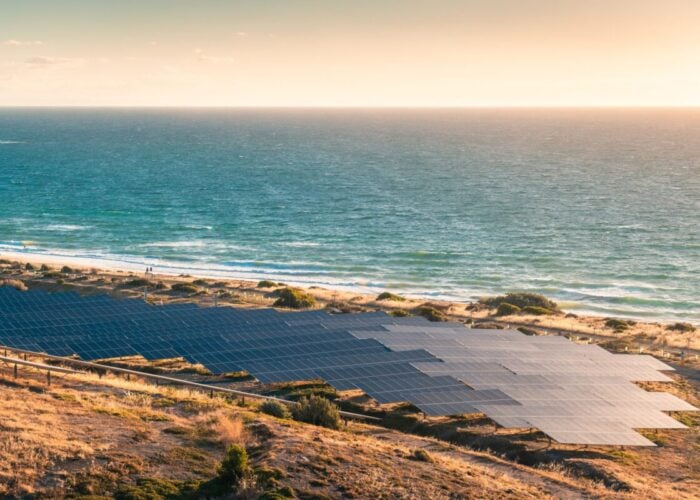
The global weighted average levelised cost of electricity (LCOE) of utility-scale PV plants fell to US$0.044/kWh in 2023, a 12% year-on-year decline from 2022, and a mammoth 90% fall since 2010.
This is the headline takeaway from the ‘Renewable Power Generation Costs in 2023’ report, the latest annual publication from the International Renewable Energy Agency (IRENA), which makes for encouraging reading for both the solar sector in particular, and the renewable energy industry at large. The report notes that the world added a record 473GW of new renewable power capacity in 2023, a 54% year-on-year increase over the capacity added in 2022, the largest year-on-year increase since the turn of the century.
Try Premium for just $1
- Full premium access for the first month at only $1
- Converts to an annual rate after 30 days unless cancelled
- Cancel anytime during the trial period
Premium Benefits
- Expert industry analysis and interviews
- Digital access to PV Tech Power journal
- Exclusive event discounts
Or get the full Premium subscription right away
Or continue reading this article for free
While much of this growth has been encouraged by looming climate change targets, the rapidly-falling LCOE attributed to many forms of renewable power generation has no doubt contributed, making new clean power projects more financially viable than ever. While the IRENA report draws attention to the massive declines in LCOE experienced over the last two decades, this trend has continued, albeit to a lesser extent, in recent years; the graph below shows how LCOE has fallen considerably for several key renewable energy technologies, even in the last six years.
Perhaps most notably, the LCOE of solar PV has almost halved since 2018, and of the technologies profiled, endured the lowest increase in cost from one year to the next, with LCOE rising just US$0.001/kWh between 2021 and 2022. This compares to the greater variations seen in technologies, such as hydropower, which saw an LCOE increase of US$0.013/kWh over the same period.
These figures echo similar conclusions drawn from other research. Last year, DNV reported that it expects solar PV’s LCOE to halve by 2050 and earlier this year, German research organisation Fraunhofer ISE found that ground-mounted PV had the lowest LCOE among all power sources in Germany, a key milestone for a critical European market.
The IRENA report also notes that the range of LCOE among all renewable power sources tightened in 2023, with the gap between the 5th and 95th percentile values falling to its lowest level since 2010, suggesting that this fall in LCOE has been seen across technology types, and across scales and scopes of projects.
Ultimately, the combination of considerable new renewable power capacity additions and collapsing LCOE in all renewable energy types means that the global electricity sector experienced considerable fuel savings in 2023. The IRENA figures show that the global electricity sector has saved US$409 billion in 2023, compared to what would have been spent without renewable power investment, and this figure is broken down by region in the graph above.
Falling module costs drive low solar LCOE
It is no surprise that Asia has seen the most cost savings in the electricity sector; as the IRENA report notes, the region, led by China, has installed vast quantities of new renewable energy capacity in recent years. China alone accounts for the world’s largest markets in the onshore wind sector (accounting for 66% of global installed capacity), offshore wind (65%), solar PV (63%) and hydropower (44%).
China has also led module production in the solar sector for some time, with figures from Ember Climate noting that China accounts for around 85% of the world’s PV module manufacturing capacity.
While this has proven troublesome for its overseas exports in recent years—with the US keen to reduce its reliance on Chinese-made solar products and Europe having such a surplus of modules that its own manufacturing sector is struggling to get off the ground—the growing demand for new solar modules has helped drive the price of such products down to new depths. The graph below demonstrates how module prices have changed over the last six years, by technology, with notable declines in price among all types of modules profiled by IRENA.
Notably, all technology types for which there is 2023 data saw a year-on-year decline in average module prices compared to 2022 figures. This is notable because many technologies saw a slight increase in module prices between 2020 and 2022, and the return to a consistent decline in prices suggests that this three-year period was the exception to the rule of sustained falls in module prices.
Indeed, IRENA figures show that, between 2010 and 2016, just prior to the period shown on the graph above, falling module prices contributed to a decline in the cost of installing new solar projects of US$1,921/W, a much larger figure than any other aspect of the solar installation process, including technologies such as inverters and balance of system (BoS) costs.
While the extent of this module-based cost saving has slowed down in the seven years since 2016, cheaper modules accounted for cost savings of US$363/W between 2016 and 2023, again more than any other sector of the solar industry. This trend, and a comparison to other cost saving metrics, is shown in the graph below.
Perhaps most notably, the only area that saw an increase in prices—BoS hardware costs between 2010 and 2016—saw costs decline between 2016 and 2023, to the point that BoS hardware has now accounted for more savings than costs since 2010. This is strong evidence of the sustained decline in costs across the solar supply chain, and should stand the industry in good stead if installations are to grow at the scale necessary to meet the world’s climate targets.
“In the coming years, remarkable growth across all renewable energy sources is expected, giving countries great economic opportunities,” said Francesco La Camera, director-general of IRENA. “Our analysis indicates that solar PV and onshore wind will have the biggest impacts on the tripling of renewables.
“Thanks to low-cost renewables in the global market, policy makers have an immediate solution at hand to reduce fossil fuels dependency, limit the economic and social damage of carbon-intensive energy use, drive economic development and harness energy security benefits.”