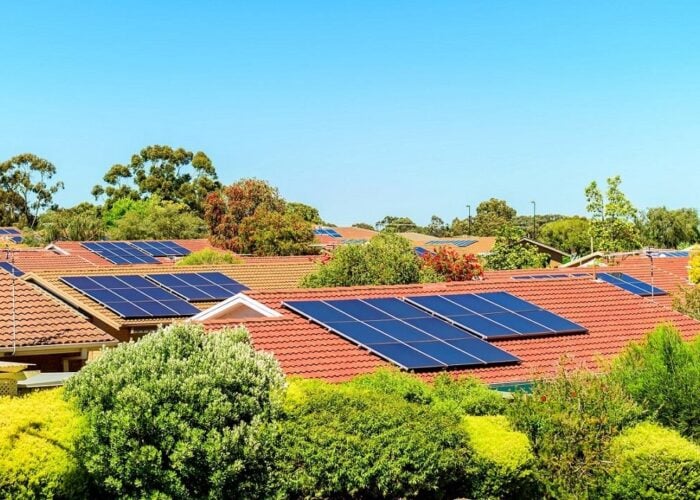
Kyocera has released, what the company deems to be, conclusive evidence that its solar modules show only 8.3% degradation after 20 years. The Atomic Energy and Alternative Energies Commission (CEA) used a sample from Kyocera’s 945W roof installation in the small village of Lhuis, Lyon, France, to test under laboratory conditions. The results demonstrate that the modules were still performing at 91.7% of their original maximum power output.
The installation, commissioned in 1992 by Hespul, a French non-profit organization, consists of 15 modules each with an output of 63W.
Try Premium for just $1
- Full premium access for the first month at only $1
- Converts to an annual rate after 30 days unless cancelled
- Cancel anytime during the trial period
Premium Benefits
- Expert industry analysis and interviews
- Digital access to PV Tech Power journal
- Exclusive event discounts
Or get the full Premium subscription right away
Or continue reading this article for free
The company enthuses that its solar modules were the first in the world to be certified by TÜV Rheinland and the non-profit Fraunhofer Center for Silicon Photovoltaics CSP's potential induced degradation (PID) test demonstrated that Kyocera's modules did not show any degradation after being subjected to high voltage stress testing.
At the time Tatsumi Maeda, general manager of the Kyocera Group said, “As a pioneer in the industry Kyocera has been involved in R&D and manufacturing of solar power generating systems for more than 35 years and in that time we have developed numerous innovations and manufacturing technologies to ensure the high quality and long-term durability of our products.”