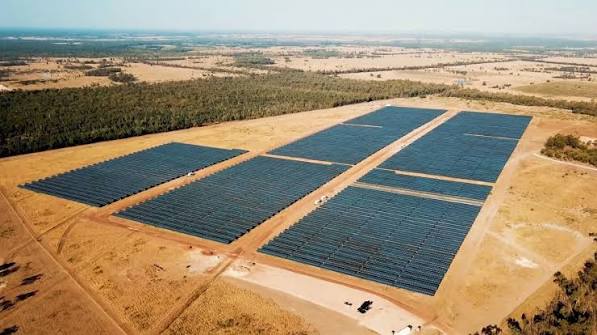
LGI, an Australian landfill gas and renewables company, has agreed to buy two operating solar PV power plants in Queensland with 42MW of export capacity for AU$22 million (US$15.3 million).
The ASX-listed company will also lift its medium-term pipeline target to more than 120MW, up from the 80MW it previously announced.
Try Premium for just $1
- Full premium access for the first month at only $1
- Converts to an annual rate after 30 days unless cancelled
- Cancel anytime during the trial period
Premium Benefits
- Expert industry analysis and interviews
- Digital access to PV Tech Power journal
- Exclusive event discounts
Or get the full Premium subscription right away
Or continue reading this article for free
LGI recovers biogas from landfills to generate electricity and carbon credits, and it also operates battery storage. It dispatches its assets through its own software, the Dynamic Asset Control System (DACS), to optimise returns across energy and carbon markets.
LGI is buying 100% of the two solar PV power plants from IIG Solar Assets Pty Ltd, which acts as trustee for the IIG Solar Asset Trust, with no debt attached. Completion is expected on 9 October, no shareholder approval is required, and the purchase will be funded from cash and LGI’s existing debt facility.
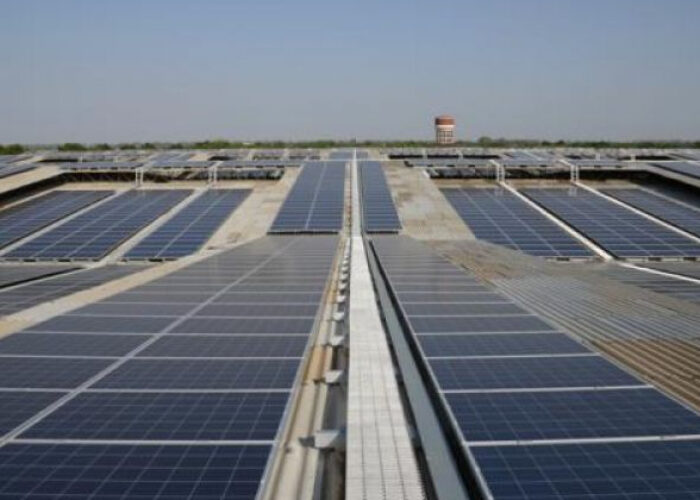
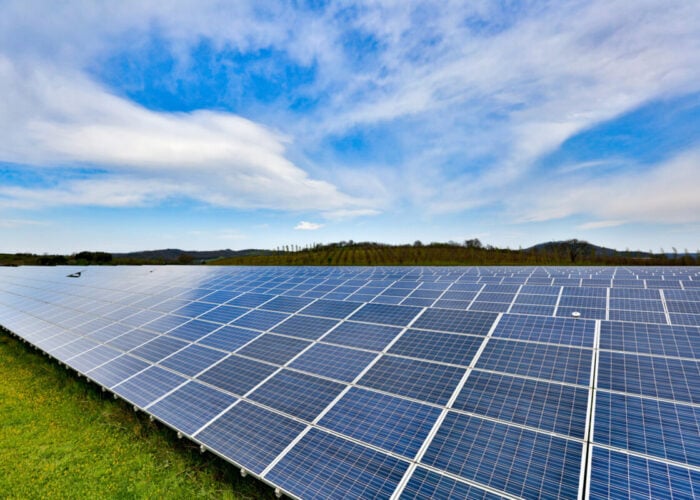
The Chinchilla solar PV plant, near Baking Board, has 19.9MWp installed and 14.7MW of export capacity. It began operating in 2019 and has 31 years left on its land lease.
The Brigalow solar PV power plant at Yarranlea has 34.5 MWp installed and 27.3MW of export capacity. It began operating in 2021 and has 33 years left on its lease.
Together, the generation power plants have 54MW installed against 42MW of export capacity. They generated 20,981MWh and 33,229MWh in 2025, respectively, and both sold entirely at spot prices.
The price works out at about AU$0.5 million per MW of export capacity, which LGI says is below the cost of developing comparable assets from scratch. The company said it assessed multiple solar assets over the past year as valuations softened in line with energy prices.
LGI estimates the power plants will add annual earnings before interest, tax, depreciation and amortisation (EBITDA) of AU$2.1 million to AU$4.0 million at current electricity prices.
The range depends on how quickly it realises revenue and implements DACS, and it expects about AU$1.6 million in the 2027 financial year, assuming a nine-month contribution.
LGI plans to bring operations and maintenance in-house. Chief executive Jarryd Doran described the power plants as “proven, operational assets acquired well below replacement cost”.
Because installed capacity exceeds export capacity, LGI says the surplus could be used to charge battery storage systems at either site. Preliminary studies on adding battery storage systems have started at both projects.
The new target combines the 80MW pipeline with the 42MW of solar. LGI’s investor presentation splits the total as 26MW of biogas, 42MW of solar and 57MW of battery energy storage.
Market context for Queensland solar assets
LGI says electricity demand in the National Electricity Market (NEM) is growing due to electric vehicles (EVs), industrial electrification, and data centres, while ageing thermal generation approaches the end of its life. It also says distribution-connected projects avoid transmission bottlenecks.
Solar output is already running into grid limits. Utility-scale solar curtailment fell to about 22% in September from 26% a year earlier, while Queensland set a September record of about 645GWh of utility solar output. Spot prices averaged below AU$65/MWh across all NEM states over the month.
Policy on data centre demand remains unsettled. Queensland and the Northern Territory opposed a national agreement in July that would require large new data centres to fund additional renewable energy generation.
Investor sentiment is mixed. A survey for the Clean Energy Investor Group found that 65% of respondents expect Australia to miss its 82% renewable energy target for 2030, and 77% said the investment landscape had worsened. Transmission delays were the top challenge cited.