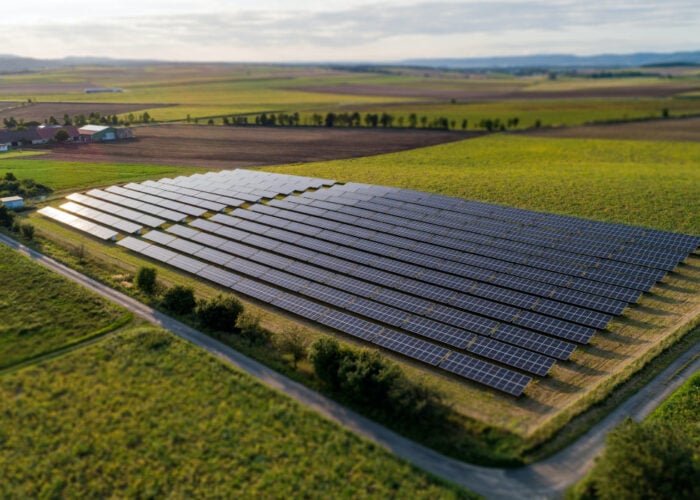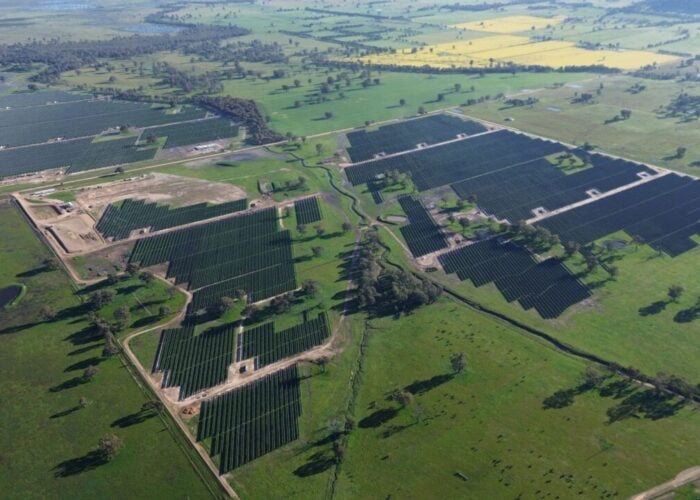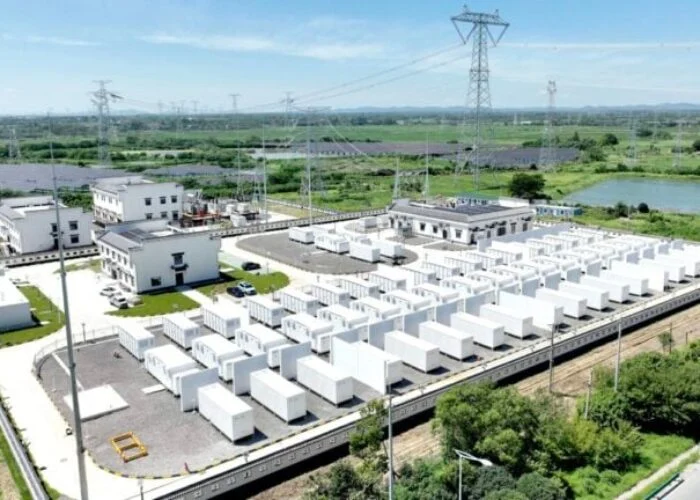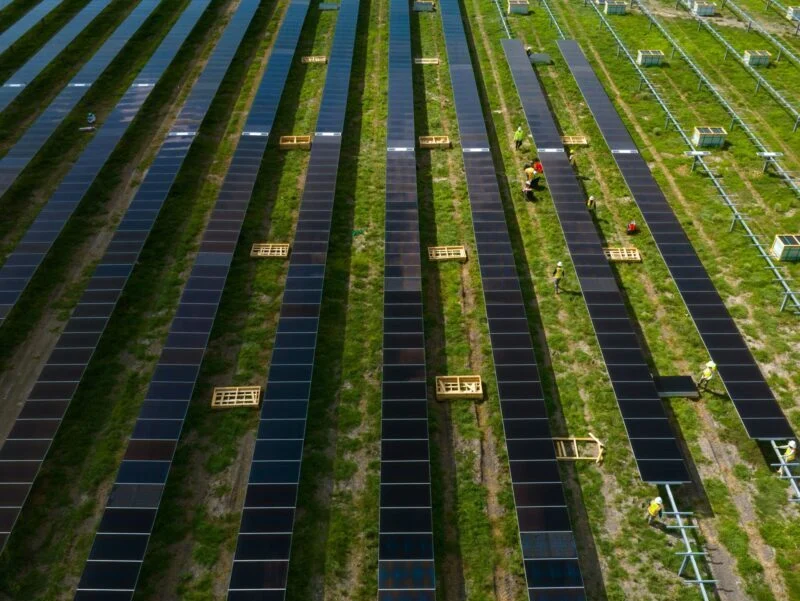
Developer Lightsource bp has reached financial close on the 171MWdc Glorit solar PV power plant, north of Auckland, New Zealand.
Construction of the utility-scale solar PV plant is set to begin imminently, with commercial operations targeted for the second half of 2028.
Try Premium for just $1
- Full premium access for the first month at only $1
- Converts to an annual rate after 30 days unless cancelled
- Cancel anytime during the trial period
Premium Benefits
- Expert industry analysis and interviews
- Digital access to PV Tech Power journal
- Exclusive event discounts
Or get the full Premium subscription right away
Or continue reading this article for free
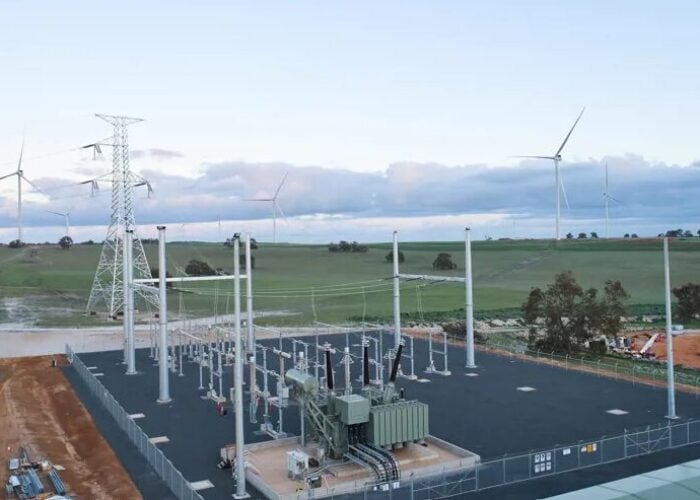
The project is being developed through Glorit Solar P LP, the 50-50 joint venture between Lightsource bp and Contact Energy. It will connect to Transpower’s 220kV transmission network via a dedicated 1.5km connection from the site.
The facility will include provisions for a 200MWh DC-coupled battery energy storage system (BESS) to store and dispatch solar energy when grid conditions require it. However, the storage component’s capacity has not been disclosed.
Contact Energy’s February 2026 equity raise documentation described the Glorit project as expected to cost NZ$305 million (US$179 million), with the plant to be more than 70% project-financed.
The solar PV plant is located on the Kaipara Coast in Glorit, north of Kaukapakapa in the Auckland region. It is designed to strengthen generation capacity in the upper North Island, a region that has faced electricity supply constraints during periods of low hydro storage.
The financial close follows a lengthy process of consent and legal review. The Environmental Protection Authority granted resource consent for the project in October 2025, following a 150-working-day assessment under the fast-track consenting legislation.
That approval was subsequently challenged. Conservation group Forest and Bird lodged a High Court appeal in November 2025, citing concerns about the endangered tara iti, or New Zealand fairy tern, whose habitat and flight paths the group argued were insufficiently protected under the consenting decision.
The resolution of that legal process and the completion of planning condition discharge requirements have now cleared the path to financial close.
The Glorit financial close is the second time the Lightsource bp and Contact Energy joint venture has reached this stage in New Zealand.
The 168MWdc Kōwhai Park solar PV power plant at Christchurch Airport reached financial close in August 2024, backed by a NZ$267 million green financing package from Westpac, Mizuho, China Construction Bank and Intesa Sanpaolo.
As PV Tech reported earlier this week, the two companies completed module installation at the Kōwhai Park and it is now nearing energisation, with commercial operations expected later this year.
The two projects together represent approximately 339MWdc of new solar generation capacity from the joint venture pipeline.
New Zealand’s solar sector is accelerating
The Glorit financial close arrives as New Zealand’s utility-scale solar pipeline is advancing across multiple developers simultaneously.
Lodestone Energy has begun construction on a 31.5MWdc solar PV plant at Ruataniwha Plains in Central Hawke’s Bay, the region’s first utility-scale solar development. At the same time, Meridian Energy received consent in May 2026 for a 120MW solar plant at Bunnythorpe in Palmerston North, which also incorporates battery storage.
New Zealand’s electricity market has provided a strong commercial case for new solar. The country experienced a prolonged dry year in 2024 that depleted hydro storage levels and drove wholesale electricity prices sharply higher, exposing the risk of a generation mix dominated by weather-dependent hydroelectric output.
In a bid to solve this and turn the country into the “simplest developed country for solar deployment”, New Zealand’s government ordered a sector review of residential and small-to-medium-scale solar installations, aiming to reduce what it describes as a “red tape nightmare” that can delay approvals for months.