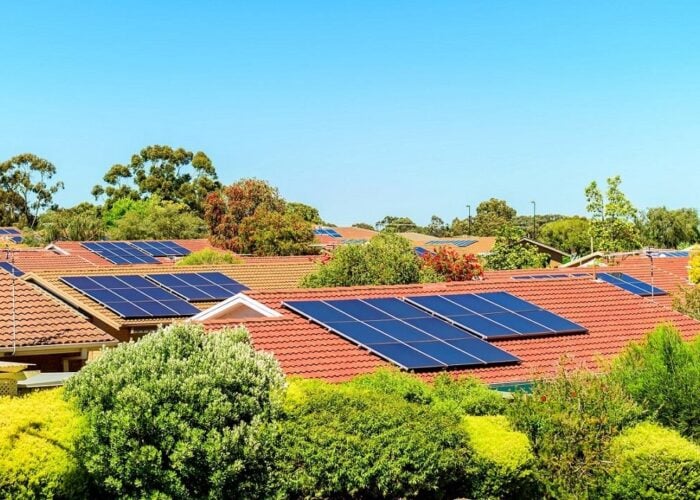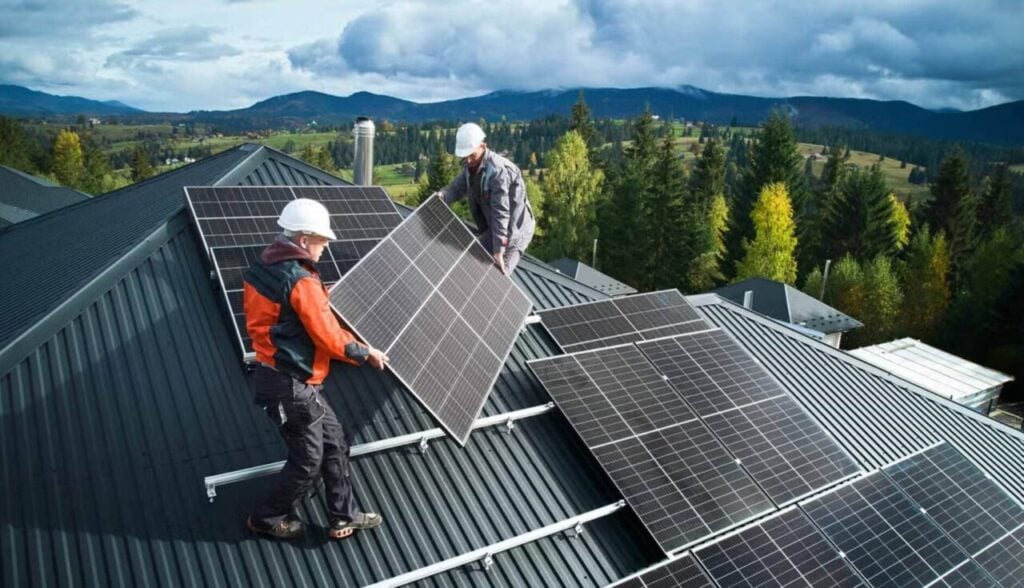
New Zealand’s government has ordered a sector review into the installation of residential and small to medium-scale solar, aiming to reduce what it describes as a “red tape nightmare” that can delay approvals for months.
According to the government, the review seeks to make New Zealand the “simplest developed country for solar deployment” by addressing regulatory barriers that currently require up to eight layers of sign-off and five separate site visits from four different entities before small-scale systems can be switched on.
Try Premium for just $1
- Full premium access for the first month at only $1
- Converts to an annual rate after 30 days unless cancelled
- Cancel anytime during the trial period
Premium Benefits
- Expert industry analysis and interviews
- Digital access to PV Tech Power journal
- Exclusive event discounts
Or get the full Premium subscription right away
Or continue reading this article for free
Analysis by the Energy Efficiency and Conservation Authority shows most New Zealand households could save more than NZ$1,000 (US$590) annually on power bills by installing solar modules.
A typical small-to-medium system costs between NZ$8,500 and NZ$11,500, with a payback period of around 10 years. Despite these economics, only 3-4% of New Zealand households currently have solar installed, compared to more than 30% in Australia.
Regulation Minister David Seymour pointed to Victoria, Australia, as a potential model, where standard installations require just one layer of sign-off and can be approved within 24 hours.
Victoria’s process allows installers to manage the entire installation, with licensed electrical inspectors conducting remote inspections using photographs unless non-compliance is identified.
“During installation, the installer often cannot turn off or reconnect the fuse, update the meter, or carry out the required independent electrical inspection,” Seymour said. “These tasks must be done by other entities, requiring additional site visits.”
The regulatory complexity comes as New Zealand’s distributed solar capacity increased 44% in 2025, with a record 258MW installed last year, according to data from Electricity Authority Te Mana Hiko.
The growth reflects broader momentum in New Zealand’s solar sector, which has seen Genesis Energy break ground on a 136MWp solar plant and install the first modules at the 400MW Te Rahui Solar Farm, which will become the country’s largest solar installation when complete.
Market context and energy security
The review follows New Zealand’s 2024 energy crisis, which exposed vulnerabilities in the country’s hydropower-dependent electricity system.
Low rainfall, declining hydro storage reserves, and natural gas shortages caused electricity prices to surge, prompting calls for greater generation diversity.
The Ministry for Regulation will examine how existing rules operate in practice, identify duplicative requirements, and study regulatory approaches in other jurisdictions. The review will cover rooftop, ground-mounted, and plug-in solar systems for residential and small commercial applications.
Initial advice will be provided to the minister later this year. The review follows feedback submitted through the government’s Red Tape Tipline, where households and installers raised concerns about approval delays and costs.
While New Zealand’s electricity generation remains approximately 87% renewable energy, primarily from hydropower and geothermal sources, the country has lagged in distributed solar adoption.