Field failures in PV power plants are increasingly being traced to tracking and racking hardware. Joerg Althaus of Intertek CEA examines some of the most commonly found defects and how to detect them early.
When solar projects underperform, developers and asset owners usually turn first to modules and inverters. These high-value, high-visibility components receive most of the industry’s quality assurance attention.
Try Premium for just $1
- Full premium access for the first month at only $1
- Converts to an annual rate after 30 days unless cancelled
- Cancel anytime during the trial period
Premium Benefits
- Expert industry analysis and interviews
- Digital access to PV Tech Power journal
- Exclusive event discounts
Or get the full Premium subscription right away
Or continue reading this article for free
But increasingly, field failures are being traced back to an overlooked source: the racking and tracker systems that support every module on site.
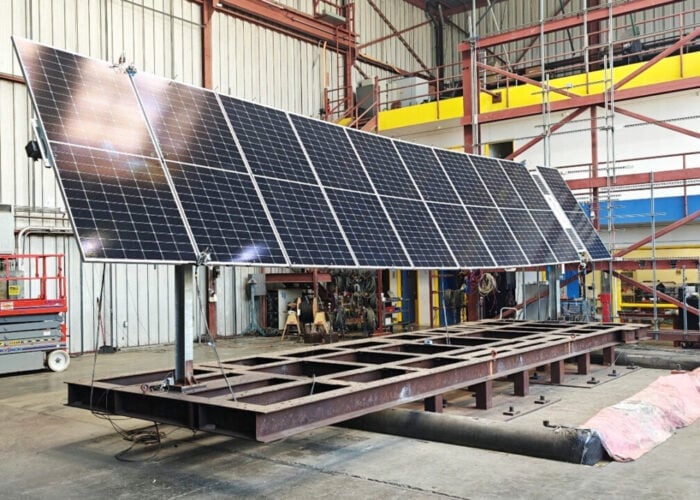
These components don’t produce power, but they keep everything in place—holding modules at the right tilt, anchoring them against wind and protecting them from long-term wear and tear. Unlike modules, which come from streamlined, high-tech factories, racking systems are pieced together from dozens of parts—often made in different places, by different suppliers, under very different quality controls.
That complexity makes racking more vulnerable than most stakeholders realise. When a torque tube starts to rust or a tracker motor seizes up under strain, it’s rarely one dramatic failure. It’s the result of small oversights during manufacturing, handling or installation—things that proper quality assurance could have caught early.
This article shares what our field teams are seeing: how tracker and racking failures happen, what causes them and how developers can stop them before they start. These aren’t theoretical risks. They’re patterns we’ve seen repeatedly—many of them preventable, and some are already costing project owners time, money and lost performance. Even well-designed systems have raw material, production process and supply chain risks that must be carefully managed.
Racking is not a singular product
Tracker systems aren’t built under one roof. Unlike modules or inverters—often produced in tightly coordinated factories—racking systems come together piece by piece, with parts arriving from different companies, countries and shop floors. In many cases, the torque tubes, slew drives, fasteners, bearings, and structural supports are each sourced independently, with each introducing its own potential points of failure.
Even when one supplier provides the full tracker system, the parts may still come from a web of different factories, making it harder to ensure everything meets the same standard. The motor alone might contain 60 tiny parts—and if even one is poorly made, stored incorrectly, or missed during inspection, it can bring down the entire system’s performance. While suppliers often offer a full tracker package, in many cases, production is highly distributed.
This fragmentation creates risk in two ways. It increases the number of handoffs between manufacturers, raising the chances that a defect or mismatch will go unnoticed. It also makes coordinated quality assurance more difficult. Even if one supplier performs basic checks on its torque tubes or drive systems, there’s no guarantee that a subcontractor producing the foundation posts or clamps is meeting the same standards.
Developers and EPCs often assume the supplier has checked everything. But in reality, critical parts can move through the supply chain without proper quality assurance oversight. Subcontractors may submit paperwork without performing required inspections. By the time these components arrive on site, any underlying quality issue becomes harder and more expensive to correct.
What we’re seeing in the field
In the past two years, quality assurance teams have identified an uptick in field issues related to racking and tracker systems. Some problems arise during installation, but others don’t appear until months or years after mechanical completion, by which point, they’ve already caused delays, added costs or cut into performance.
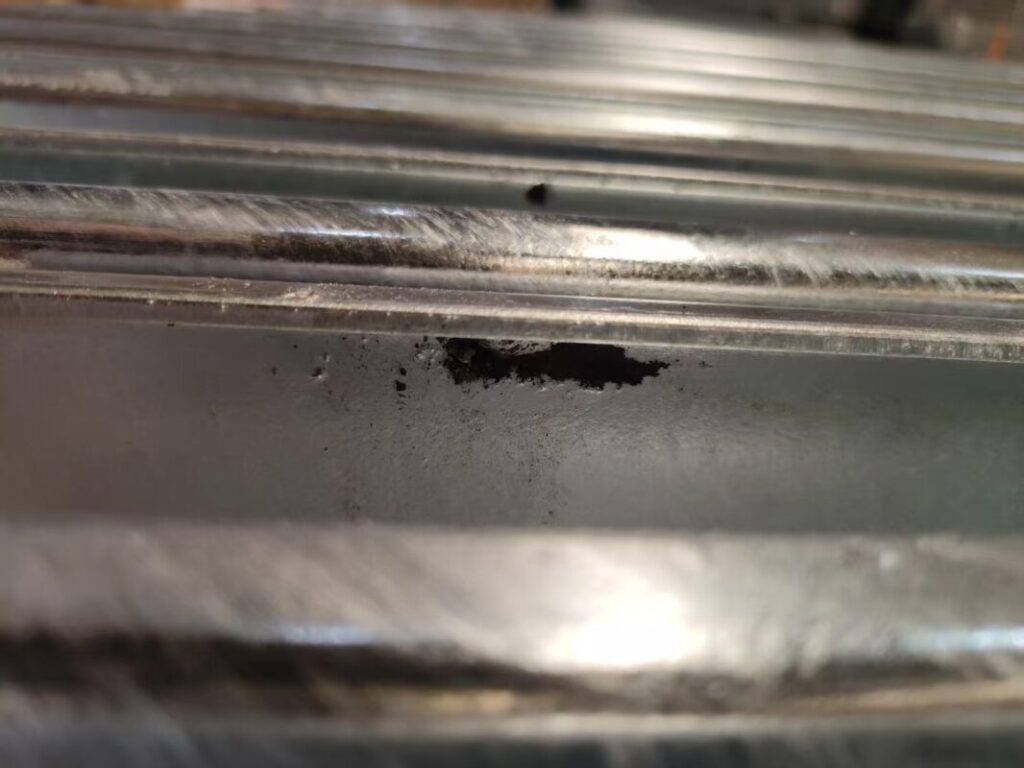
Corrosion is one of the most frequent and costly failure points, especially in dry deserts or humid coastal regions. In one project audit, more than 50% of components that had been hot-dip galvanised showed surface issues such as contamination and rust. The internal seams of torque tubes and drive supports, normally protected from exposure, had been left vulnerable by missing or dislodged end caps. Overzealous grinding at the factory had stripped off protective zinc layers, leaving bare steel exposed before a single panel was installed.
Mechanical assembly brings its own surprises. At one factory, a pre-shipment inspection revealed that 20% of tracker components had holes drilled with incorrect spacing. If those parts had made it to site, nothing would have lined up, and fixing it would have meant days of rework.
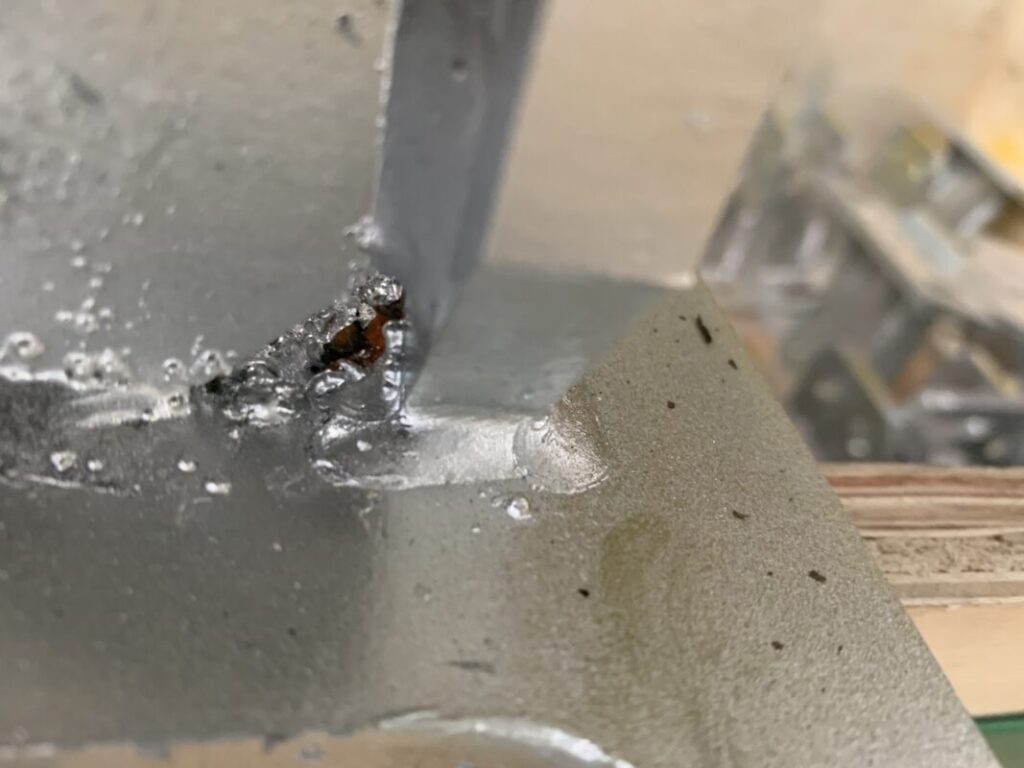
In the field, installation crews have reported coating delamination near welded joints, especially where surfaces weren’t properly cleaned or treated before painting. These seams later became early corrosion sites.
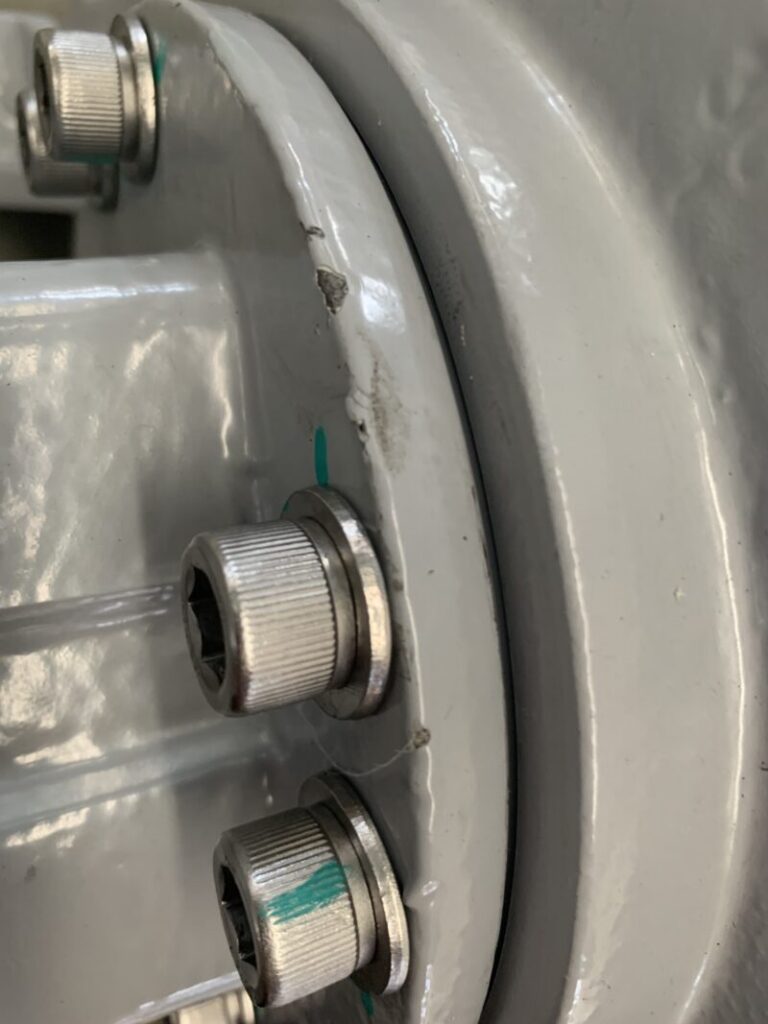
Fasteners, cable supports, and related hardware components are also frequent problem areas. These components are often treated as off-the-shelf hardware, with little attention paid to corrosion resistance or surface preparation. In some cases, improperly matched fasteners, including those without adequate corrosion resistance, have created galvanic corrosion risks. In others, electrical enclosures have experienced moisture intrusion due to damaged seals and improperly torqued bolts.
These aren’t just bad batches. They reflect bigger process gaps: poor packaging, missing documentation, inconsistent treatment, and lax oversight.
What’s causing the failures
Most tracker failures don’t come from one big mistake. They build up: small lapses at different points in the manufacturing and delivery process. And while each issue may seem isolated—a rusted bolt here, a misaligned drive there—they often stem from a common set of underlying causes.
One of the most common is inadequate surface preparation during coating and galvanisation. If weld seams aren’t cleaned well before coating, the zinc won’t stick, and that bond is what keeps corrosion out. This flaking might not be visible when parts leave the factory, but once exposed to humidity or rain in the field, the bare metal underneath begins to corrode.
Another cause is over-grinding. In an effort to clean up imperfections after galvanisation, some factories use grinders or files to smooth edges or remove zinc drips. But this can backfire. When too much of the protective coating is removed, it leaves the steel below unprotected. In one inspection, red rust was found on support structures where workers had ground too far, shaving off the protection the coating was supposed to provide.
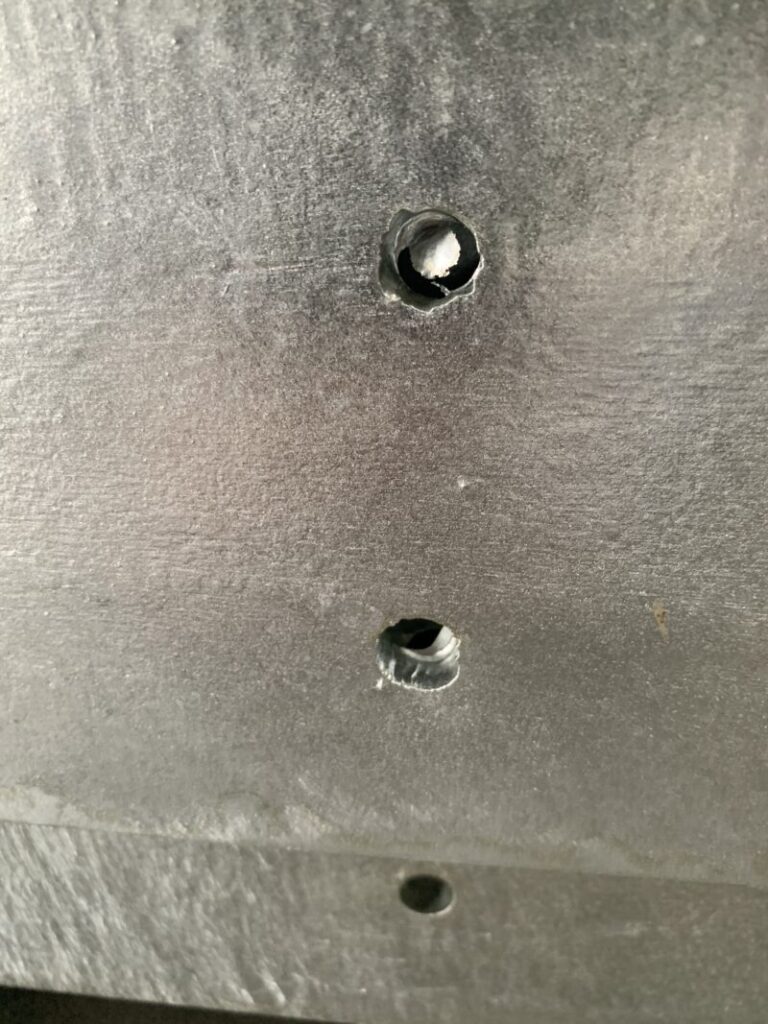
Failures can also come from poor packaging or mishandling during transit. Even the best-coated parts can get scraped or dented during loading, shipping, or just sitting in a staging yard. And in high-humidity regions, long storage times before installation can lead to white rust or moisture intrusion, especially if parts are wrapped in plastic that traps condensation.
Some problems are locked in from the start. Components such as end caps are often treated as secondary hardware, but if they come loose or are never installed, they expose internal seams to water and debris. Similarly, fasteners and supports may be sourced from vendors using different material standards or protective treatments, creating mismatches that accelerate wear.
Finally, lack of documentation and traceability makes it harder to catch these issues before installation. Without records showing how thick the coatings are, what the torque force on the bolts should be, or how well the coating stuck to the surface, developers are left guessing whether the parts delivered are up to spec.
The role of factory and field QA
In most solar projects, quality checks start with the modules. It’s standard practice to test performance, verify certifications and inspect packaging. But that same level of scrutiny rarely reaches the racking, even though tracker problems can stall construction, throw off alignment and drag down performance for years.
That’s where third-party quality assurance plays a critical role. These inspections typically happen post production, either at the factory just before shipping or at a staging location prior to installation. But by that point, the damage may already be locked into the system. QA should be embedded earlier in the process—during or immediately after manufacturing—so that issues are caught before parts are boxed, transported or deployed.
Here are some of the common inspections and tests we use to identify defects that cause serious problems in the field:
- Galvanisation thickness testing: measured in microns using handheld coating meters, this confirms that zinc coatings meet specifications across flat surfaces, corners, and cut edges
- Adhesion testing: dimension inspections and jig tests confirm whether zinc-rich coatings bond properly to weld seams and other treated surfaces. Poor adhesion is a leading cause of flaking and early corrosion
- Ingress protection (IP) testing: electrical enclosures and motor housings are rated for dust and moisture resistance, but only if seals, gaskets and fasteners are installed correctly. IP testing verifies that those ratings hold up in practice
- Backlash and load/no-load testing: for slew drives, gearboxes and actuators, performance tests confirm that mechanical tolerances are met and components operate within acceptable limits
- Salt contamination testing: especially important for desert or coastal environments. In most cases, the product should be repaired during the construction, as slight surface defects are inevitable. Salty surfaces can negatively impact repair quality and need to be carefully managed
Without these detailed inspections, defective components could reach the construction site, where they would cause significant installation delays. It’s much less expensive to fix defects if the issues are caught early and corrected before any trucks leave the factory.
Effective QA aims to provide that kind of early intervention. When properly designed and implemented, it protects not just product quality but also project schedules, field labour budgets and long-term asset performance.
Recommendations for developers and EPCs
Avoiding racking failures starts with one thing: building quality assurance into the project from the start. That means treating QA as a critical part of procurement and construction, not a last-minute checkpoint.
Third-party inspections shouldn’t stop at modules and inverters; they need to cover racking, drives and all structural components. Tracker systems include hundreds of moving parts, and even a small defect rate can spiral into site-wide issues. Verifying critical parts before shipping is one of the most effective ways to prevent costly rework.
Clear documentation is just as important as physical testing. Inspection reports should include coating thickness measurements, pull-test results, drive alignment data and IP certifications where applicable. Missing documentation is usually a sign that quality checks were skipped, too.
Handling and storage procedures also deserve close attention. Materials may spend weeks in shipping containers or at staging sites before installation. If they’re packed too tightly, sit in humidity, or take on rain, they may already be rusting before they ever reach the tracker row.
Field repair protocols help ensure consistency. Zinc-rich paint is commonly used to treat minor scratches or exposed cut edges, but not all damage can or should be painted over. Clear rules about what can be repaired—and what needs to be replaced—keep field teams from second-guessing.
A shared inspection log can tie all these practices together. With photos, checklists and serial numbers recorded at each stage, developers have a clear record of what was delivered, what passed inspection and what required remediation. That documentation adds value long after construction is completed.
Racking failures are rarely the result of one mistake. They’re the consequence of lapses at multiple stages. QA gives developers the leverage to influence those decisions before they turn into problems on site.
Getting it right before it goes wrong
Every solar project relies on strong foundations—not just in concrete and steel, but in the quality of the parts that hold everything together. When those foundations are overlooked, problems show up fast.
Steel rusts. Holes don’t line up. Communications systems and drives fail. And unlike control system issues, these can’t be fixed with a firmware update. They need boots on the ground, and come with delays, repairs and costs no one planned for.
That doesn’t mean tracker systems are inherently fragile. In fact, when built and handled properly, they’re among the most durable parts of the system. But that durability only holds if every detail is right—from materials and coatings to packaging and testing.
For developers and EPCs, investing in quality assurance isn’t just about catching defects. It’s about reducing risk, avoiding rework and ensuring that every part installed on site performs as expected. It’s about fixing what’s broken before it ever breaks ground.
Most of all, it’s about recognising that racking isn’t just a commodity. It’s a system with real complexity and real consequences when things go wrong. And that means it deserves the same level of scrutiny as every other part of the project.