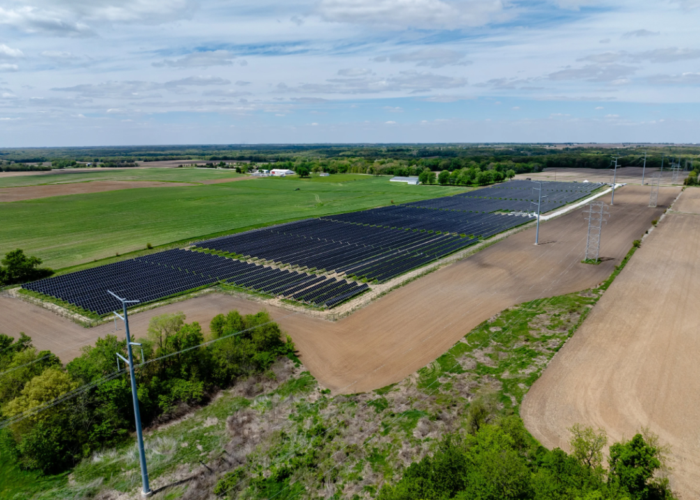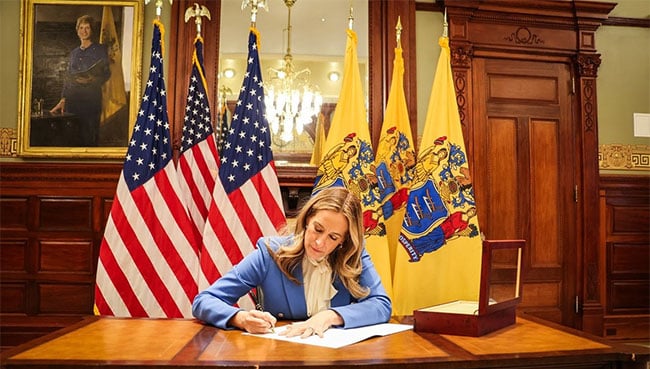
New Jersey will build “thousands of megawatts” of new solar PV and energy storage capacity, and introduce permitting reforms and electricity rate management, as per executive orders signed by newly inaugurated governor Mikie Sherrill.
On her first day in office, last week, governor Sherrill signed six executive orders, two of which related to the state’s grid operator and energy industries.
Try Premium for just $1
- Full premium access for the first month at only $1
- Converts to an annual rate after 30 days unless cancelled
- Cancel anytime during the trial period
Premium Benefits
- Expert industry analysis and interviews
- Digital access to PV Tech Power journal
- Exclusive event discounts
Or get the full Premium subscription right away
Or continue reading this article for free
The first order will offset future electricity price rises using existing funds, which Sherrill’s office attributed to “the regional grid operator PJM’s mismanagement”. The order will also “hold utilities accountable” for preventing rates from “continuing to climb at an unsustainable rate”, it said.
The order will empower the Board of Public Utilities (BPU), a New Jersey government office, to “pause or modify utility actions that could further increase bills” and direct it to review utility business models “to ensure alignment with delivering cost reductions to ratepayers”.
The second executive order declares a “State of Emergency” to develop “massive amounts of new power generation” and to reduce state-level permitting delays and utility-level interconnection bottlenecks.
The order will establish and accelerate programmes “to bring on thousands of megawatts of new solar and battery storage generation”, it says, and will direct state agencies to identify permit reforms to more rapidly deploy new energy projects.
The second order is aimed at reducing energy bills, and Sherrill positioned it in opposition to federal policies. It reads: “More power means lower costs—and we must move quickly as the federal government cuts support for energy production”.
Leah Meredith, mid-Atlantic state affairs director for the Solar Energy Industries Association (SEIA), commended the governor’s orders. “Governor Sherrill wasted no time taking action to fulfil the mandate New Jersey voters gave her to lower electricity prices through solar and storage,” she said.
“Executive Order 2 will help the state develop more solar energy and battery storage—the cheapest and fastest energy sources to build—by cutting costly red tape and addressing permitting and interconnection reform, as well as speeding up the Board of Public Utilities’ solicitation process for procuring solar and storage.
“Governor Sherrill’s actions will help unlock solar and storage’s grid reliability and affordability benefits for families and businesses across the Garden State.”
PJM controversy
The New Jersey Governor’s orders follow a controversial intervention by the federal government in utility operator PJM. Earlier this month, the Trump administration and a group of governors urged PJM to hold an “emergency” auction to build “more than US$15 billion of reliable baseload power generation”, among other measures, which it said would address high energy prices on the Regional Transmission Organisation’s (RTO) network. By “reliable baseload generation”, the decision means coal, natural gas and nuclear generation plants.
The “fact sheet” issued by the administration blamed the Biden administration’s “energy subtraction agenda” for high prices, and urged PJM to charge data centre operators for new power capacity built “on their behalf”. The region covered by PJM is expected to see massive demand increases from new data centres in the coming years.
Renewable energy advocates have said that fast-tracking fossil fuel projects would not lower rates for PJM customers and that the RTO’s slow permitting process had resulted in a backlog of clean energy projects unable to access the grid, which has pushed up prices. You can read coverage of this in full on our sister site, Energy-storage.news.
Sherill’s emergency orders seek to redress this by accelerating renewable energy projects before the potential federal intervention takes effect.