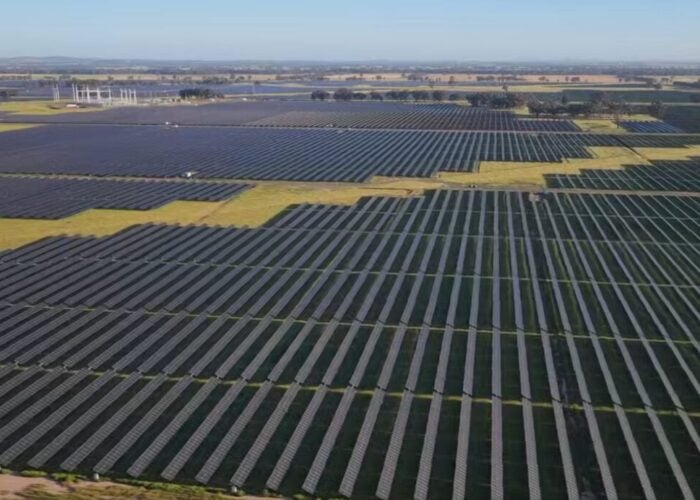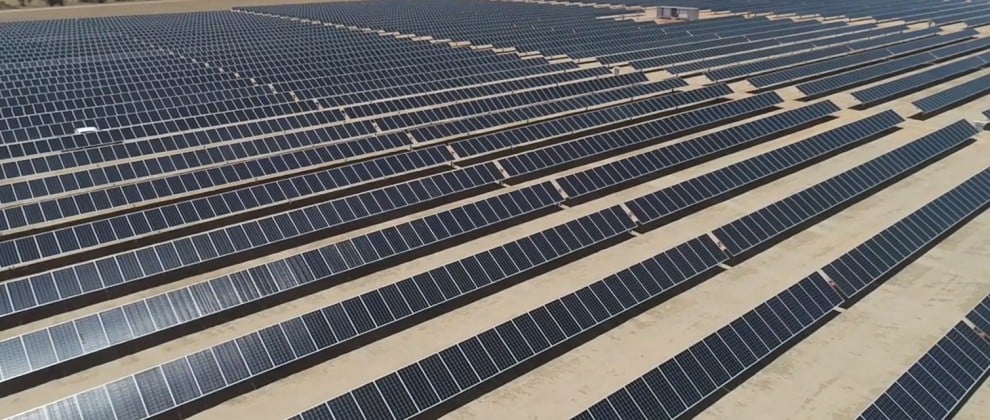
Australia’s utility-scale solar PV and wind assets collectively generated 5,420GWh in December 2025, a 19% increase from the previous year’s 4,551GWh, according to Rystad Energy.
This was driven by strong performance across key solar PV facilities in New South Wales, Queensland and Western Australia.
Try Premium for just $1
- Full premium access for the first month at only $1
- Converts to an annual rate after 30 days unless cancelled
- Cancel anytime during the trial period
Premium Benefits
- Expert industry analysis and interviews
- Digital access to PV Tech Power journal
- Exclusive event discounts
Or get the full Premium subscription right away
Or continue reading this article for free
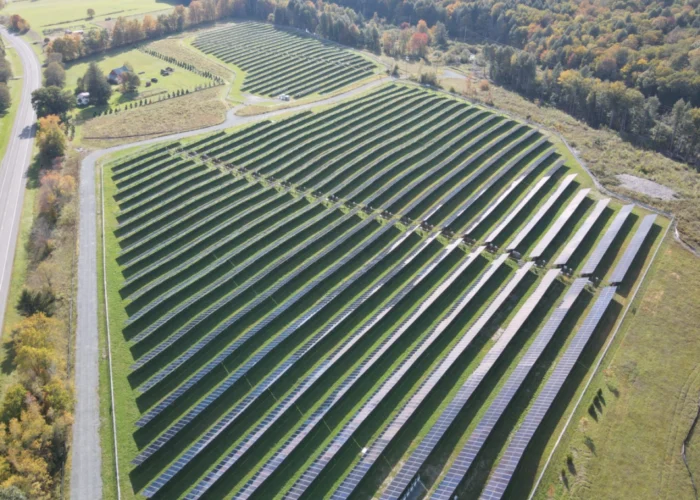
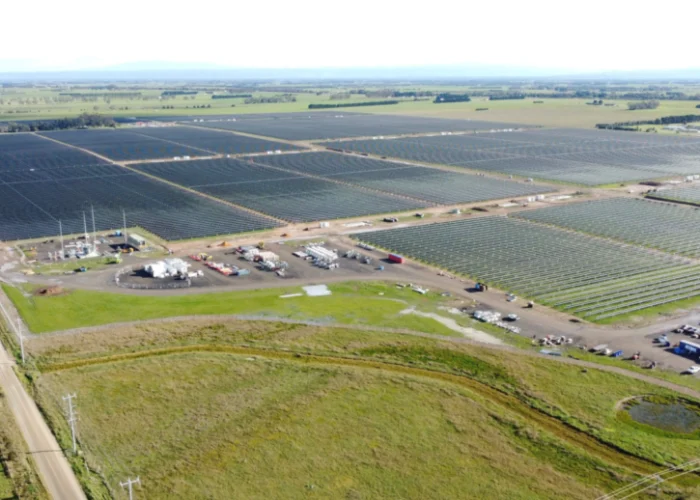
The best-performing utility-scale solar PV asset for December 2025, by AC capacity factor, was SUN Energy’s Merredin Solar Farm in Western Australia, which achieved an AC capacity factor of 45.2%.
Located in the Wheatbelt region, the 132MW facility has consistently ranked among the top solar performers in the country, benefiting from high solar irradiance and advanced tracking technology.
Merredin’s performance reflects Western Australia’s growing prominence in renewable energy, as highlighted in PV Tech’s coverage of the state’s renewable energy developments.

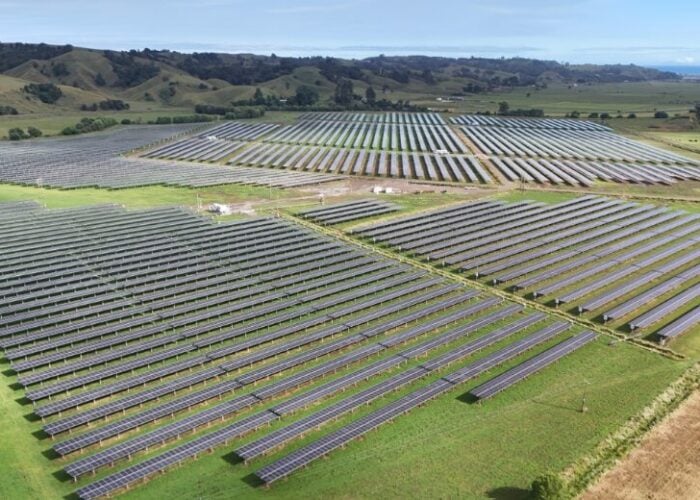
In New South Wales, Neoen’s Griffith Solar Farm recorded an AC capacity factor of 40.1%, securing its position as the second-best performing utility PV asset for the month.
The 36MW facility, located in the Riverina region, benefits from its strategic location and efficient design, which includes single-axis tracking systems to optimise energy capture.
Similarly, Fotowatio Renewable Ventures (FRV)’s Moree Solar Farm, also in New South Wales, achieved an AC capacity factor of 39.7%. The 56MW project integrates bi-facial solar modules, which enhance energy output by capturing reflected light, a feature increasingly adopted across Australia’s utility-scale solar projects.
At the state level, New South Wales led the nation in utility-scale solar and wind generation, producing 1,678GWh in December 2025.
Of this, 1,052MWh came from utility-scale solar PV, marking the first time any Australian state had surpassed 1TWh of monthly utility-scale solar generation. This milestone highlights the state’s leadership in renewable energy deployment, supported by favourable policies and robust infrastructure.
December 2025 also saw records set for renewable energy generation across Australia’s electricity markets.
The National Electricity Market (NEM) recorded its highest-ever monthly renewable energy generation at 9.5TWh, accounting for 50.4% of total generation. You can find out more via PV Tech’s recent NEM Data Spotlight article for December 2025 (Premium access).
Meanwhile, the Wholesale Electricity Market (WEM) in Western Australia achieved 1.07TWh of renewable energy generation, representing 53.9% of total output.
Utility-scale battery storage also played a pivotal role in December’s energy landscape, with discharging activity tripling year-over-year in both the NEM and WEM.
In the NEM, utility-scale battery energy storage systems (BESS) discharged 248GWh, up from 68GWh in December 2024, while the WEM saw discharges rise to 102GWh from 32GWh.
The month also marked declines in fossil fuel generation. Gas-fired generation fell to its fourth-lowest monthly level since January 2011, while coal generation recorded its eighth-lowest month in the same period.
However, the increasing penetration of renewables also brought challenges, including a record number of hours with negative electricity prices in the NEM.
South Australia experienced 351 hours of negative prices in December, accounting for 47% of the month, followed by Victoria with 290 hours (39%), Queensland with 189 hours (25%), and New South Wales with 159 hours (21%).
This phenomenon highlights the need for continued investment in grid flexibility and energy storage to manage surplus generation during periods of low demand.
The Energy Storage Summit Australia 2026 will be returning to Sydney on 18-19 March. To secure your tickets and learn more about the event, please visit the official website.