A comprehensive new study conducted by an international team of scientists and published in the journal Nature Energy sheds light on the various low-carbon technologies and how they differ when it comes to indirect greenhouse gas emissions in their life cycle.
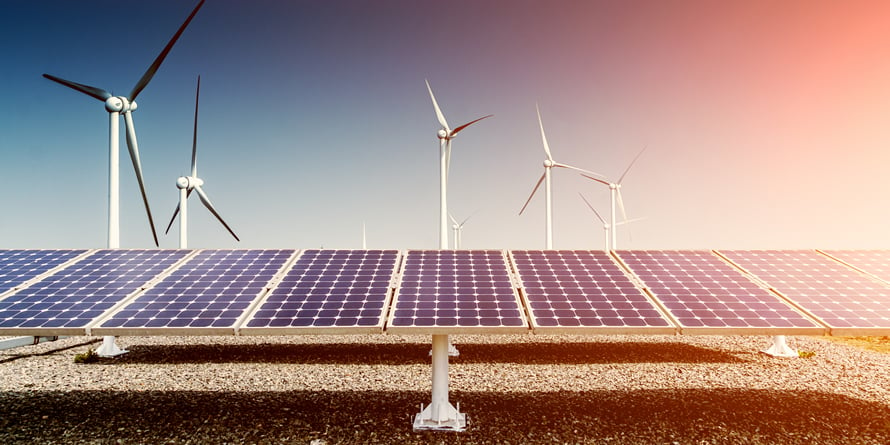
Despite what some critics have noted, the study revealed that both PV and wind energy are much more favorable when it comes to low life-cycle emissions. The study also notes that ramping up both solar and wind energy would generate only modest indirect greenhouse gas emissions – which would not not delay the transformation towards a climate-friendly power system.
Try Premium for just $1
- Full premium access for the first month at only $1
- Converts to an annual rate after 30 days unless cancelled
- Cancel anytime during the trial period
Premium Benefits
- Expert industry analysis and interviews
- Digital access to PV Tech Power journal
- Exclusive event discounts
Or get the full Premium subscription right away
Or continue reading this article for free
The study’s lead author Michaja Pehl noted: “Both fossil and non-fossil power technologies still come with a certain amount of greenhouse gas emissions within their life cycle – on the one hand because it needs energy to construct and operate them, on the other hand because of methane emissions, e.g. from coal and gas production.
“However, we found there are substantial differences across technologies regarding their greenhouse gas balance. Electricity production from biomass, coal, gas and hydropower for instance induces much higher indirect greenhouse gas emissions than nuclear electricity, or wind and solar-based power supply.”
The study was conducted by combining simulations based on integrated energy-economy-climate models that evaluate cost-optimal long-term strategies to meet climate targets with life-cycle assessment approaches.
Upon further analysis, the study found that fossil power plants equipped with carbon capture and sequestration (CCS) will be responsible for for life-cycle emissions of around 100 grams of CO2-equivalents per kWh of electricity produced. That is 10 times more than the around 10 grams of CO2-equivalents for wind and solar power.
Edgar Hertwich, an industrial ecologist from Yale University who co-authored the study, added: “When it comes to life cycle greenhouse gas emissions, wind and solar energy provide a much better greenhouse gas balance than fossil-based low carbon technologies, because they do not require additional energy for the production and transport of fuels, and the technologies themselves can be produced to a large extend with decarbonized electricity.”