Australia’s New South Wales (NSW) government will provide AU$225 million (US$161 million) in new funding to support domestic manufacturing of low-carbon products and renewable energy components.
The funding, released by Treasurer Daniel Mookhey, Energy Minister Penny Sharpe, and Minister for Domestic Manufacturing John Graham, forms part of the state’s Net Zero Manufacturing Initiative, which has opened for applications today (2 June).
Try Premium for just $1
- Full premium access for the first month at only $1
- Converts to an annual rate after 30 days unless cancelled
- Cancel anytime during the trial period
Premium Benefits
- Expert industry analysis and interviews
- Digital access to PV Tech Power journal
- Exclusive event discounts
Or get the full Premium subscription right away
Or continue reading this article for free
This targets commercial and construction-ready projects capable of scaling production, attracting private investment, and creating skilled jobs across regional NSW.
Eligible categories now encompass renewable energy components such as wind towers, solar modules, batteries, and transmission cables. They also include low-carbon products like blended cement, cross-laminated timber, and biofuels. Additionally, emerging clean technologies are represented, covering next-generation renewables, storage solutions and agricultural systems.
Grant recipients are required to match or exceed NSW government funding dollar-for-dollar, meaning the AU$225 million is expected to leverage at least AU$225 million in private investment.
The round is particularly targeted at regions such as the Hunter, which the government described as having the established skilled workforces and supply chains needed to grow the state’s low-carbon industrial base.
Solar manufacturing in focus
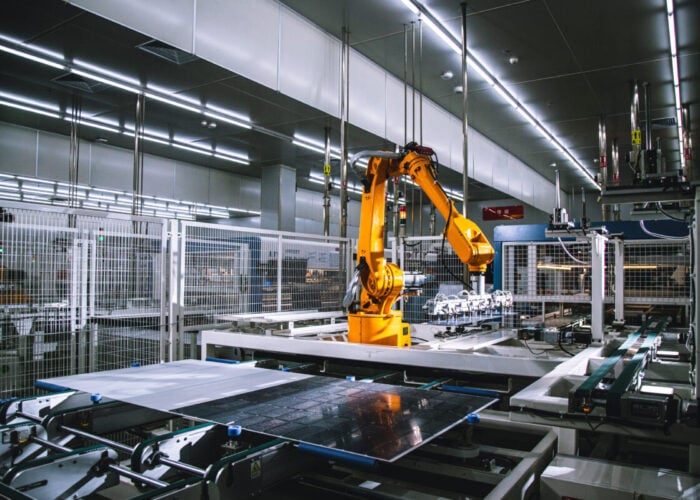
The announcement builds directly on the state’s existing commitment to the Hunter Valley Solar Foundry, a 500MW solar module manufacturing facility being developed by the Sunman Group at Black Hill in the Hunter Valley.
The facility has already received AU$20 million in NSW government support and is expected to create 300 jobs once operational. In December, ARENA committed up to AU$151 million in conditional funding for the project under the federal Solar Sunshot Program, which at the time of reporting, was the largest single commitment under the AU$1 billion initiative.
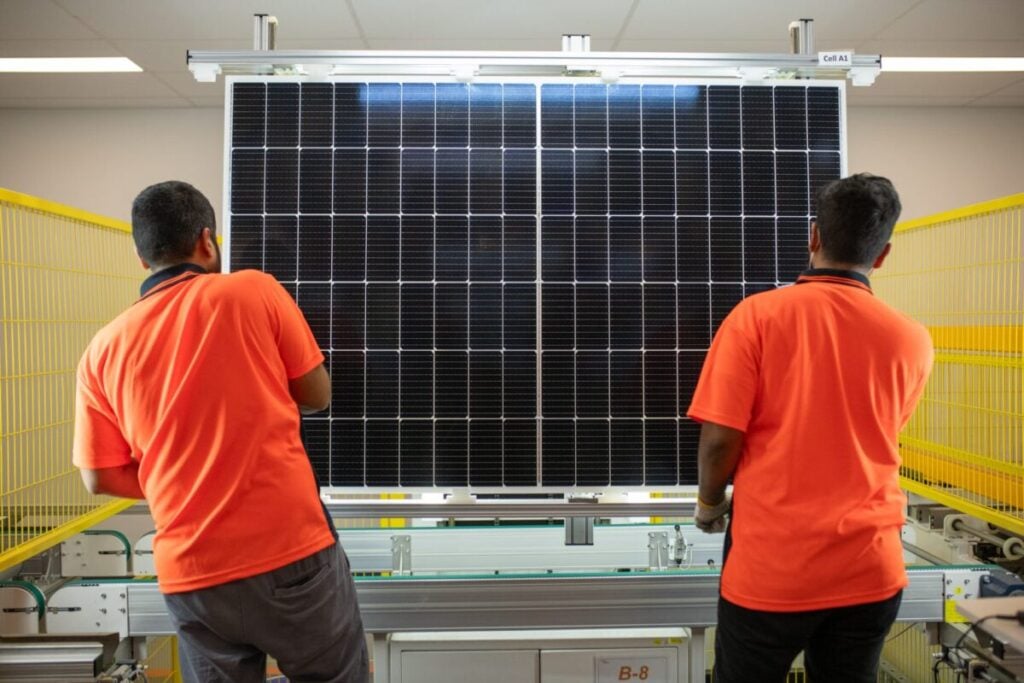
The facility will use Sunman’s lightweight solar technology and, once fully operational, will be the largest solar module manufacturer in Australia and the only one in NSW.
Construction is expected to begin in mid-2026, with initial production of 300MW per year before scaling to 500MW as new manufacturing lines are commissioned.
The Hunter Valley Solar Foundry sits within a national push to build domestic solar manufacturing capacity, which has accelerated considerably over the past 18 months.
The federal government’s Solar Sunshot Program, which aims to support Australian-made solar PV modules for both domestic and export markets, has backed a growing cohort of manufacturers.
As PV Tech reported in August last year, South Australia-based Tindo Solar received AU$34.5 million through the programme to scale its Mawson Lakes facility from 20MW to 180MW annual output, while ARENA simultaneously opened a AU$60 million ultra-low-cost solar R&D funding round targeting breakthroughs in cell efficiency and balance-of-systems innovation.
Tindo remains the only manufacturer of fully Australian-made solar modules currently in production. PV Tech Premium previously spoke with Tindo Solar’s CEO, Richard Petterson, about domestic module manufacturing capabilities in Australia.
The upstream supply chain is also drawing interest. Australia holds material potential to contribute to global polysilicon supply, with ARENA analysis suggesting the country could help fill a projected 350,000-tonne supply gap by 2040 by leveraging its quartz and energy resources.
The AU$225 million round builds on an earlier phase of the Net Zero Manufacturing Initiative, which backed more than 40 projects that generated approximately 1,000 jobs across NSW.
One of the projects already supported under the broader initiative is Green Timber Tech, which received AU$4.8 million to support the manufacturing of sustainable building materials.
The investment is framed as part of NSW’s efforts to meet its legislated emissions targets, which include a 70% reduction by 2035 and net zero by 2050.