Nextpower, the utility-solar solutions and technology provider that grew out of Nextracker, is suing GameChange Energy over alleged infringement of intellectual property relating to its tracker technology.
News of the lawsuit emerged as GameChange announced a consolidation of its solar tracker division (formerly GameChange Solar), transformer division (formerly GameChange BOS), electrical BOS (eBOS) division and remote asset monitoring offerings under the unified GameChange Energy brand.
Try Premium for just $1
- Full premium access for the first month at only $1
- Converts to an annual rate after 30 days unless cancelled
- Cancel anytime during the trial period
Premium Benefits
- Expert industry analysis and interviews
- Digital access to PV Tech Power journal
- Exclusive event discounts
Or get the full Premium subscription right away
Or continue reading this article for free
As GameChange announced its restructuring and rebranding, Nextpower said today it had filed a patent infringement lawsuit against GameChange Solar in the United States District Court for the District of Delaware.
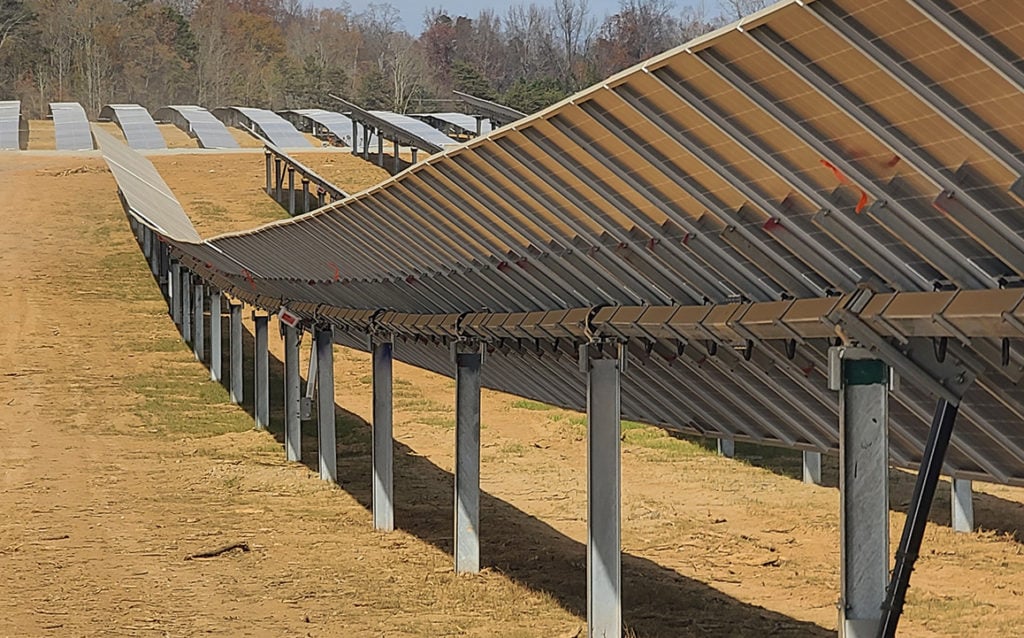
It said the lawsuit charges GameChange with infringing three patents related to the company’s proprietary self-powered solar tracker technology and TrueCapture energy management control system, based on GameChange’s sales of its Genius Tracker systems and associated software.
“Nextpower invests heavily in the development of our best-in-class solar tracker products, and we treat intellectual property very seriously,” said Dan Shugar, founder and CEO of Nextpower in a statement. “We respect legitimate competition, but we will vigorously defend our patent rights in all global markets in which we conduct business.”
Nextpower said it was seeking remedies available under US law, including injunctive relief and monetary damages.
Nextpower, the world’s largest tracker supplier, moved into eBOS, power conversion, automation, and, most recently, energy storage following a 2025 rebrand. Other tracker companies have since made similar moves to evolve into broader providers of PV power plant technologies and services, as explored in our quarterly journal PV Tech Power (subscription required).
While GameChange did not immediately respond to PV Tech for a comment on the Nextpower lawsuit, it gave further details of its own consolidation and rebranding, saying that the single identity would enable the company to serve developers, EPCs and utilities “seeking a more integrated approach to project delivery”.
“The GameChange Energy name tells the full story of what we offer now,” said Andrew Worden, founder of GameChange Energy. “Utility-scale projects are growing more complex, so developers need partners who can reduce risk and streamline installation for all project scales and types. Unifying our tracker, eBOS, asset monitoring, and transformer offerings under a single platform positions us to deliver integrated capabilities with the reliability, speed, and service our customers expect.”
“The biggest challenge we hear from customers is vendor coordination. Managing multiple suppliers across trackers, eBOS, monitoring, and transformers adds cost and time to every project,” added Phillip Vyhanek, CEO of GameChange Energy. “Consolidating under a single brand simplifies and speeds that process for our clients, maintaining our commitment to excellence, high-performance products and long-term customer relationships.”
Since the initial publication of this story, GameChange published a statement addressing the lawsuit, saying it “denies” the allegations made.
“GameChange Energy, a global energy infrastructure company, is aware of the lawsuit filed by Nextpower (Nasdaq: NXT) today alleging infringement of three patents,” said the company. “GameChange Energy denies the allegations in the complaint and intends to mount a full and vigorous defence.”
Clean energy ‘lawfare’
Commenting on Nextpower’s legal action against GameChange Energy, Andrew Docherty, partner and head of energy & environment at IP law firm Marks & Clerk, said the move mirrored the numerous patent disputes that have convulsed the increasingly competitive clean energy sector in recent years.
“While it would be inappropriate to comment on the merits of the lawsuit and the underlying allegations, this dispute appears to form part of a broader trend that is becoming increasingly visible across the clean-tech sector. As energy-transition technologies mature and markets become more competitive, intellectual property is playing a more prominent strategic role, and businesses are prepared to litigate to enforce their rights. What is particularly interesting in this case is the apparent breadth of the patents being asserted.
“The dispute appears to involve different layers of technology, which is consistent with the increasingly sophisticated IP strategies being adopted by clean-tech companies. Businesses are willing to invest not only in the protection of core hardware innovations, but also in system architecture, controls, software and operational functionality. The energy transition is not only creating competition for market share; it is also creating competition for ownership of innovation, and we are likely going to see more disputes of this nature as the sector continues to grow,” Docherty added.
This article has been updated to include GameChange’s statement on the lawsuit.