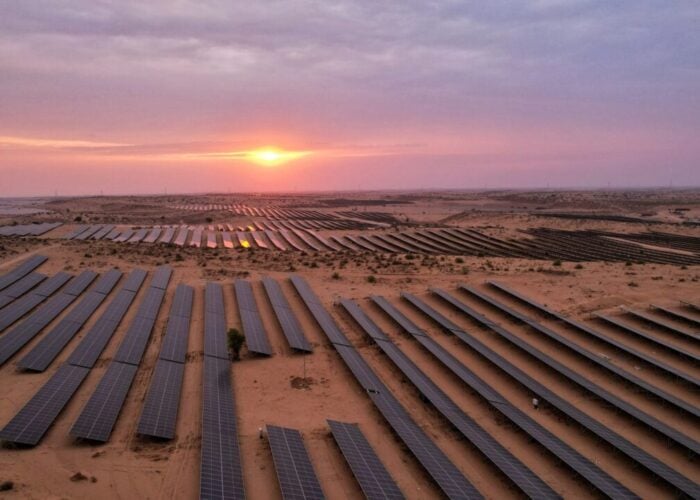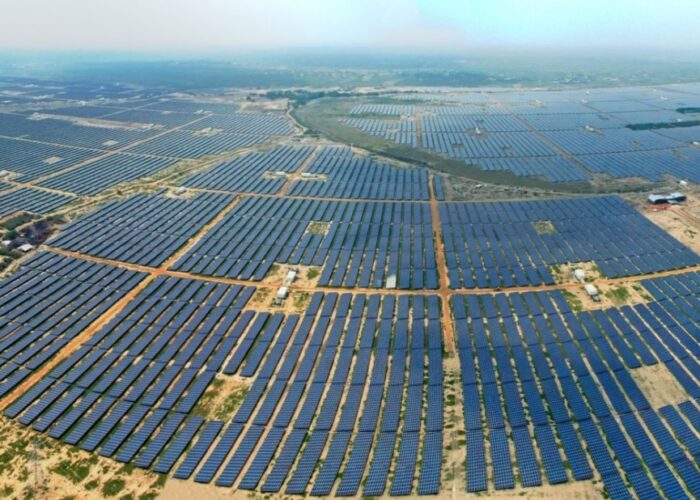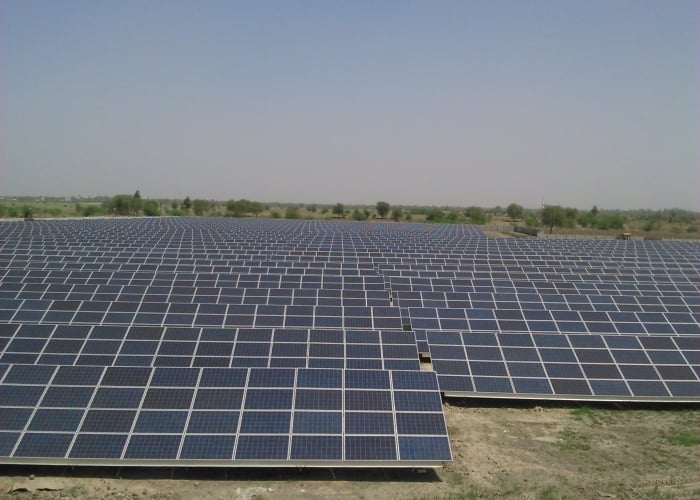
Indian solar tariffs have reached a paradigm shifting new low after the final reverse auction round for 750MW capacity in Madhya Pradesh followed through into a nail biting second day.
At the time of writing, the Rewa solar park auction is still ongoing with the winner yet to be announced, but it is known that the utility-scale tariffs have gone as low as INR 2.992/kWh (US$0.045).
Try Premium for just $1
- Full premium access for the first month at only $1
- Converts to an annual rate after 30 days unless cancelled
- Cancel anytime during the trial period
Premium Benefits
- Expert industry analysis and interviews
- Digital access to PV Tech Power journal
- Exclusive event discounts
Or get the full Premium subscription right away
Or continue reading this article for free
As the tariffs breached the US$5 cents mark for the first time ever in India and later went below 3 rupees, analysts announced that even thermal energy will now have trouble competing with these prices.
It is important to note that the tariffs in this case include an escalation of INR 0.05/kWh per annum for 15 years, but prices have plummeted to such an extent on this occasion that heads will be turned across India’s entire power system – not to mention the heads of solar advocates across the globe.
Rajnesh Trivedi, senior director, sustainable investment banking at Yes Bank, told PV Tech that there are several financial reasons for the bids being able to go so low.
Firstly, since the previous lowest utility-scale solar bid from Finnish firm Fortum at INR 4.34/kWh 13 months ago, the loans tenor has gone up, meaning that banks today can give loans up to 19 years.
Secondly, interest rates have fallen further over the last 18 months to around 9.5%.
Thirdly, as has been well documented, module prices have decline 28-30% during this period, although there has been a slight correction in module prices of late.
Other reasons unique to the Rewa project include an 18-month development period, so developers can put in advance orders for modules and bank on module prices decreasing further in the interim period.
Trivedi added: “There is a guarantee which is available from Solar Energy Corporation of India (SECI), which basically means that the risk is totally protected. Secondly, there is a further upside in terms of transmission – also for evacuation – if there are any issues; the government is going to give you a protection.”
“All these bids are happening on certain calculations, which are clearly demonstrated in the market […], but going below 3.50 rupees is surely a price which nobody had anticipated.”
Jasmeet Khurana, associate director consulting at Bridge to India noted solar’s impact on other sources of energy on Twitter. PV Tech will feature a detailed analysis of the new lows from Khurana in the coming days:
Today's #solar bid in Madhya Pradesh to put India's coal, gas, wind and nuclear power sector on notice! @PiyushGoyal
— Jasmeet Khurana (@jasmeetkhurana) February 9, 2017
The first round of bidding on Wednesday had already set the tone for breaking records, with several players Sembcorp, Softbank and Solenergi putting in bids that were around the same levels that analysts had forecast to be the final prices. Meanwhile a total of 18 companies were still in the running, so it was inevitable that prices would go even lower in the final round.
Tim Buckley, director of energy finance studies, Australasia, Institute of Energy Economics and Financial Analysis (IEEFA) told PV Tech: “This is transformational and it’s a bit like the Fortum news a year ago. At the time everyone [doubted] it and said look, INR 4.34/kWh can’t be replicated; it’s not commercial; it’s not viable; it won’t be repeated.”
More to follow on this story.