Ahead of the forthcoming PV ModuleTech 2018 event in Penang, Malaysia on 23-24 October 2018, PV-Tech took the time to catch up with Pepijn Veling of Eternal Sun Group.
A key partner of the PV ModuleTech 2018 event, Eternal Sun Group includes both Eternal Sun (focusing on climate controlled steady-state light sources) and Spire Solar (focused on long-pulse simulators since 1980).
Try Premium for just $1
- Full premium access for the first month at only $1
- Converts to an annual rate after 30 days unless cancelled
- Cancel anytime during the trial period
Premium Benefits
- Expert industry analysis and interviews
- Digital access to PV Tech Power journal
- Exclusive event discounts
Or get the full Premium subscription right away
Or continue reading this article for free
Which market needs are you trying to address at Eternal Sun Group?
“We see an increasing need from manufacturers, investors, EPCs and insurance companies to better understand the real performance of solar modules at different moments in time; end of manufacturing line, ownership transfer, installation and after the first years in the field.
Especially with the current oversupply and 20-25% drop in module prices due to the Chinese 531 policy, opportunities for downstream solar investments are massive. At the same time, lower module prices lead to fear for lower PV module quality among PV module buyers, who tell us they do not fully understand these new risks.
Investor confidence and risk mitigation are two of the biggest factors in allowing the growth of solar to continue. The winners in our industry will have the ability to forecast performance and degradation with smaller safety margins.”
How does Eternal Sun Spire address these concerns?
“Our mission is to contribute to the development and growth of the solar industry by enabling the highest degree of measurement control and certainty. We do this by providing high-end solar testing advice, technology & services.
Over the years we have developed testing tools for new PV module technologies (requiring broader spectrum and longer pulse), understanding energy yield in different regions and degradation effects like LID, LeTID but also regeneration; so, for testing new technologies, such as Perovskites, that require stabilization before performance testing. Our customers tell us that technology understanding and extremely accurate control of all variables (GR&R) is the only way to do this correctly.”
What were the main changes impacting business operations during 2017 and so far during 2018?
“After concluding the integration of the two companies in 2016, we spend most of 2017 developing three new products for 1) real long pulse performance testing (beyond 200ms), 2) energy rating and 3) LID of new technologies.
In 2018, the China 531 policy obviously puts the manufacturing market in China under huge pressure, however we are benefiting from our broad portfolio and global spread thus limiting the impact of China-531 on our strategic planning.
In fact, EPC customers tells us they fear module quality will drop along with the prices and therefore request us to support them, leading to new opportunities in our testing and certification market. It is for that reason that we opened a test lab ourselves in the harbor of Rotterdam in collaboration with Odin warehousing. 40% of all imported PV modules in Europe go through this specific location. EPC companies ask us to do a proper quality assessment before module ownership transfers to them.”
What are the impacts of new module technologies coming on the market?
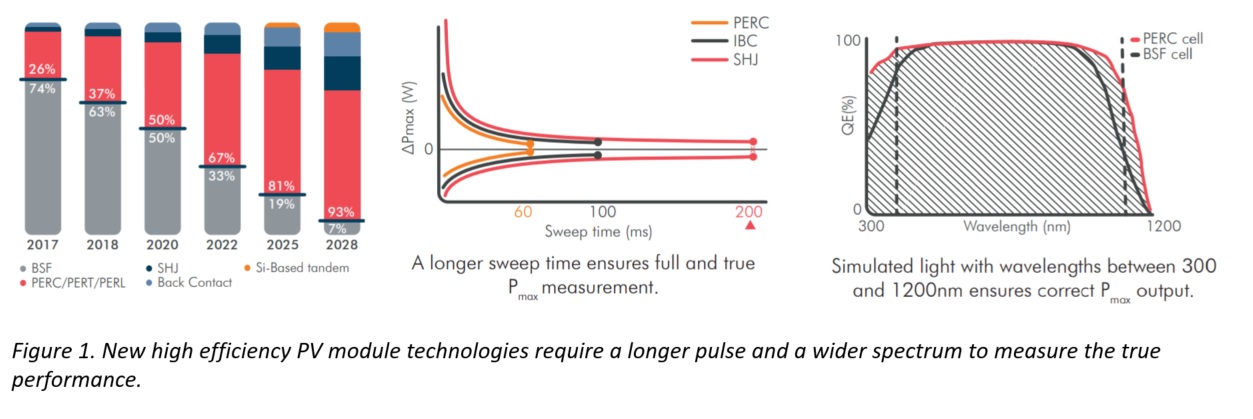
“The whole industry agrees that new PV cell technologies require a longer pulse and a wider spectrum for accurate and real performance measurements. The new IEC 60904-9 Ed3 norm for sun simulators, of which committee we are member of, will include such new requirements. Leading institutes and manufacturers have recently decided for our single long pulse technology, because it allows them to do a real measurement of even the highest efficiency technologies.
Other simulator technologies like short pulsed xenon or LED (limited spectrum) are forced to use software or offset corrections. Such corrections are difficult to set and in the end lead to undesired inaccuracies.”
ESG has been very vocal on LID in recent communication. Why?
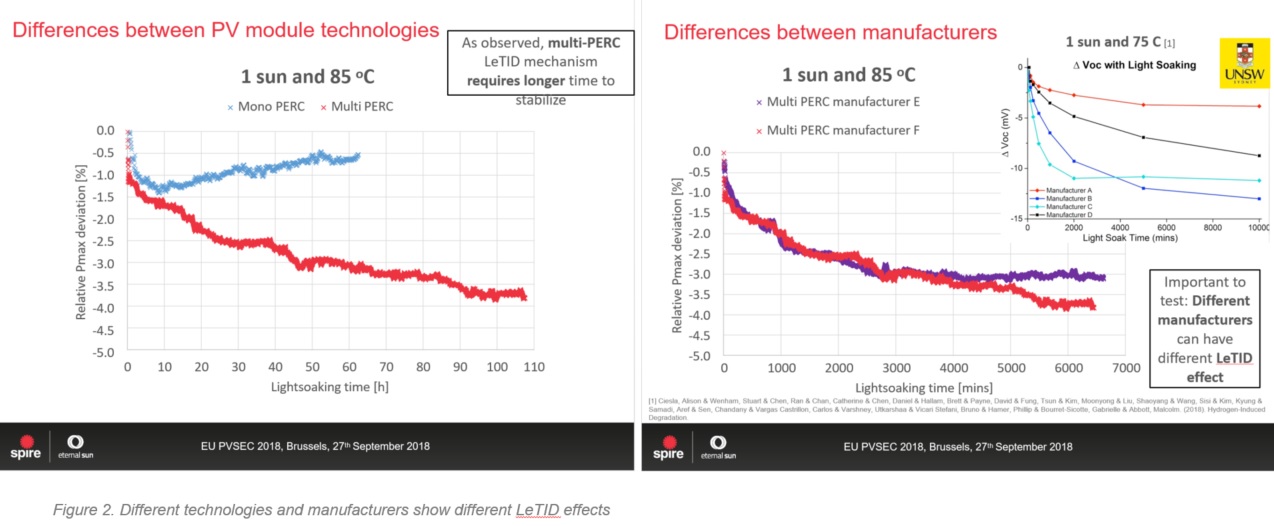
“PV module buyers tell us they have difficulties understanding manufacturer LID claims while manufactures need more data to prove their claims. We at ESG agree that LID is a difficult topic.
It is about being able to accurately understand degradation, regeneration and elevated temperature degradation effects of new technologies. As mentioned earlier, we believe that those companies understanding this will be the most successful in the future. We see that leading institutes and manufacturers are embracing our technical solutions, whereas others are awaiting IEC 61215 LeTID norm developments for guidance or rely on alternative (less accurate) solutions.”
What are you looking forward to learning at PV ModuleTech 2018?
“For us, such conferences are a great platform to challenge our solutions against real customer needs. We highly appreciate the broad customer range; both upstream and downstream key players were well represented last year. Understanding the needs of the whole value chain is crucial for this industry to bloom.”