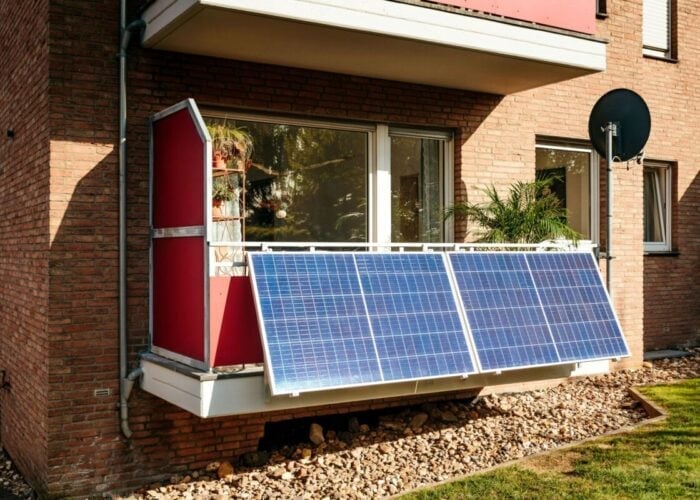
As per the modifications to the German Renewable Energy Act last week, effective April 1st, 2012, new feed-in tariff payments for rooftop PV plants smaller than 10kW will be €0.195/kWh (USD$0.261/kWh). The rates for rooftop PV up to 1MW will be €0.165/kWh (USD$0.221/kWh) and rates for ground-mounted and rooftop PV of 1-10MW in size will be €0.135/kWh (USD$0.180/kWh).
This legislation, borne from a compromise between the ruling Christian Democratic Party and the Liberal Party, ends FiT eligibility for PV plants over 10MW a grace period has been set up for developers to complete large PV plants. The government has also stated that only 80% of the electricity produced by rooftop PV plants below 10kW will qualify for FiT payments and only 90% of the electricity produced by plants 10kW to 1MW.
Try Premium for just $1
- Full premium access for the first month at only $1
- Converts to an annual rate after 30 days unless cancelled
- Cancel anytime during the trial period
Premium Benefits
- Expert industry analysis and interviews
- Digital access to PV Tech Power journal
- Exclusive event discounts
Or get the full Premium subscription right away
Or continue reading this article for free
Predictions from last week were also confirmed – a monthly degression to the FiT has been set depending upon the amount of PV installed annually, ranging from 0% to a maximum of 2.8% if 7.5 GW is installed, with a maximum annual degression of 29%.
Unsurprisingly, the government has praised the cuts:
“The history of photovoltaics will continue,” stated environment minister Norbert Roettgen (CDU). “We want the Renewable Energy Act to become a market law.”
Both CDU and FDP praised the cuts, with Dr. Maria Flachsbarth of the CDU arguing that the EEG is not a tool for risking or saving jobs. The Liberals stated that the cuts were overdue and that returns for owners installing PV plants remain attractive. Thuringia's Federal Prime Minister Matthias Machnig (SPD) warned the Bundestag that 30-40% of industrial jobs in the PV sector are at risk due to the cuts.
He also called for a “local content” clause that would require that a certain percentage of participating PV systems be produced in Germany, similar to the policy in the Canadian province of Ontario.