NexWafe raises €6 million to produce customer test wafers

March 7, 2016
Facebook
Twitter
LinkedIn
Reddit
Email
The funds were said to be used for the production of monocrystalline-based solar wafers using its high-temperature APCVD multi-chamber reactor technology that are required for customer evaluations ahead of potential wafer orders and commercialisation.

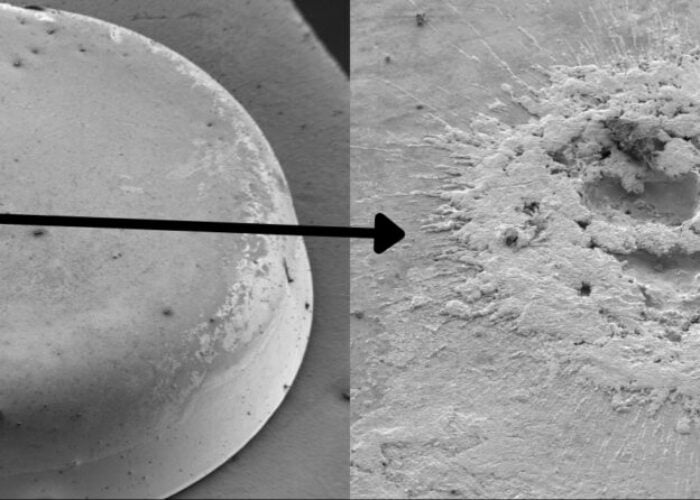
Novel epitaxial wafer technology start-up NexWafe a spin-off from Fraunhofer ISE has raised €6 million in Series A funding from Swiss-based Private Equity firm Lynwood (Schweiz) AG.

The funds were said to be used for the production of monocrystalline-based solar wafers using its high-temperature APCVD multi-chamber reactor technology that are required for customer evaluations ahead of potential wafer orders and commercialisation. 

This article requires Premium SubscriptionBasic (FREE) Subscription

Try Premium for just $1

  • Full premium access for the first month at only $1
  • Converts to an annual rate after 30 days unless cancelled
  • Cancel anytime during the trial period

Premium Benefits

  • Expert industry analysis and interviews
  • Digital access to PV Tech Power journal
  • Exclusive event discounts

Or get the full Premium subscription right away

Or continue reading this article for free

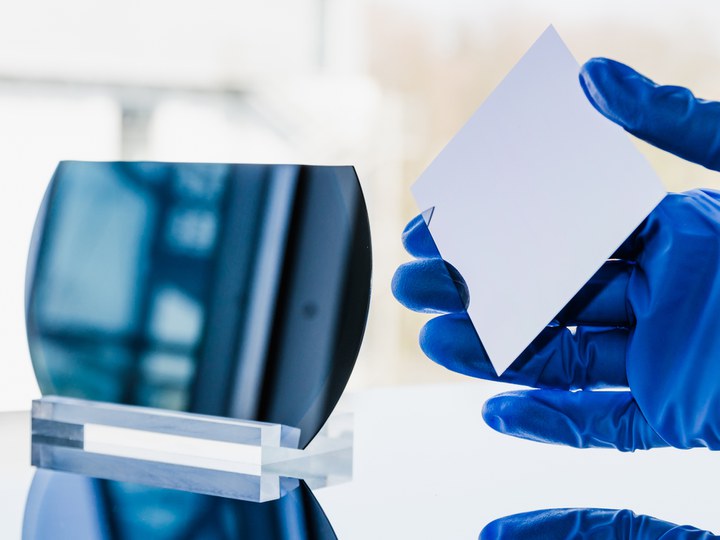
The NexWafe epi-wafer is claimed to be able to achieve 20% plus cell conversion efficiencies at production costs lower than conventional mono wafer production cost levels. 

“NexWafe’s technology will be instrumental in the silicon wafer business serving the PV industry which is continuously searching for new ways to cut overall cost of high efficiency Silicon PV modules,” said Marina Groenberg, CEO of Lynwood. “With its EpiWafer technology the NexWafe team will implement a disruptive manufacturing process that will enable to drastically reduce the cost to manufacture high efficiency Silicon wafers.” 
Read Next

December 4, 2025
High power prices and increased energy storage usage have led to a sharp increase in self-consumption of solar power in Germany since 2022, according to data from the Fraunhofer Institute for Solar Energy Systems (ISE).
December 3, 2025
German research institute Fraunhofer ISE has launched a project to explore how medium-voltage technology can make material-intensive solar components more efficient and cost-effective.
Premium
June 18, 2025
Aesolar and Fraunhofer CSP are developing segmented solar modules optimised for rooftops with partial shading.
Premium
May 27, 2025
Inverters are critical to PV systems but are often over-specified due to inadequate data on which materials and designs optimise performance.
December 30, 2024
The US general election and its aftermath, along with struggles from Western inverter manufacturers have dominated Q4 news in 2024.
December 18, 2024
The company uses direct “gas-to-wafer” epitaxial technology to produce its solar wafers which achieved 24.4% efficiency on HJT cells.

Upcoming Events

Solar Media Events
February 3, 2026
London, UK
Solar Media Events
March 24, 2026
Dallas, Texas
Solar Media Events
April 15, 2026
Milan, Italy
Solar Media Events
June 16, 2026
Napa, USA
Solar Media Events
November 24, 2026
Warsaw, Poland