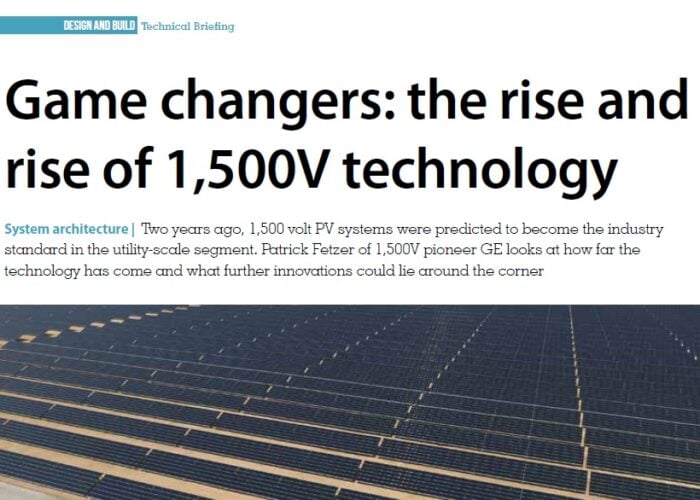
Two years ago, 1,500 volt PV systems were predicted to become the industry
standard in the utility-scale segment. Patrick Fetzer of 1,500V pioneer GE looks at how far the
technology has come and what further innovations could lie around the corner
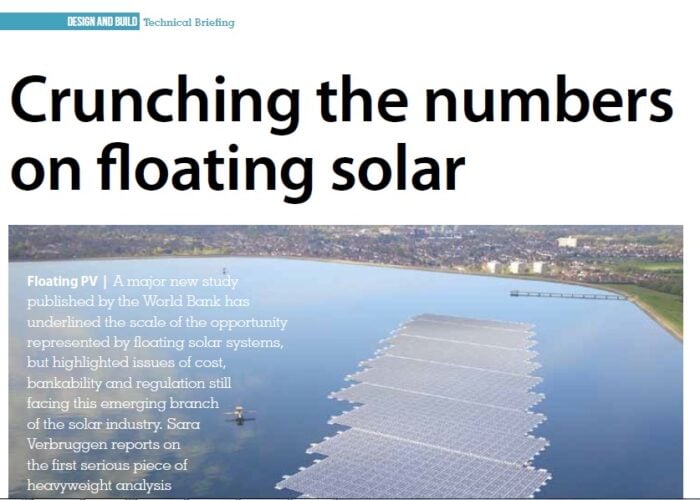
A major new study
published by the World Bank has
underlined the scale of the opportunity
represented by floating solar systems,
but highlighted issues of cost,
bankability and regulation still
facing this emerging branch
of the solar industry. Sara
Verbruggen reports on
the first serious piece of
heavyweight analysis
of the prospects for
floating solar
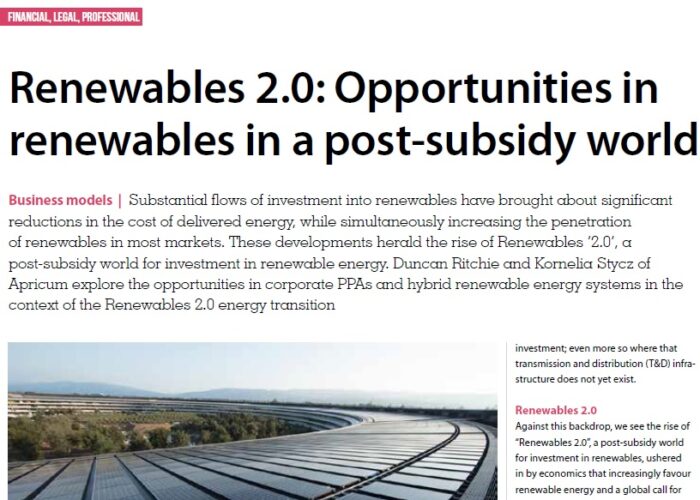
Substantial flows of investment into renewables have brought about significant
reductions in the cost of delivered energy, while simultaneously increasing the penetration
of renewables in most markets. These developments herald the rise of Renewables ‘2.0’, a
post-subsidy world for investment in renewable energy. Duncan Ritchie and Kornelia Stycz of
Apricum explore the opportunities in corporate PPAs and hybrid renewable energy systems in the
context of the Renewables 2.0 energy transition
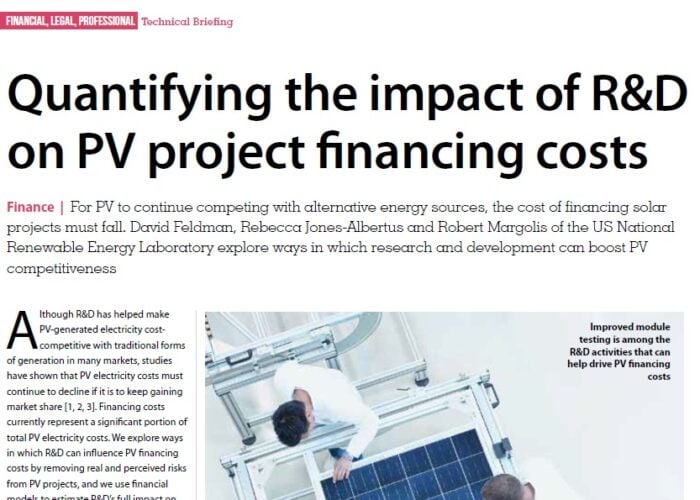
For PV to continue competing with alternative energy sources, the cost of financing solar
projects must fall. David Feldman, Rebecca Jones-Albertus and Robert Margolis of the US National
Renewable Energy Laboratory explore ways in which research and development can boost PV
competitiveness
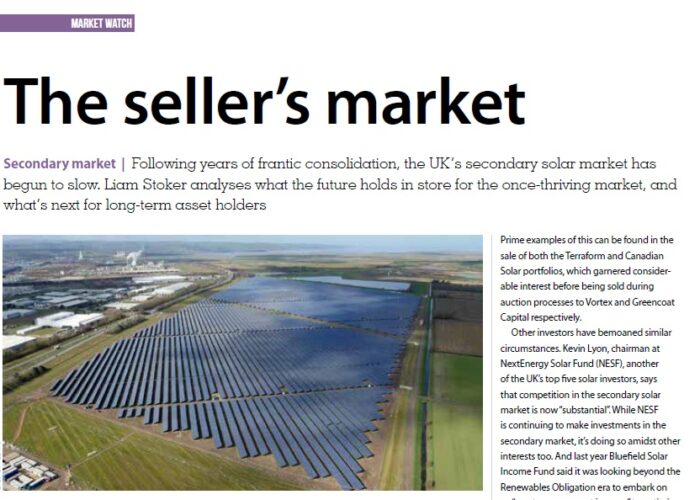
Following years of frantic consolidation, the UK’s secondary solar market has
begun to slow. Liam Stoker analyses what the future holds in store for the once-thriving market, and
what’s next for long-term asset holders
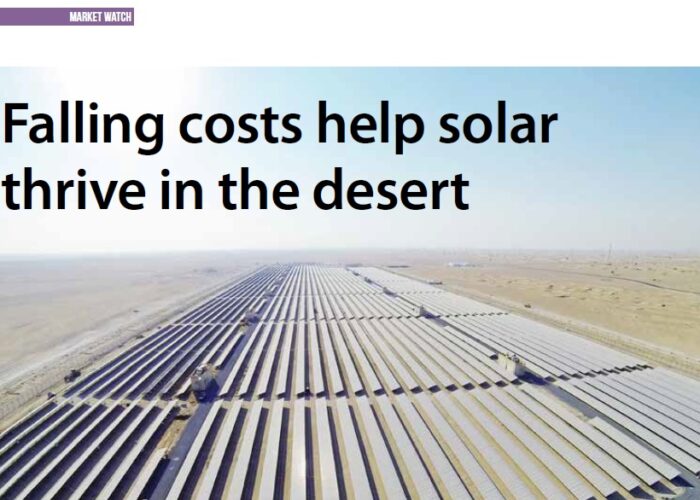
Solar in the Middle East and North Africa continues to flourish, with utility projects leading
the way. As Paul Mansouri and Angela Croker of Norton Rose Fulbright write, the development of
battery storage technology and a growing interest among large corporates in solar as an energy
source will help the market to continue growing
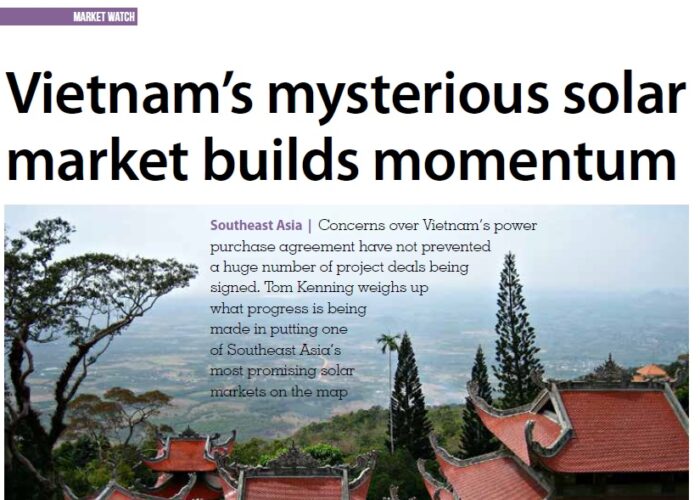
Concerns over Vietnam’s power
purchase agreement have not prevented
a huge number of project deals being
signed. Tom Kenning weighs up
what progress is being
made in putting one
of Southeast Asia’s
most promising solar
markets on the map
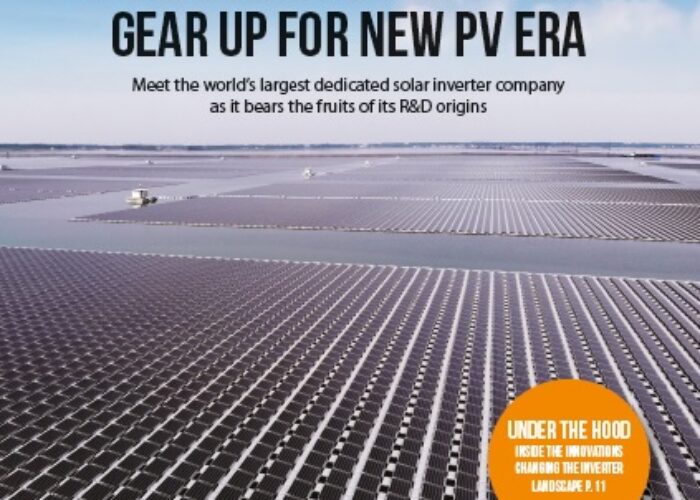
Meet the world’s largest dedicated solar inverter company as it bears the fruits of its R&D origins.
In this special collaboration between PV Tech and Sungrow, we’ll investigate the company’s roots, its technology, its stable finances and its all-encompassing product line up covering every solar application.
We’ll take a deep dive, no pun intended, into what many are calling the third pillar of PV, floating solar. Mark Osborne will assess the market for floating solar and where Sungrow’s place in this emerging sector lies in the wake of its research and development efforts.
Together with Sungrow, we’ll also demonstrate the company’s product selection philosophy and meet some of the key customers already putting Sungrow at the heart of their work. We’ll look at how Sungrow is matching the market’s requirements, be it for central or string inverters or even the inclusion of energy storage.
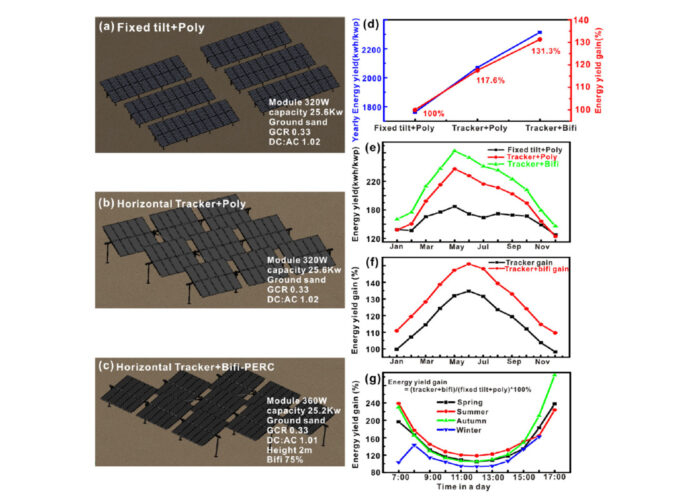
In an exclusive preview of a forthcoming paper in PV Tech Power, LONGi Solar and Huawei present their analysis from a bifacial project in the Middle East.
Bifacial PV promises a significant reduction in the levelized cost of electricity (LCOE) for PV systems, which, compared with efficiency improvements at the cell level, is still achievable with comparatively moderate effort. Almost all major PV module suppliers have bifacial modules in their product portfolios or have announced production. This paper gives an overview of the currently available bifacial modules and cell technologies and the performance of these modules. Special attention is given to the cells and the layout of the modules, including light trapping and interconnection technologies, the encapsulation materials and the adapted mounting solutions. Finally, an outlook is given on the basis of the compiled information.