Across the PV industry, a steady trend of field failure issues is being attributed to workmanship and incorrect assembly of cable connectors.
In the field, crews generally mean well and take pride in their work. Yet many are operating with outdated training or a lack of knowledge about the nuanced yet critical practices that can be the difference between built-in failures and assemblies that can outlive the useful life of the system.
Try Premium for just $1
- Full premium access for the first month at only $1
- Converts to an annual rate after 30 days unless cancelled
- Cancel anytime during the trial period
Premium Benefits
- Expert industry analysis and interviews
- Digital access to PV Tech Power journal
- Exclusive event discounts
Or get the full Premium subscription right away
Or continue reading this article for free
Those habits, passed down from one crew to the next, can quietly introduce flaws that manifest later as system underperformance, costly rework, or even catastrophic failures that can end in fire damage or complete system loss.
Solar installers don’t lack good intentions; they often lack good information.
What we still get wrong
In training sessions we’ve held across the US, certain themes appear again and again.
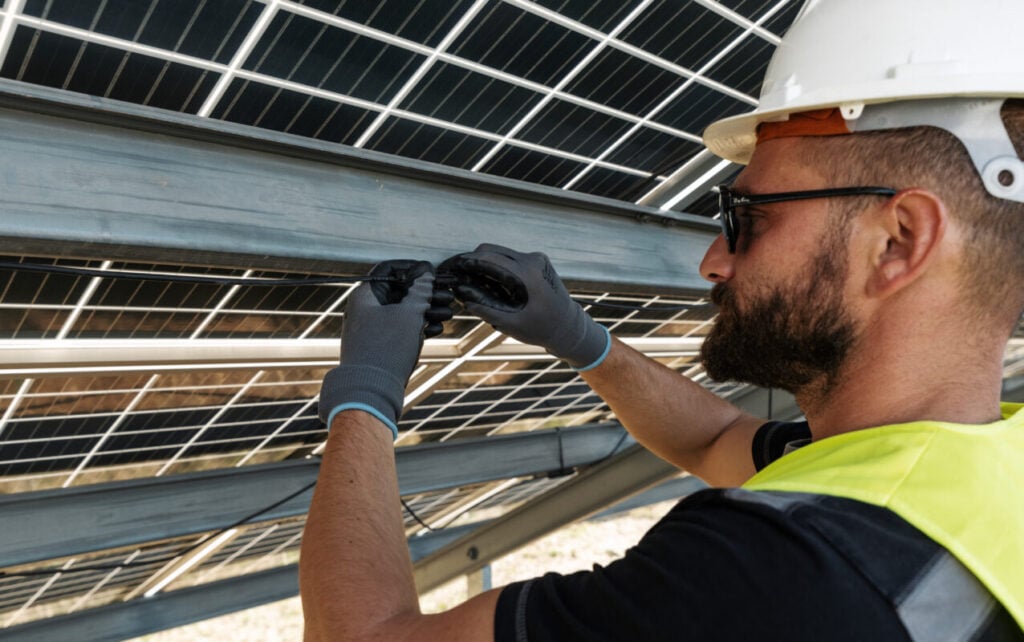
One regards crimping. Most installers do not understand how important and consequential proper conductor crimping is. The appropriate crimping tool, in proper working order, used to crimp the right combination of connector and cable, ensures that the assembly made in the field replicates what was tested and validated both by the manufacturer and the certification agency (such as Underwriters Laboratory, UL).
PV connectors operate under the harshest conditions imaginable for several decades, and an improper crimp is almost a guarantee for early failure and all the issues that brings with it.
Another is proper cable seal tightening. All cable seals (connectors, cable glands, etc.) that rely on a gland nut to control the sealing function have a prescribed tightening torque to ensure the proper seal is created. Installers sometimes “snug up” fittings by hand tightening only, aiming for a few visible threads, when each connector actually requires a precise torque setting.
Too loose, and moisture seeps in; too tight, and the mechanical stresses seen by the insulator can cause stress cracks or deformation that affect safety and performance. A product-specific, pre-calibrated torque wrench is one simple solution to this issue, but across the industry, many connector cable seals are assembled using a “best guess” method for judging how tight they should be.
A third issue involves selecting the proper product and following the correct assembly steps. It’s crucial to recognise that cable connectors are not just components; they are part of a system that comprises a specific product, combined with a specific type and size range of cables, assembled with specifically prescribed tools, according to a well-defined set of assembly steps and practices.
It’s like how your car’s performance and reliability are not just defined by a bunch of parts on a shelf at the factory — they are critically affected by how and in what order those parts were assembled, and how much care and attention were used while doing it.
The problem beneath the surface
Connector reliability doesn’t end at assembly. It also depends on where and how the connector is installed within the system.
When the first connector standards were written decades ago, the industry still relied mainly on fixed-tilt arrays. Those specifications and product certifications never contemplated moving tracker systems. As a result, many legacy practices that were good enough on static structures create problems on systems that move through a mechanical cycle every single day. This can equate to tens of thousands of cycles throughout the system’s lifetime.
On today’s single-axis trackers, some cables in the system undergo flexing and movement every time the array moves. This motion introduces “dynamic loading” — subtle, repetitive bending that can impart significant stresses on cables and connectors if proper practices are not followed.
In some systems, connectors end up positioned right in the middle of that movement zone, or with one connector constrained to the tracker frame and the other free to be affected by the tracker system movement. Each mechanical movement thereby equals stress cycling of cable seals and crimp connections, and the creation of micro-movements between the metal contacts known as “fretting”.
Fretting is a well-known phenomenon that damages and degrades the electrical connection between plug and socket. These failure modes are brand-agnostic: any connector designed and certified according to the standards for static/fixed installation will suffer and fail under these conditions.
Electrical codes already require flexible, multi-strand conductors in these areas. For example, the National Electrical Code calls for fine-strand cable — at least 49 strands for 8-AWG conductors — to accommodate this dynamic flexing. Yet that alone isn’t enough.
Good cable management closes that gap. Keeping connectors out of moving zones and securing both sides of the connector pair to fixed structures can make the difference between a system that runs for decades and one that needs repairs after a few seasons. A range of manufacturers now provide tracker-mounted clips and torque-tube attachment systems to help achieve this, offering practical options regardless of the connector brand used.
How misinformation spreads
Many technicians learn connector practices informally. A lead installer might show a new hire “how we’ve always done it”, with no one realising that procedure changed years ago. The result is a patchwork of outdated techniques circulating among well-meaning crews.
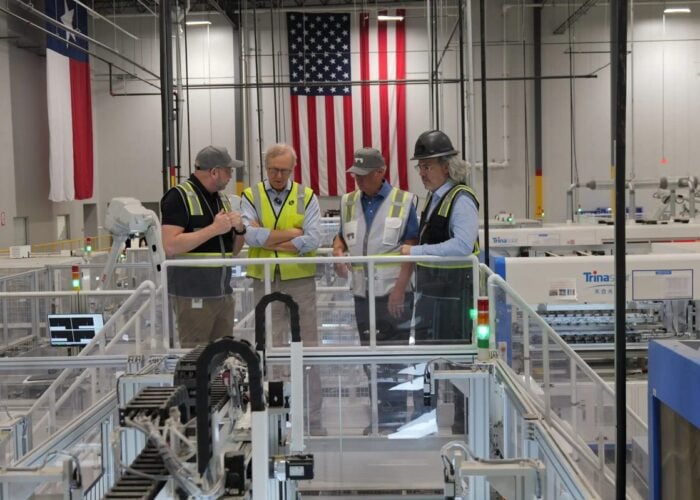
That’s why education matters just as much as engineering and design. In training, we often meet experienced journeymen electricians who are surprised to learn the correct torquing requirements, or how to create and inspect a proper crimp. One recently told us, “I’ve been doing this for 20 years, and no one ever explained why this mattered.” When people understand the why, they take greater care with the how. Effective field education isn’t just a list of steps — it connects each one to its purpose, effects of good versus bad, and how each step is uniquely important. We guide them through following all of those steps via hands-on training, to ingrain what they have learned as new habits, and practice.
Building a culture of quality
Quality in solar construction doesn’t come only from technology. It comes from culture — the shared expectation that every connection matters.
Field teams face pressure to finish projects quickly, but the extra time and the care taken to follow the correct process with the right tools are the cheapest insurance a project can buy. As portfolios expand, the cost of repeated “small” errors scales with them.
A disciplined installation culture saves money, protects safety, and upholds the industry’s reputation for reliability. Our equipment already meets stringent standards; but it can only be as effective and reliable as the workmanship used to put them into service.
As solar grows into a global energy backbone, connector reliability becomes a shared responsibility among designers, manufacturers, and installers. Design improvements will continue, but the immediate gains come from the field — from how each worker handles, assembles, and protects these small yet critical components.
Training remains the most effective reliability tool we have. Every class, every toolbox talk, and every reminder that “good enough” isn’t good enough helps ensure that the energy flowing through and protected by our connectors keeps powering projects safely for decades to come.
Brian Mills is head of renewable energy North America and Grayson Maurer is head of renewable energy services North America for Stäubli.