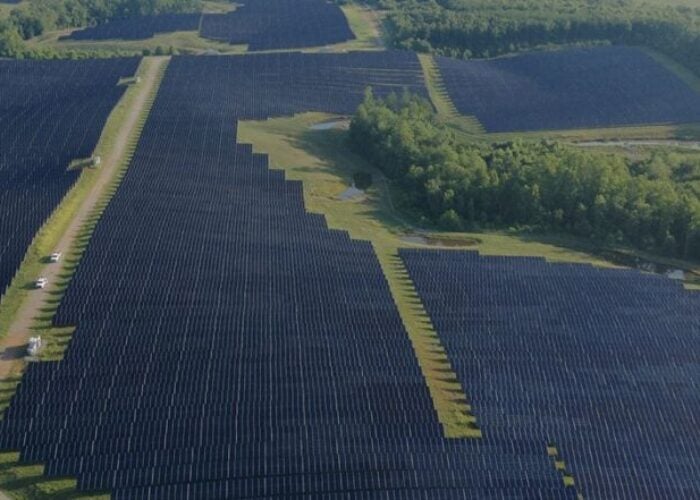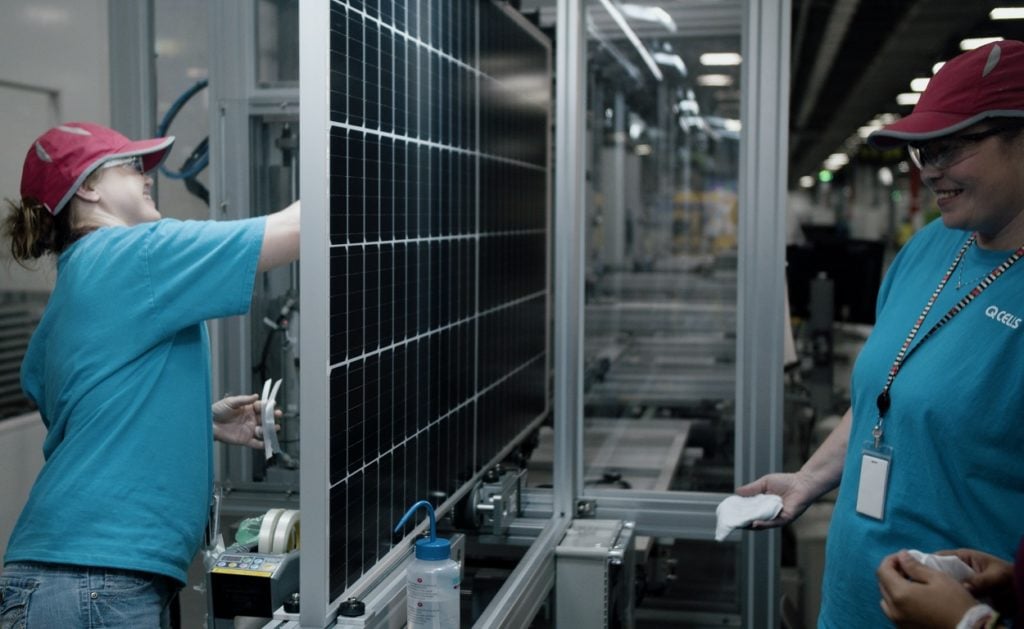
Vertically integrated PV manufacturer Qcells has passed all evaluation categories in module reliability tests conducted by Kiwa PVEL and the Renewable Energy Test Center (RETC) for US-made solar modules.
According to the company, it is the first solar PV manufacturer to achieve this accomplishment and did so with its domestically produced modules.
Try Premium for just $1
- Full premium access for the first month at only $1
- Converts to an annual rate after 30 days unless cancelled
- Cancel anytime during the trial period
Premium Benefits
- Expert industry analysis and interviews
- Digital access to PV Tech Power journal
- Exclusive event discounts
Or get the full Premium subscription right away
Or continue reading this article for free
The modules tested by the two independent labs came from Qcells’ module assembly plant in Dalton, Georgia, which increased its annual nameplate capacity by 2GW to 5.1GW in 2023.
The manufacturer received RETC’s Overall Highest Achiever designation earlier this year and its yearly PV Module Index (PVMI) Report, which highlighted damp heat and UVID testing as showing the highest number of “red flags”. However, Qcells was among 13 companies that received the highest achiever designation in RETC’s three categories of Reliability, Performance and Quality.
For the first time this year, Kiwa PVEL will update its regular PV Module Reliability Scorecard in May and November; the May edition registered a record number of module test failures. Whereas in the first iteration of this year’s Scorecard no manufacturer had reached the “Top Performer” status across all categories, the November update lists seven manufacturers, including Qcells, as a Top Performer in each of the eight tests.
“With modules assembled in the United States, Qcells has demonstrated its manufacturing excellence and product quality while helping developers and investors qualify for domestic content bonus tax credits,” said Qcells.
The fact that Qcells domestic modules have achieved the highest results from both Kiwa PVEL and RETC, gives a signal that manufacturers in the US are improving quality of their modules. In a recent feature on PV Tech Premium, we covered the quality challenges that companies face when procuring US modules. In that feature, Tristan Erion-Lorico, vice-president of sales and marketing at Kiwa PVEL pointed out that new module and cell factories in new regions, such as is the case in the US and other new markets in Africa and the Middle East, have been a contributor to the decrease in module quality in the past few years.
“New factories always have a ramp-up period with higher defect rates. Hopefully, they’re catching most of those defects before they get shipped. But certainly, we’re seeing that in our testing. The failure rate is higher than it’s ever been. Almost every year, I say ‘the failure rate is higher than it’s ever been’. We’re setting new records every year and not the good records,” said Erion-Lorico.
The importance of bringing front and centre the quality and reliability module issues was also a key discussion earlier this year at the PV ModuleTech USA Conference, with several speakers calling for continuing to raise awareness of current quality concerns and what manufacturers can do to resolve them.
On top of its 5.1GW module assembly plant in Dalton, Qcells has also been ramping up its supply chain at its vertically integrated factory in Cartersville, the only such facility in the US. With an annual nameplate capacity of 3.3GW from ingots to modules, the company began cell production in June of this year.