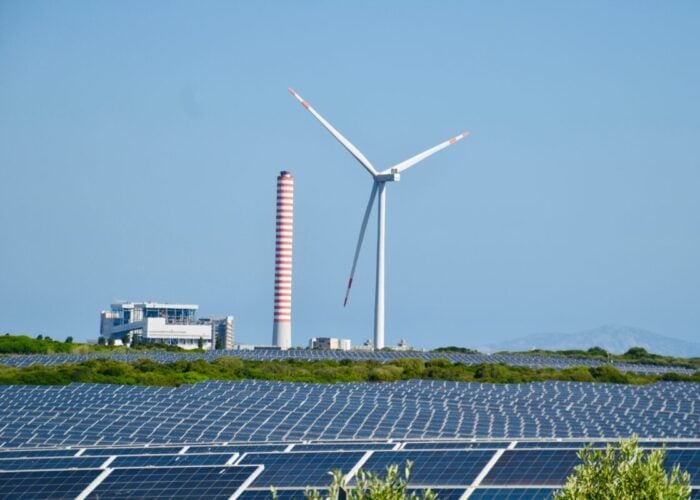
State-run utility Electricity Generating Authority of Thailand (EGAT) is planning to facilitate 1GW of hybrid floating solar-hydro projects across eight dams throughout the country.
The solar industry gets to grips with the bewildering array of new module technologies at the second edition of the PV ModuleTech event in Penang, Malaysia. The conference raised a huge number of questions such as how to evaluate bifacial technology and whether it might rise faster than predicted, how long p-type multicrystalline has left in the running and the perennial issue of quality, to name a few.
In part II of PV Tech’s interview with Vikas Bansal, Head of Business Development - International Solar at Sterling & Wilson Solar, one of the world's largest PV EPC firms, we discuss how installers are having to adapt to new technologies in the realm of PV modules, balance of system, robotics and energy storage.
Ahead of the forthcoming PV ModuleTech 2018 event in Penang, Malaysia on 23-24 October 2018, PV-Tech took the time to catch up with Pepijn Veling of Eternal Sun Group.
The MIP is no longer with us but some European manufacturers did manage to outlive it. Happily, a culture of innovation and a political will to support the sector could breathe new life into it.
Finlay Colville summarises the updated analysis by our in-house research team at PV-Tech, where we have adjusted our models and forecasts for the 20 companies active in Taiwan today producing ingots, wafers, cells and modules.
With the multi to mono transition largely a fait accompli in the PV industry, the buzzword for 2019 will certainly be on bifaciality. This has been brewing for some years, but the sheer weight of capacity and production will finally impact on large-scale utility solar in ways most appear to be grossly unprepared for.
The European Commission’s decision to end the minimum import price (MIP) on solar imports from China sends the wrong message about Europe’s future support of the battery storage industry, according to a key figure at French power giant, Total.
Much has been written and voiced over the past couple of months in the PV industry, following the so-called China-531 policy announcement that finally provided a wake-up call to Chinese manufacturers that their domestic end-market was not going to be allowed to maintain its near-exponential growth characteristics.
As the solar industry has grown from a 50GW market to 100GW in just a few years, the desire to have differentiated production has increased, especially for companies entering the market or repositioning strategies.