Australian investment firm Quinbrook Infrastructure Partners has advanced its plans to develop a polysilicon production facility in the Townsville area of Queensland, Australia.
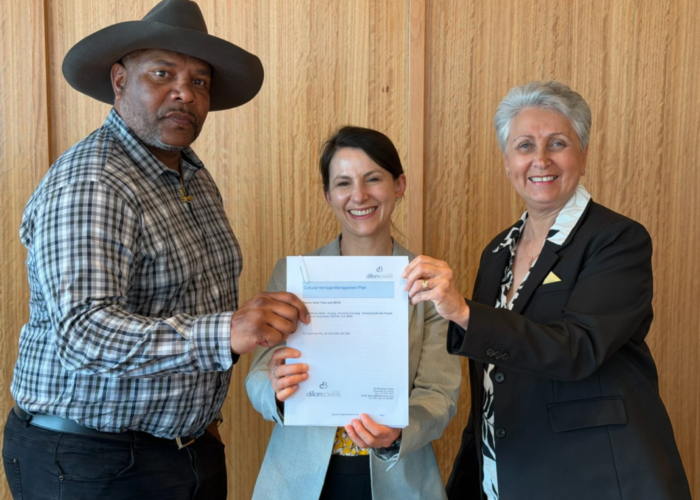
The company signed a memorandum of understanding (MOU) with the Townsville City Council via its subsidiary, Solquartz, to “advance” the Northern Quartz Campus at the Lansdown Eco-Industrial Precinct. The project will process quarts into “higher value silicon products” for solar PV and semiconductors. The company did not specify the annual production capacity for the site.
Try Premium for just $1
- Full premium access for the first month at only $1
- Converts to an annual rate after 30 days unless cancelled
- Cancel anytime during the trial period
Premium Benefits
- Expert industry analysis and interviews
- Digital access to PV Tech Power journal
- Exclusive event discounts
Or get the full Premium subscription right away
Or continue reading this article for free
The MOU “establishes a pathway to finalise a Project Development and Infrastructure Agreement by the end of the year,” the City of Townsville said. The site is earmarked to be operational by 2030, having been identified as a “Prescribed Project” by the Queensland state government and a “Major Project” by the Australian government, in acknowledgement of its significance to the regional and national economies.
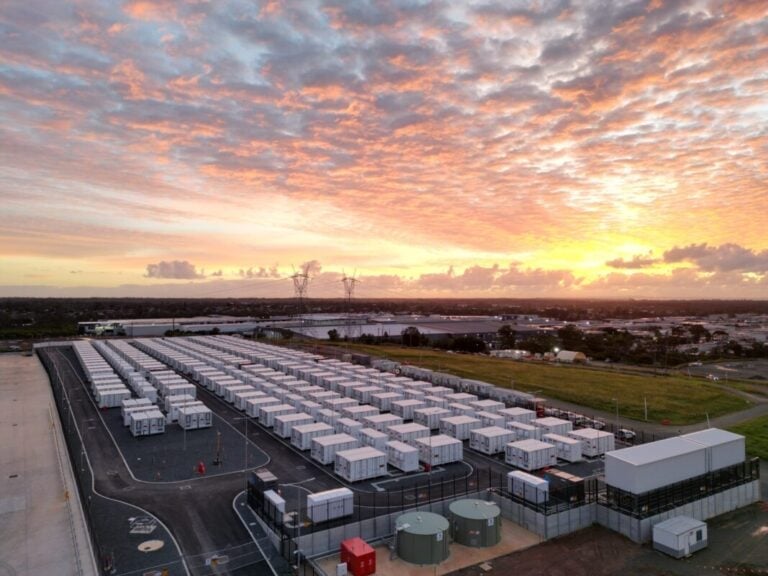
In addition to the planned polysilicon production facility, the Lansdown Eco-Industrial Project will feature a long-duration battery energy storage system (BESS) developed by Quinbrook. The Supernode North BESS is “intended to provide reliable, flexible power to support energy-intensive, low-carbon manufacturing,” the City authority said.
“The Northern Quartz Campus, Supernode North and our renewable energy projects are complementary investments that can help establish Townsville and North Queensland as a hub for energy-intensive advanced manufacturing,” said Quinbrook senior vice president Vignesh Bandi.
“We see a compelling opportunity to combine Queensland’s renewable energy and natural resources to build more of the value chain here at home and manufacture higher-value products for domestic and global markets,” Bandi continued.
Quinbrook first voiced its plans for a polysilicon production facility near Townsville in 2023, having won a council-run tender process that awarded a 200-hectare plot.
Earlier this year, a study from the Australian Renewable Energy Agency (ARENA) said that Australia could establish a 50,000MT annual polysilicon production base with the potential to export to other markets in the next decade. The Australian Silicon (AusSi) Study published in May focused on the Hunter Energy Hub in New South Wales and found that AU$2.5 billion – AU$3.5 billion of capital expenditure could enable a credible facility.
The study relied on a potential growth in demand for non-Chinese polysilicon in the coming years, to meet growing solar PV demand and support supply resilience measures in the US, EU and India. China currently dominates global polysilicon supply and major producers have massive inventories in excess of current demand; however, the report suggests that by 2040 policy changes may result in a shortfall in supply for non-Chinese polysilicon.