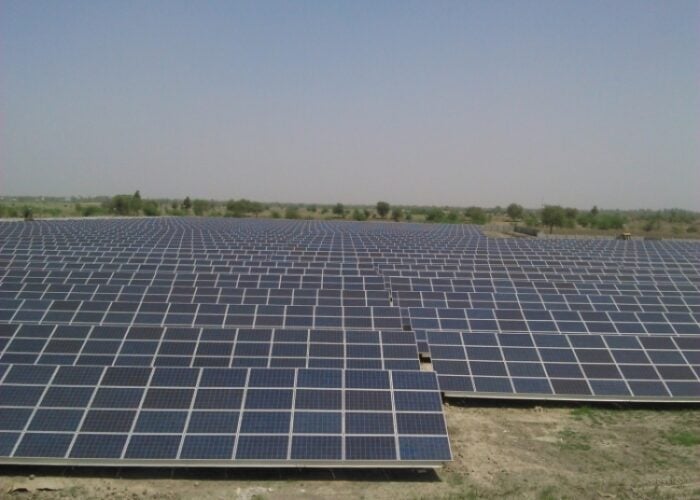
Module selection for utility-scale solar sites in 2019 is likely to see the widespread availability of higher performance products with average selling prices significantly lower than witnessed over the past 12-18 months. So what does this mean for EPCs and developers? Finlay Colville reveals all.
PV Tech looks at market trends through the eyes of the CEO of DK Electronic Materials (DKEM), a metallization solution provider for high efficiency cells.
The past few weeks has seen some of the most dramatic knee-jerk, naïve and misinformed PV market reporting seen in recent times, with the headlines often resembling nothing more than tabloid sensationalism.
The evolution of metallization paste and its impact on cell technology development was a key topic at PV CellTech 2018. During the conference, we caught up with Guangyao Jin, chief scientist, DuPont Solamet photovoltaic metallization pastes, to discuss industry trends.
Ahead of the company’s forthcoming talk at the PV CellTech 2018 meeting in Penang, Malaysia on 13-14 March 2018, PV Tech met with Omid Shojaei, the CEO of heterojunction production equipment supplier INDEOtec, to get his thoughts on the new investments and expansions being applied to n-type heterojunction concepts.
Acciona Energia has signed a renewable energy-based power purchase agreement (PPA) with Aguas Chañar, a water cycle management company in the region of Atacama, Chile.
PV capital expenditure (capex) in 2018, covering investments into ingot, wafer, cell and module capacity, will grow by almost 25% compared to 2017, passing through the US$10 billion mark, returning to levels last seen back in 2010 and 2011 when investments in turn-key thin-film fabs were a key contributor.
The planned merger of Taiwan-based PV manufacturers Gintech Energy, Neo Solar Power (NSP) and Solartech Energy to be called United Renewable Energy Co (UREC) is to receive an investment from the Taiwan government, according to reports.
Solar PV capital expenditure (capex) covering the midstream segments of the industry (c-Si ingot-to-module and thin-film) is now well into its second major upturn in spending, going into 2018, at a time when the industry is just about to move to a new phase in annual deployment levels of greater than 100GW.