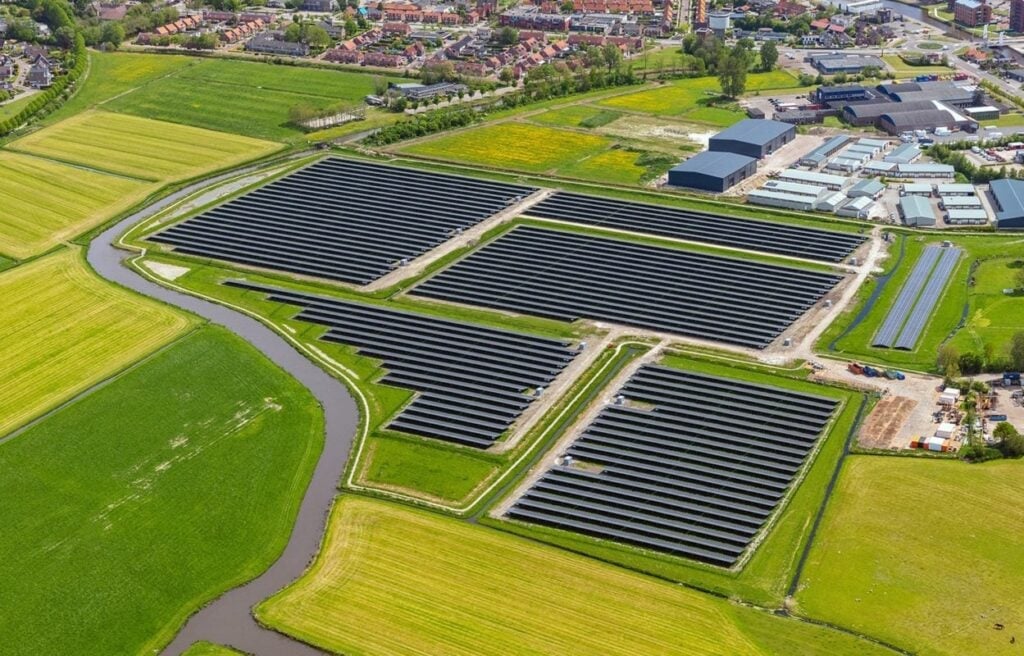
The levelised cost of electricity (LCOE) for solar PV increased marginally in 2025, reaching US$44/MWh, up from US$43/MWh in the previous year.
This is a key takeaway from the ‘Renewable Power Generation Costs in 2025’ report, published by the International Renewable Energy Agency (IRENA). The stability of LCOE in solar PV is striking, considering the greater year-on-year increase in costs for geothermal and hydropower and year-on-year declines in the costs of onshore and offshore wind, and follows a similarly marginal increase in cost in last year’s report, of 0.6%.
Try Premium for just $1
- Full premium access for the first month at only $1
- Converts to an annual rate after 30 days unless cancelled
- Cancel anytime during the trial period
Premium Benefits
- Expert industry analysis and interviews
- Digital access to PV Tech Power journal
- Exclusive event discounts
Or get the full Premium subscription right away
Or continue reading this article for free
The year-on-year trends are shown in the graph below, which compares IRENA figures for LCOE across technology types over the last decade.
LCOE for renewable energy technologies, such as solar PV and wind, is also significantly lower than fossil fuel technologies; the IRENA report notes that the LCOE of combined cycle plants in Italy, Germany and Japan “rose towards US$100/MWh”.
“As in 2024, more than 90% of utility-scale renewable projects commissioned in 2025 were cheaper than the lowest-cost, new fossil-fuel alternative,” reads the report.
There was a greater decline in the total installed cost (TIC) of installing solar PV, which incorporates all parts and expenses of the installation process. Solar PV’s TIC was US$667/kW, lower than every other source of technology profiled by IRENA by some margin; the only other technology to record a TIC figure below US$1,000/kW was onshore wind, which saw a TIC of US$976/kW.
Between 2024 and 2025, the TIC of solar PV fell by 6%, compared to the 1% year-on-year increase in LCOE. While the TIC percentage change is lower than that of onshore wind (8% decline) and offshore wind (no change), the exceptionally low TIC of solar PV remains notable.
One cause of this low TIC figure is the dramatic, and much-discussed, collapse in PV component and product prices among major Chinese manufacturers, which have spent the last few years competing with one another to lower prices. However, the industry has sought to correct this trend, with the China Photovoltaic Industry Association (CPIA) announcing plans earlier this year to cut module production and project installation.
As a result, module prices have declined sharply in the last few years, but stabilised this year, and this is borne out in the IRENA figures; the graph above shows how, across module technology types, prices have remained relatively stable between 2025 and the first quarter of 2026, after a dramatic fall in prices of all technologies between 2022 and 2025.
LCOE variation persists across markets
The IRENA report also notes that there is significant variation in the LCOE for solar PV, with a low of US$35/MWh in India. While the general trend is that more mature markets have lower LCOE, while less mature markets have a higher LCOE—China’s LCOE of US$36/MWh is around one-third of the US$95/MWh reported in Central America and the Caribbean—exceptions remain. Germany, for instance, has an LCOE of US$65/MWh, which is higher than the European average of US$59/MWh.
Meanwhile, the most dramatic change over the last decade was reported in Brazil, which saw an LCOE of US$37/MWh in 2025, around one-sixth of the US$184/MWh reported in 2015. Eurasia, meanwhile, saw the largest decline in raw numbers, with LCOE falling US$256/MWh over the decade, from US$347/MWh in 2015 to US$91/MWh last year.