Space Machines Company (SMC) and Sydney-based solar cell developer SunDrive Solar have started developing Australian-made solar arrays for spacecraft, applying SunDrive’s copper-based heterojunction (HJT) cells to satellites.
The companies said Australian satellite programmes currently rely on imported space-grade arrays, which limits both cost and supply. They see a market for lower-cost, locally developed arrays priced for spacecraft that are built and deployed at scale.
Try Premium for just $1
- Full premium access for the first month at only $1
- Converts to an annual rate after 30 days unless cancelled
- Cancel anytime during the trial period
Premium Benefits
- Expert industry analysis and interviews
- Digital access to PV Tech Power journal
- Exclusive event discounts
Or get the full Premium subscription right away
Or continue reading this article for free
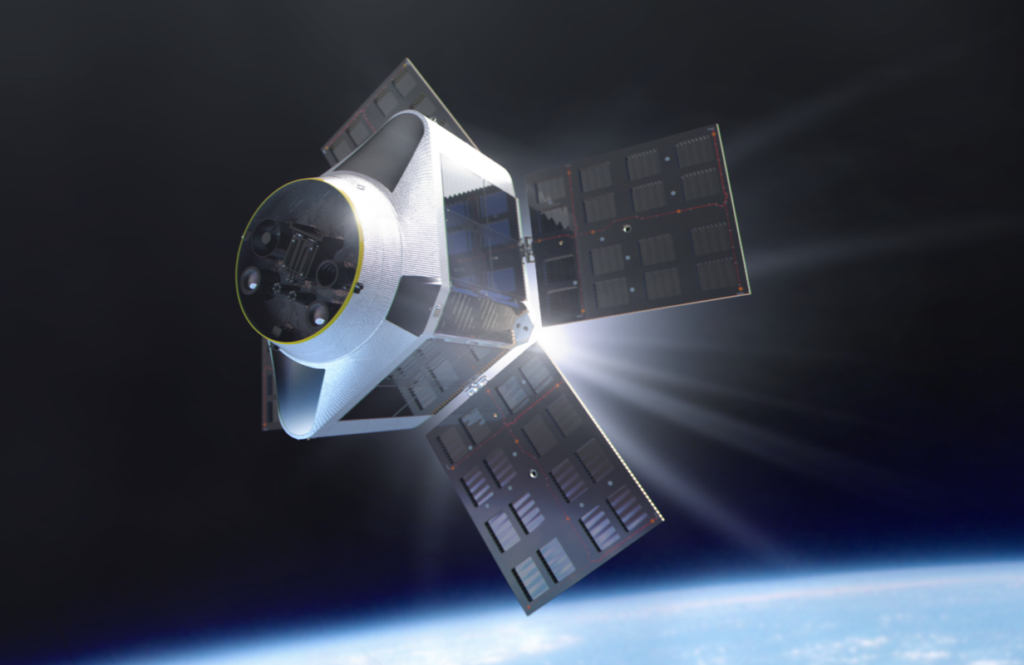
The first phase of the research and development collaboration runs to April 2027. It will produce a body-mounted solar module for SMC’s next-generation Optimus Viper spacecraft, which is designed for low-Earth orbit, along with prototype flight-sized panels.
Engineering teams from both companies formally started the project at SunDrive’s Kurnell facility on 1 October 2026.
The body-mounted panel will go through environmental testing, including thermal-vacuum and vibration tests. The companies said this would generate the engineering and performance data needed to move towards a flight-ready product.
Such testing is also a step towards flight heritage, which satellite manufacturers use as a benchmark when choosing components.
“A solar panel has to survive launch vibration, vacuum and extreme thermal cycling while staying as light as possible,” said Ian Partis, vice president of engineering at SMC.
“Those are exactly the problems our structures, thermal and test teams work on every day.”
SunDrive will lead cell selection, module design, lamination and electrical characterisation. SMC will handle substrate design, structural and thermal analysis, assembly and testing, and will mount the panel on a structural model of Optimus Viper.
The two will jointly develop the process for bonding the solar modules to the panel substrate.
The companies have not disclosed the value of the collaboration, how it is funded or any planned production volumes. They said Phase 1 results would inform decisions on further phases, aimed at a flight-ready deployable solar array for SMC’s future spacecraft and the wider satellite market.
SMC is headquartered in Australia, with operations in the US, UK and India. The company builds AI-based orbital threat prediction software alongside small, agile spacecraft for allied nations.
“This collaboration began because two Australian companies saw a commercial reason to work together,” said Rajat Kulshrestha, CEO and co-founder of SMC.
“Other nations are moving quickly to secure their space supply chains, and partnerships like this are how Australia builds capability that lasts.”
From ARENA-backed copper cells to low-Earth orbit
SunDrive’s direct-copper plating process replaces silver with copper in HJT cells, cutting reliance on a costly critical material. The company said its cells are ultra-thin and lightweight, which matters in orbit, where every gram of array mass is a trade-off against payload.
“SunDrive’s copper HJT technology brings together the ultra-thin, lightweight and high-efficiency performance needed for next-generation spacecraft solar arrays,” said Vince Allen, co-founder and chief technology officer at SunDrive.
The University of New South Wales spin-off has so far focused on terrestrial solar. In November 2025, the Australian Renewable Energy Agency (ARENA) committed an AU$25.3 million (US$16.5 million) in funding to take its copper metallisation from the lab to commercial production. That followed an AU$11 million award from the agency in 2023.
In May 2025, SunDrive also signed a joint development agreement with Chinese equipment suppliers Maxwell Technologies and Vistar to co-develop commercial-scale copper plating tools. SunDrive and Maxwell jointly claimed a 25.54% HJT cell efficiency world record in 2021.
“As the global space economy rapidly accelerates, Australia is well-placed to seize the opportunity, not just to participate, but to build and own the critical technologies that will underpin it,” said SunDrive CEO Natalie Malligan.
Space PV has long been dominated by gallium arsenide cells, which tolerate radiation well but are expensive. HJT technology is now being tested in orbit.
In September, Chinese manufacturer JA Solar sent prototype p-type HJT modules into space aboard a satellite launched from the Jiuquan Satellite Launch Centre, though the company said it had no orders related to space PV.
Government funding is also moving into the area. The US Department of Energy (DOE) in September opened a US$12 million research and development programme for space photovoltaics, offering awards of up to US$2 million to university and industry labs.
“The next frontier for solar PV power generation is in space,” said Assistant Secretary of Energy Audrey Robertson.
Commercial interest extends to beaming power back to Earth, a separate application from the spacecraft power SMC and SunDrive are working on.
Earlier this year, Meta signed an agreement with start-up Overview Energy for early access to up to 1GW of space-based solar power for its US data centres. Overview plans to send near-infrared light from satellites to solar PV plants on the ground, with a demonstration planned for 2028 and commercial power production expected in 2030.