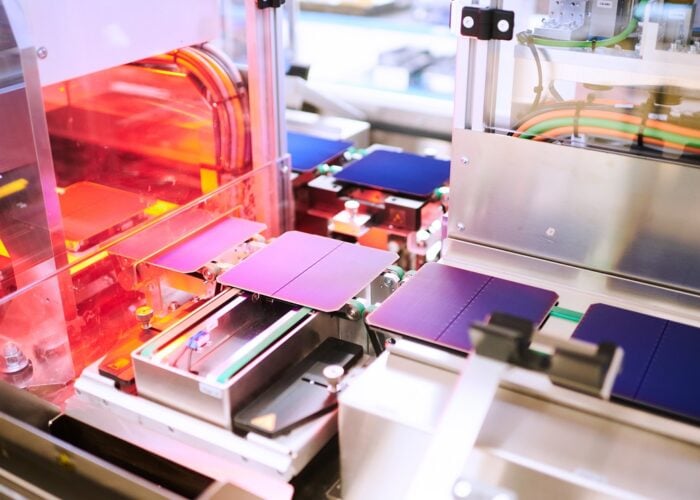
Having successfully completed its transition from a solar equipment provider to a heterojunction cell and module manufacturer, Meyer Burger is looking to build on a major supply deal last month as it works to ramp up production capacity in the US.
Solar module prices for international markets are expected to fall in tandem with forecasted polysilicon price reductions as of 2023, according to research from Clean Energy Associates (CEA).
Solar PV costs continued to decline globally in 2021 as supply chain challenges and rising commodity prices have yet to show their full impact on project costs.
Solar polysilicon prices jumped by a further 4% this week, fuelling industry assessments that prices will soon jump above the RMB300/kg (US$44.74/kg) barrier.
Polysilicon prices will likely continue rising throughout 2022 and only soften towards the very end of the year, driven by unfaltering demand and panic buying.
Solar manufacturer LONGi has revised the price of its G1 and M6 p-type wafers in its fifth price revision so far this year, taking prices to a near five-month high.
In this special, free-of-charge edition of PV Price Watch, Finlay Colville, head of research at PV Tech, discusses the numerous factors that have contributed to a significant rise in module pricing in the previous two years, before exploring where module pricing could go into 2024.
US solar deployment reached a record high in 2021, but with volatile commodity prices and supply chain uncertainty leading to project delays and cancellations, utility-scale additions are set to contract this year.