The policy of fully integrating China’s new energy power into the market has triggered adjustments to project revenue models, compounded by the capacity imbalance between supply and demand. Companies across the PV module industry chain have been grappling with sustained losses, signalling an imminent industry reshuffle.
Recent industry developments highlight the escalating consolidation in the solar sector. Following Eging PV’s debt challenges, the news of TCL Zhonghuan’s investment and acquisition of Das Solar provides further evidence of the dynamics at play in the industry.
Try Premium for just $1
- Full premium access for the first month at only $1
- Converts to an annual rate after 30 days unless cancelled
- Cancel anytime during the trial period
Premium Benefits
- Expert industry analysis and interviews
- Digital access to PV Tech Power journal
- Exclusive event discounts
Or get the full Premium subscription right away
Or continue reading this article for free
On 16 January, TCL Zhonghuan announced that the company had signed a “Cooperation Framework Letter of Intent” with DAS Solar CEO Liu Yong and Quzhou Zhidao Enterprise Management Partnership (Limited Partnership).
According to the announcement, TCL Zhonghuan plans to acquire 44% of DAS Solar’s equity held by the four major shareholders, including Quzhou Zhidao Enterprise Management Partnership, Liu Yong, Suzhou Risos and Beijing Jingguan Equity Investment Fund. The investment in DAS Solar will be carried out through methods such as equity transfer, acceptance of voting rights delegation and capital increase.
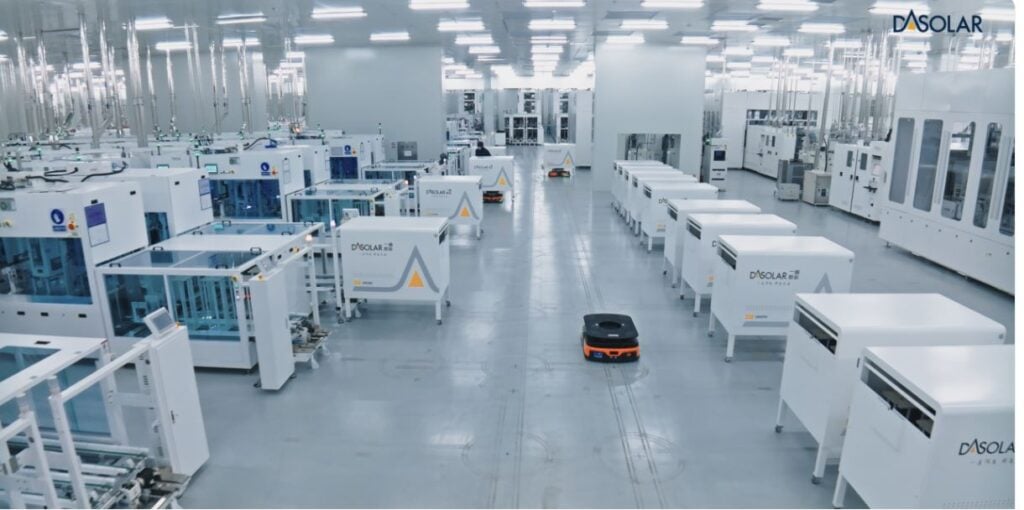
TCL Zhonghuan began as a wafer manufacturer and has gradually grown into a global leader in G12 large-size wafers. Currently, TCL Zhonghuan maintains the highest comprehensive market share in wafer shipments within the industry, but it faces operational gaps in the cell and module segments. DAS Solar’s core business encompasses the R&D, manufacturing and sales of high-efficiency solar cells, PV modules and system applications. DAS Solar filed a prospectus for an IPO on the ChiNext Board in 2023 but pulled its application in August 2024. Subsequently, the company encountered operational difficulties amid the recent and ongoing industry adjustment cycle.
TCL Zhonghuan stated in the announcement that its investment in DAS Solar aims to integrate and optimise existing production capacity, enabling the vertical and horizontal expansion of its industrial chain. It will quickly address operational gaps, optimise its PV cell and module production capacity, while diversifying its product and customer structure. The investment will also synergise the back contact (BC) patent technology of the company’s controlling subsidiaries with the target company’s BC cell and module manufacturing processes and capacity advantages, accelerating the commercialisation of patent technology and establishing a robust technological barrier. Post-acquisition, the two companies are expected to co-establish a joint innovation platform to collaboratively explore next-generation n-type technologies, such as BC cells and perovskite tandem cells.
According to the terms outlined in the letter of intent, TCL Zhonghuan will be granted a 90-day exclusive negotiation right. During this period, the founders, major shareholders of DAS Solar, and their affiliates are prohibited from engaging in any other negotiations or imposing any rights restrictions regarding the equity in question. Upon completion of the transaction, Das Solar’s board of directors will be reorganised, and TCL Zhonghuan will be entitled to nominate directors in proportion to its equity holding ratio.
However, the announcement also cautioned that specific core terms of this transaction—such as the transfer price, equity holding ratio and payment methods—have yet to be finalised. The deal still requires internal approvals from both parties and compliance with relevant regulatory procedures, introducing elements of uncertainty.