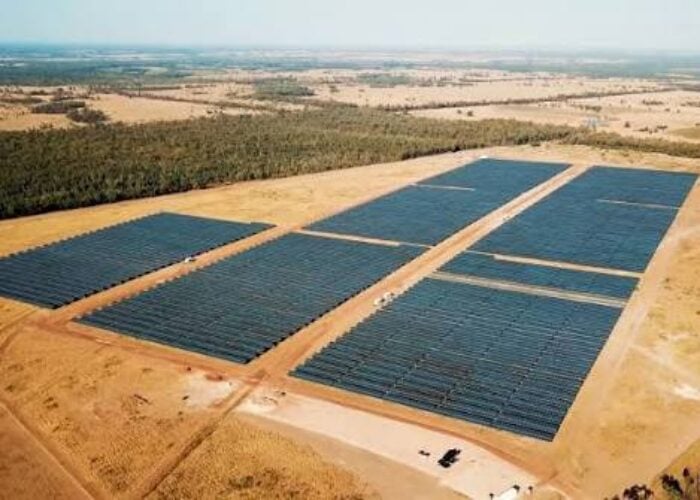
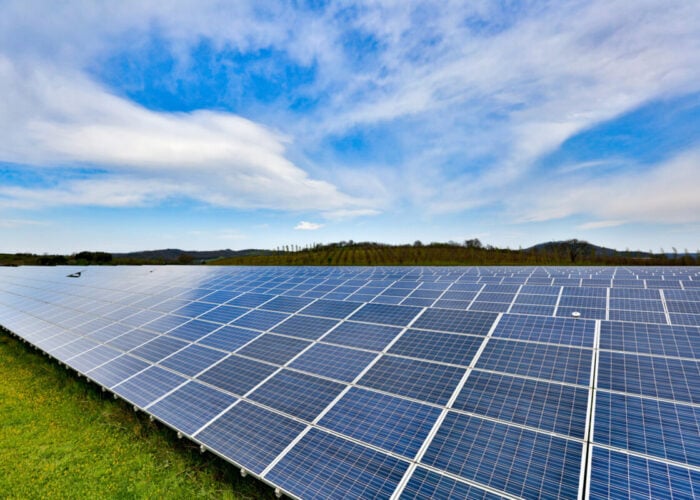
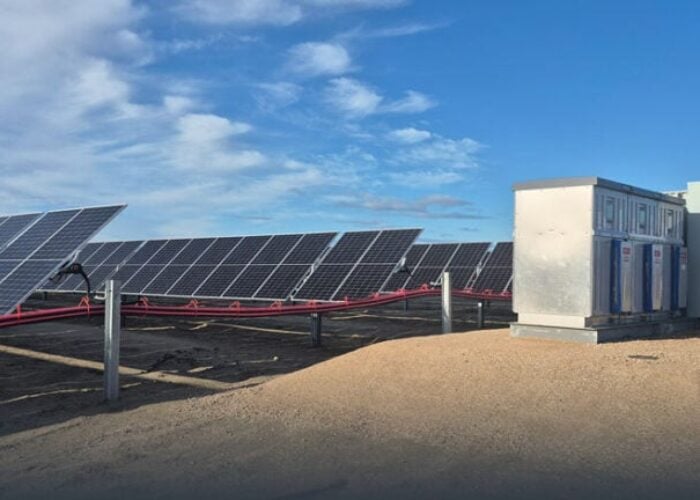
The pipeline of large-scale solar farms in the UK has now reached 3.9GW, comprised of 340 sites, according to the latest release of the UK Large-Scale Solar Farms: The Post-Subsidy Prospect List report.
While we continue to log new screening applications, full planning applications, and plans for unused capacity from previous partially-completed ROC sites (mostly as downsized 1.2 RO schemes), the most significant update during the past month has been our inclusion of a 300MW solar farm in the south of England.
Try Premium for just $1
- Full premium access for the first month at only $1
- Converts to an annual rate after 30 days unless cancelled
- Cancel anytime during the trial period
Premium Benefits
- Expert industry analysis and interviews
- Digital access to PV Tech Power journal
- Exclusive event discounts
Or get the full Premium subscription right away
Or continue reading this article for free
This single site accounts for most of the new capacity added in the past month, compared to the 3.55GW of capacity included in the previous monthly report release.
I will be delivering a presentation on the post-subsidy pipeline next week at the Solar Business Conference of the Solar & Storage Live event at the NEC in Birmingham (3-5 October 2017).
However, for many reading this article right now, the burning topic will relate to our breaking news here of plans for a 300MW solar farm in the UK.
The UK’s 300MW solar farm uncovered
It seems like the rumours have been around forever, and I can recall discussions back in 2015, when excited component suppliers were readying prospect lists with the inclusion of a 300MW solar farm opportunity in the south of England.
Back then, the only thing known was mainly related to the county where the site was being considered, and not much more.
Of course, during 2015 and 2016 (and the first quarter of 2017), all attention was on building out under ROCs, FiTs or CfDs for the lucky few. The months and years passed, and signs of the 300MW solar farm were largely parked to the side, awaiting tangible facts and figures.
However, things have been moving since the end of 2016, and for the first time, we are now including this site in our UK Large-Scale Solar Farms: The Post-Subsidy Prospect List report, with the latest release due out later this week.
Joining the dots on the 300MW solar farm stakeholders
Often, the more developers crave for publicity during the early days of a mega-solar planning process, the less likely it is to come to fruition. Generally, handshakes and smiles on speculative joint development agreement press conferences are done to convince governments or utilities on the need for the site in the first place, or to get the attention of a cash-rich backer to finance the plan.
This is certainly not the case for the 300MW solar farm site in the UK. The initial site development is understood to be spearheaded by one of the most credible and successful solar farm developers in the UK, and partnered now by a European-based developer/EPC with an equally-impressive track-record in large-scale solar farm build-out in the UK and on the global stage.
The location is thought to be a few miles inland from the southeast coastline of England, with energy from the solar farm possibly being fed into unused capacity that was put in place for a major offshore wind farm infrastructure that was only partially completed.
Having visibility on the stakeholders behind the scheme, the location of the site, and the availability of the grid to export the energy to, are three very important parameters in terms of any solar farm proposal, regardless of the size.
With these thought to be in place, this goes some way to explaining why we are only now including the 300MW site in our pipeline analysis, albeit with still cautious estimates on any ground-breaking timelines or likelihood of completion.
Final jigsaw pieces still pending
Several hurdles remain, as would be expected of a major infrastructure project in the UK. These include: the planning process (both governmental and local), infrastructure financing, and revenue streams if completed.
However, by far the most important relates to planning. Without planning approval (which moves to a different level here, outside of the LPA) – or indeed simply moving past environmental impact assessment – everything else is somewhat irrelevant.
So for now, all attention is on the planning side of things.
Rest assured, the second this scheme hits the public domain from a planning standpoint, every news outlet in the UK will be claiming breaking-news status within hours, supported by the usual suspects from trade associations and so-called energy ‘experts’ or ‘consultants’ being asked to comment.
This will mark the official ‘day-one’ of the 300MW solar farm in the public domain. For those wanting to get earlier visibility, the UK Large-Scale Solar Farms: The Post-Subsidy Prospect List report captures our pre-application estimates of the site in question.
Details of the full UK solar pipeline will be covered in my talk next week at the Solar Business Conference of the Solar & Storage Live event at the NEC in Birmingham (3-5 October 2017).