The US federal government must use every tool available, and do so at an unprecedented scale, if it is to sufficiently tackle the climate crisis and stimulate a clean economy.
The benefits of doing so, a new report published by the Senate Democrats claimed, would pose multiple benefits for US citizens, ranging from public health benefits to enormous job creation.
Try Premium for just $1
- Full premium access for the first month at only $1
- Converts to an annual rate after 30 days unless cancelled
- Cancel anytime during the trial period
Premium Benefits
- Expert industry analysis and interviews
- Digital access to PV Tech Power journal
- Exclusive event discounts
Or get the full Premium subscription right away
Or continue reading this article for free
Yesterday (25 August 2020) the Senate Democrats published the report, dubbed ‘The Case for Climate Action’, which provides detailed recommendations on how the country could establish a clean economy for the good of its people.
The document claims that the federal government must “use every proven tool at its disposal”, and at a scale not seen before, in order to accelerate the decarbonisation of the US’ power supply. Included within these tools are;
- Direct spending and financing of new build renewable generation
- Investments in transmission to increase the effectiveness of the grid across the entire US
- Ramp up the use of market mechanisms such as a federal clean energy standard or carbon price to scale-up clean technologies over fossil fuels
- Predictable, technology-neutral tax incentives focused on reducing emissions
- Increased R&D spending aimed at reducing the cost of associated technologies
The benefits of doing so, the senate democrats have argued, would be plentiful and extensive, ranging from reducing emissions, allowing consumers to save money on energy bills, improving health and wellbeing and creating sustainable jobs for US citizens in the wake of COVID-19.
The document further warns that a failure to act on the energy transition risks the US falling behind other nations or groups of nations, most notably China and the European Union. It states that while China’s solar capacity grew from 415MW in 2009 to 175GW in 2018, the US has only added 43.3GW in the same time frame, with China far outpacing it.
Significant importance has also been given to the need for any energy transition to occur in the US to be as fair and equitable as possible, with all citizens given an equal chance of participating in and benefitting from the shift to clean energy.
Amongst specific recommendations included within the report is policy to make the adoption of solar, energy efficiency retrofits and electric vehicles more accessible to US citizens. Senate Democrats point to institutions created by the US government in the 1930s, which increased home ownership by making available more affordable mortgages. Similar institutions could and should be created today for this purpose.
“A just and equitable low-carbon future must be founded on optionality, flexibility, and innovation to accommodate regional differences in energy resources, infrastructure, jobs, technology needs and costs,” Ernest Moniz, former secretary at the US Department of Energy, is quoted as saying in the document.
The full document can be read here.
The report comes off the back of hearings and meetings held by Democrats in the Senate while also featuring input from industry experts, labour unions and local communities, amongst others.
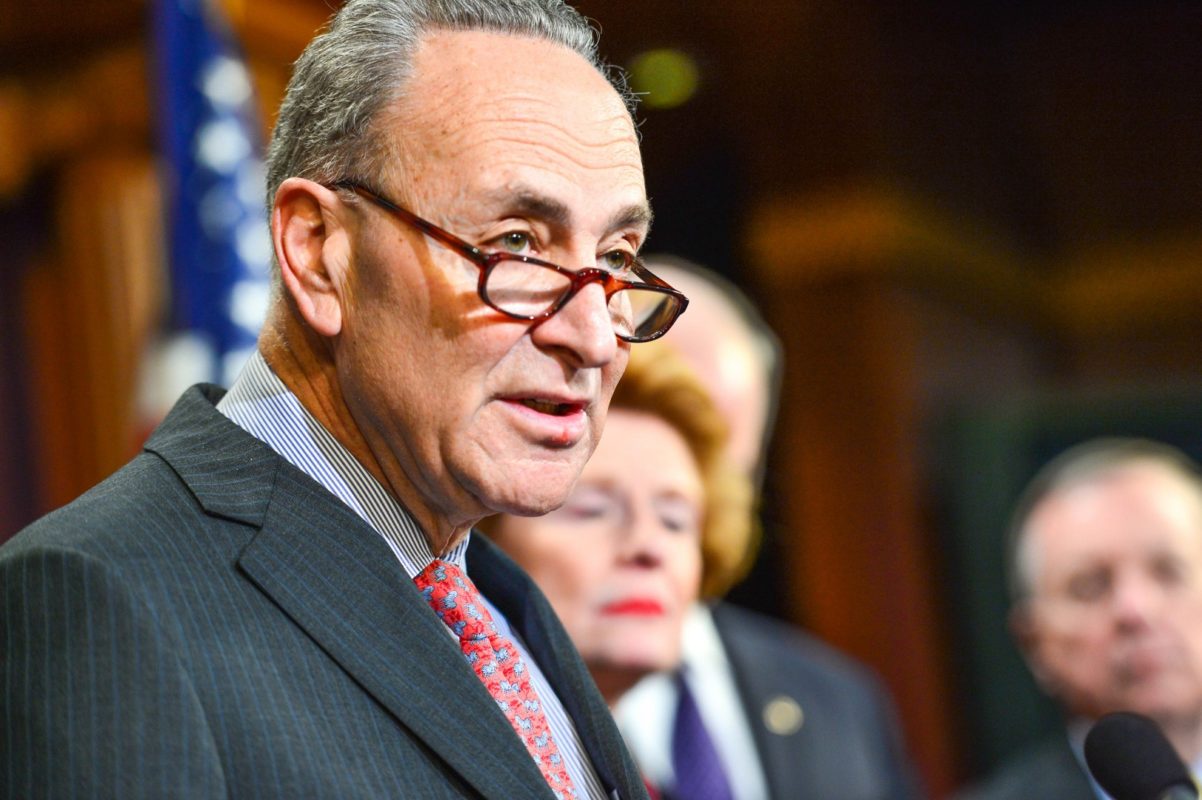
Chuck Schumer, leader of the Senate Democrats, said the climate crisis “not some distant threat”, but one that is present today and would be “catastrophic if we don’t strike back immediately”.
“Over the next few decades, climate change will affect every part of American life: our health, our economy, our national security, even our geography. Democrats are committed to working—decisively and aggressively—to avoid the steep human and economic costs of a worsening climate crisis, and to guide the transition to a low carbon economy,” he said.
Its publication comes at a critical time for politics in the US, with this week seeing the Republican National Convention taking place a week after the Democratic equivalent was held. With both President Donald Trump and presidential rival Joe Biden now formally selected as their parties’ candidates, election campaigning is in full swing.
While Trump has yet to outline any specific energy or climate-related proposals, Biden and the Democratic party last month unveiled a US$2 trillion climate plan that promised to boost the US economy by establishing a blueprint for a net zero economy.