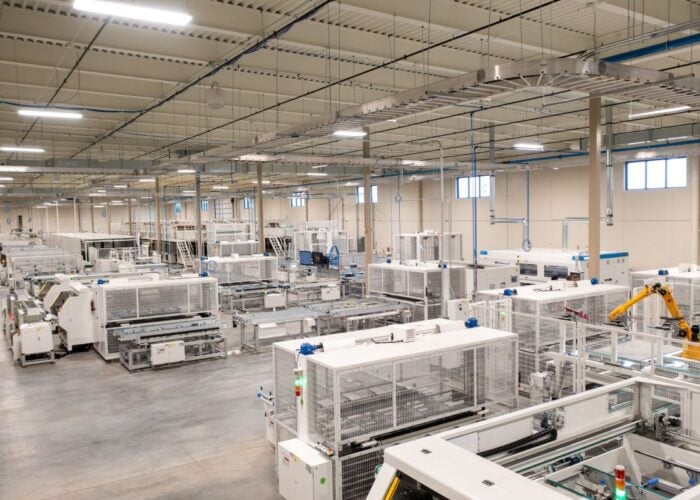
Indian solar manufacturer Waaree Energies has planned to expand its US module assembly plant by 1.6GW to 3.2GW of annual nameplate capacity.
The decision was approved by the company’s Board of directors and will affect the Brookshire plant in the state of Texas, doubling the already existing 1.6GW annual nameplate capacity for solar modules.
Try Premium for just $1
- Full premium access for the first month at only $1
- Converts to an annual rate after 30 days unless cancelled
- Cancel anytime during the trial period
Premium Benefits
- Expert industry analysis and interviews
- Digital access to PV Tech Power journal
- Exclusive event discounts
Or get the full Premium subscription right away
Or continue reading this article for free
According to the company, the expansion will be integrated into its existing US operations and ensure a domestic supply chain. However, Waaree did not share details of the timeline for when the 1.6GW solar cell capacity will be operational.
Amit Paithankar, director & CEO at Waaree Energies, said: “At a time when the world is redefining the rules of global trade, we’re not waiting for the dust to settle – we’re building through it. The United States is not just a key market for us; it’s a cornerstone of the next energy order.”
Waaree’s expansion to the US was unveiled at the end of 2023, with an investment of up to US$1 billion and an initial timeline of reaching 3GW of annual nameplate capacity by the end of 2024, before scaling up to 5GW by 2027.
The Indian manufacturer continues to expand its manufacturing capacities globally, as it recently commissioned a 5.4GW solar cell processing plant in its home country of India. Located in the western Indian state of Gujarat, the solar cell plant will process 1.4GW of mono-PERC capacity and the remaining 4GW will be TOPCon cells.
Outside of India and the US, the company launched an Australian subsidiary in December 2024. No details were revealed at the time aside from the fact that the subsidiary will be dedicated to renewable energy and focus solely on the Australian renewables market.