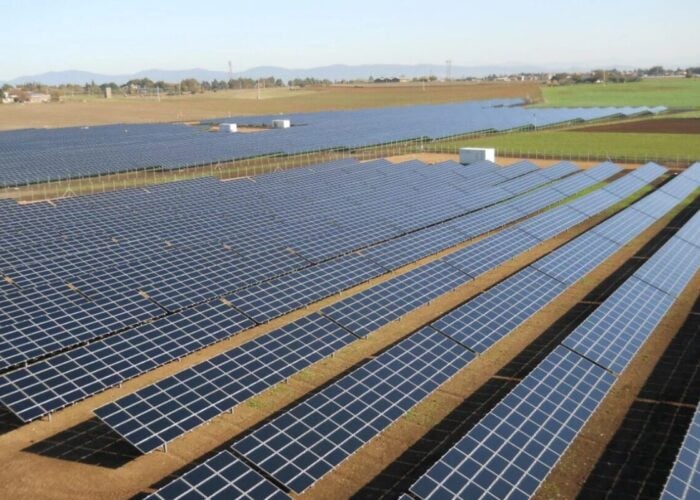
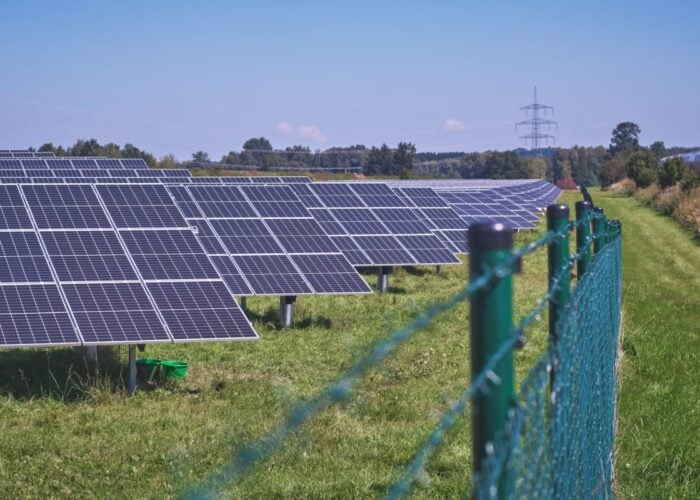
First Solar’s U.S. project pipeline now tops the 1GW mark, after the thin-film photovoltaics company and utility Southern California Edison signed deals that will lead to the construction of two large-scale solar power projects in Southern California. The installations in Riverside and San Bernardino counties will have a combined generation capacity of 550MW (AC) of solar electricity, or about 1.2 billion KW-hours, enough to provide power to approximately 170,000 homes, according to SCE.
First Solar will engineer, procure and construct the two solar facilities–the 250MW Desert Sunlight site near Desert Center (to begin in 2012) and the 300MW Stateline project in northeastern San Bernardino county (to begin in 2013)–and equip the power plants with its cadmium-telluride modules. The projects will create hundreds of construction jobs.
The agreements must be approved by the California Public Utilities Commission; once network upgrades are done and applicable governmental permits are received, both projects are expected to be finished by 2015.
Try Premium for just $1
- Full premium access for the first month at only $1
- Converts to an annual rate after 30 days unless cancelled
- Cancel anytime during the trial period
Premium Benefits
- Expert industry analysis and interviews
- Digital access to PV Tech Power journal
- Exclusive event discounts
Or get the full Premium subscription right away
Or continue reading this article for free
California has a goal of delivering 20% of electricity from renewable sources by 2010 and is considering legislation to increase the goal to 33% by 2020. SCE, the leading purchaser of renewable energy in the U.S, said it delivered 12.6 billion KW-hours of energy to its customers from renewable resources in 2008–about 16% of its total energy portfolio. The utility also said it delivered more than 65% of the solar energy produced in the country last year.
First Solar has four other major projects in the pipeline with utility companies in the southwestern U.S., scheduled for completion and activation over the next few years: the 550MW Topaz farm, with PG&E, in central California; the 48MW Copper Mountain site, with Sempra, in southern Nevada; the 30MW Cimarron project, with Tri-State, in northeastern New Mexico; and the 21MW Blythe installation, with SCE, in southeastern California.
Together with the new projects, the company’s total pipeline for the western U.S. has reached 1.199GW (AC). It also has 220MW of sites in development in the Canadian province of Ontario, including a 20MW farm under construction in Sarnia.
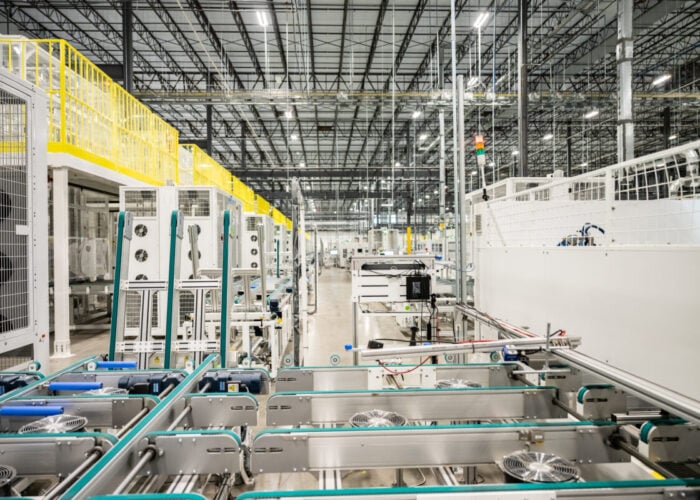
During its recent conference call, First Solar said that annualized production capacity at its three manufacturing locations is 1.2GW, with an average line run-rate of 51.7MW per year, module conversion efficiency of 10.9%, and a manufacturing cost per watt of $0.87 cents.