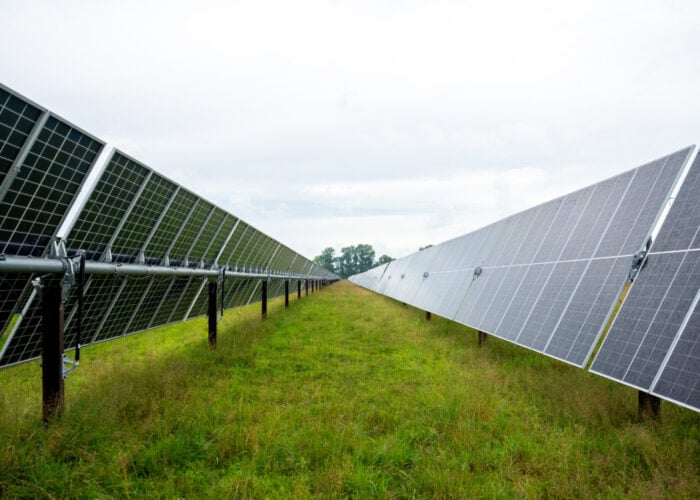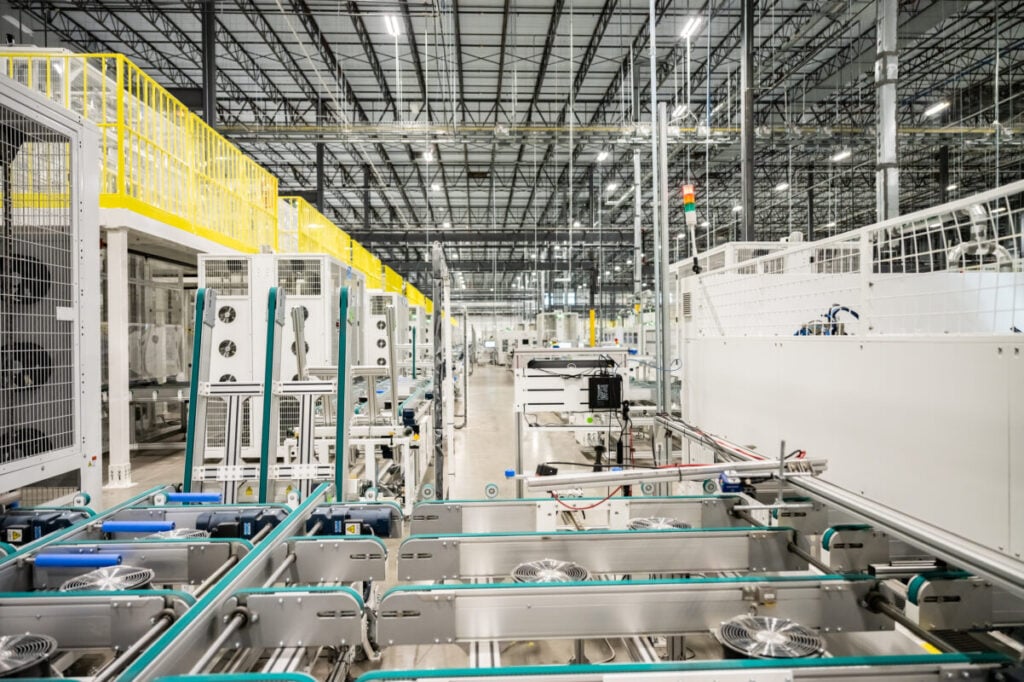
The ongoing permitting challenge is a key factor slowing down solar manufacturing and deployment in the US, according to T1 Energy’s CEO, Dan Barcelo.
Speaking to PV Tech in an interview, Barcelo said permitting regulation needs to be reformed at both the upstream and downstream levels to enable the solar PV industry to navigate a post-tax-credit world.
Try Premium for just $1
- Full premium access for the first month at only $1
- Converts to an annual rate after 30 days unless cancelled
- Cancel anytime during the trial period
Premium Benefits
- Expert industry analysis and interviews
- Digital access to PV Tech Power journal
- Exclusive event discounts
Or get the full Premium subscription right away
Or continue reading this article for free
“I’d love to see those tax incentives, which [will soon] fade, get replaced with streamlining for permitting or streamlining for construction,” said Barcelo. He added that in the US, and in Europe too, there is a “massive disadvantage” on the capital side when building solar manufacturing, but highlighted the state of Texas as a positive model to follow.
“Texas is probably the best example of building in America,” Barcelo told PV Tech. Many manufacturers, including T1 Energy, have built or are building solar PV manufacturing capacity in that state.
Permitting issues have long been a recurring topic in the solar industry, even globally. One of the key takeaways from a recent report from the clean energy platform Crux was that federal permitting delays could increase a project’s development costs by 10%.
Barcelo’s sentiment echoed recent comments from Darren Van’t Hof, interim president and CEO of the Solar Energy Industries Association (SEIA), who singled out permitting as a damper on America’s progress in deploying new solar and energy storage capacity when launching the latest quarterly US solar market report from SEIA and Wood Mackenzie yesterday.
“As power demand skyrockets, political and regulatory attacks are slowing down the exact resources we rely on. Impeding the only sector that is actively building new power is a reckless gamble that will only drive electricity bills higher. The stakes are simply too high for Washington’s permitting gridlock to continue,” said Van’t Hof.
The report highlighted that, despite solar PV and energy storage accounting for 91% of all new power additions to the US grid in Q1 2026, permitting remains a challenge for faster deployment of solar PV and helping meet power demand growth in the coming years.
Moreover, the other important aspect to consider when the tax incentives are gone is the forecasted power demand growth that data centres are leading.
“We believe there will be [an increased power demand]. That demand is going to drive a market response. Nuclear and SMRs [small modular reactors] aren’t here today, gas turbines are not here today, solar and storage are here today,” added Barcelo.
Ahead of PV ModuleTech USA next week, Barcelo exclusively spoke with PV Tech Premium and shared his optimism regarding the US solar manufacturing industry and how solar PV and energy storage are the two technologies capable of meeting the power demand growth expected in the coming years.
“The technology is commercially available, and we should build it here. I’m super optimistic. We could build a module plant now within a year,” said Barcelo.
You can read the interview in full here (subscription required).
Building a resilient supply chain in the US – from polysilicon to modules – will be one of the key topics of conversation at the upcoming PV CellTech USA Conference in San Francisco on 13-14 October 2026. For full details and booking, click here. PV Tech readers can save 20% with code PVT20.