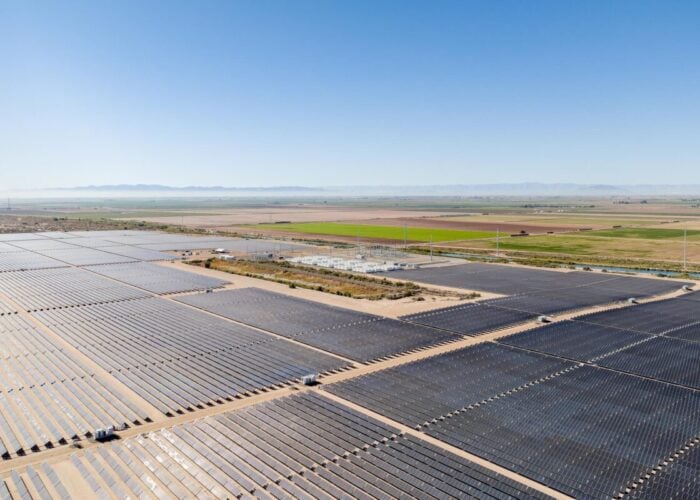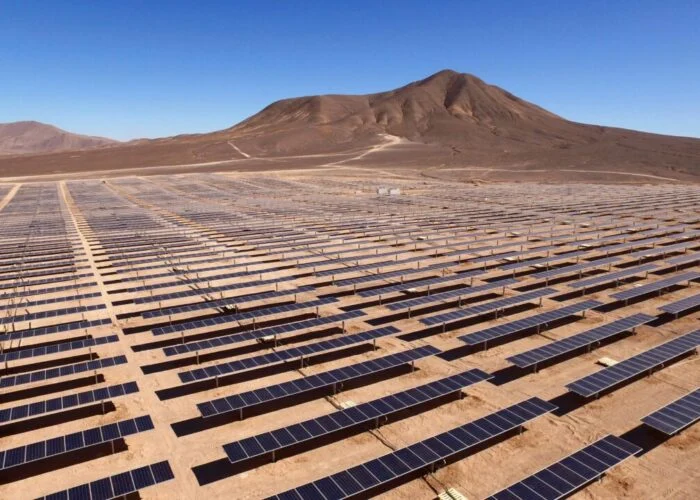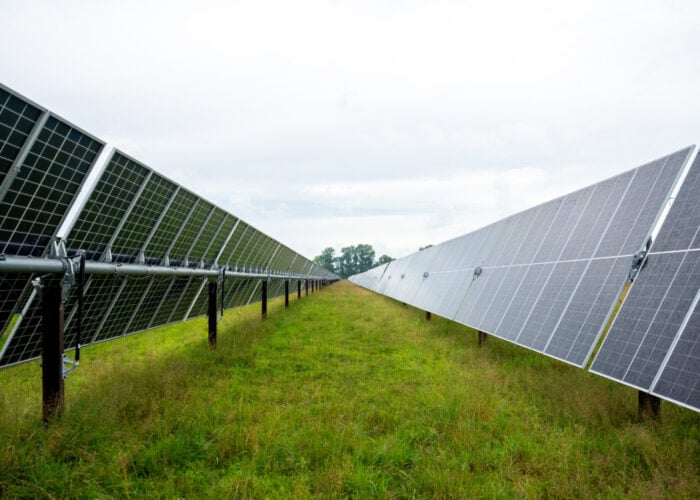
Despite the policy setbacks solar PV faced last year in the US, the technology keeps on shining, as shown recently by the first-quarter 2026 installation figures. Despite witnessing a year-on-year drop, solar PV, along with energy storage, still accounted for 91% of all new power additions to the US grid in the first three months of the year.
At the same time, on the upstream front, the optimism is also strong, and there is no better indicator of that sentiment than the positive announcements from PV manufacturers Toyo, SEG Solar, MSolar, Suniva and Qcells this month alone.
Try Premium for just $1
- Full premium access for the first month at only $1
- Converts to an annual rate after 30 days unless cancelled
- Cancel anytime during the trial period
Premium Benefits
- Expert industry analysis and interviews
- Digital access to PV Tech Power journal
- Exclusive event discounts
Or get the full Premium subscription right away
Or continue reading this article for free
This same optimistic spirit is also shared by Dan Barcelo, CEO of US manufacturer T1 Energy, when speaking with PV Tech.
“Crystalline silicon is the future. Silicon is this century, oil is last century,” Barcelo says.
“We, as a society, need to develop all of the infrastructure in the ecosystem around crystalline silicon, which is foundational for semiconductor manufacturing. The more the solar industry is doing around that, the more it’s creating demand for lower-grade polysilicon for solar, which is allowing polysilicon producers to make higher-quality polysilicon for a smaller semiconductor market. The same with ingots, the same with wafer slicing, the same with the equipment suppliers that do solar cell manufacturing,” explains Barcelo.
Barcelo’s optimism and confidence that the US can build more solar manufacturing capacity is not limited to what T1 Energy is doing, but extends to the industry as a whole.
He draws a parallel with the US natural gas market in the 80s, noting that deregulation enabled the market to grow into what it is today.
“This was all about letting the market go, allowing technology, allowing capital and allowing risk-taking, and that’s not going to be an issue,” says Barcelo, adding that Tesla’s announcement to build a 100GW annual nameplate capacity cell and module plant in the US or Corning entering the wafer manufacturing scene are the types of action needed for the industry to grow.
He adds that the US manufacturing market should be even bigger than it currently is, adding that the outcome of the Section 232 investigation for polysilicon could create strong incentives for the US to build more polysilicon production, which will have a domino effect down the supply chain.
“The technology is commercially available, and we should build it here. I’m super optimistic. We could build a module plant now within a year.”
From energy storage to solar PV
But T1 Energy’s story did not start in the solar industry, but rather with energy storage. Barcelo explains that the company raised financing in 2019 and entered the European scene with lithium iron phosphate batteries before moving to solar PV in the US two years ago.
The company shifted from the energy storage industry to solar PV when it acquired Trinasolar’s US assets in 2024, which included a module assembly plant in Dallas, Texas, under construction at the time, as well as a polysilicon supply agreement with Hemlock Semiconductor.
“We saw that the need for the American grid was more profound. We actually pivoted from storage to solar, because we saw that solar in the United States had a much more open market for American companies,” Barcelo says, in explaining why the company moved to solar PV manufacturing, adding that solar PV and energy storage are the only technologies that can meet today’s power needs.
“If people want turbines, it’s late 2028-29. If people want SMRs [small modular reactors], you’re talking post 2030. That’s great, but the world’s not going to stop. It’s all about solar and storage.
“For us, it’s that vision of how do you go into a rapidly scalable, low-cost, reliable energy source that’s proven, like solar and storage, and this is coming from someone who spent his entire career internationally, domestically in oil and gas, and particularly on the natural gas side. For me, it’s that vision of how to accelerate energy.”
The rapidly scalable source is also a testament to the rapid growth of US solar manufacturing since T1 Energy emerged.
And in T1 Energy’s case, since its acquisition of JA Solar’s assets, the module assembly plant reached full operations last November, with an annual nameplate capacity of 5GW, while the solar cell plant in Austin, Texas, began construction in December 2025. It will be completed in two phases, the first one bringing an annual nameplate capacity of 2.1GW, with operations set to begin in Q4 2026.
A second phase will expand the capacity to 5.3GW, but in the most recent financial results, T1 Energy also mentioned the potential for a third phase that would increase annual nameplate capacity to 8GW.
“If the market demand is there and the demand signals from the hyperscalers, or through the utility-scale developers, are there and we have access to capital, we’re going to grow, and we’re excited to keep growing”, says Barcelo.
Power demand growth leading to module deployment
For Barcelo, the increased growth demand for power in the coming years is one of the key aspects for the continued appetite for solar modules, once investment tax credits expire. “That demand is going to drive a market response,” he says, with solar and storage at the forefront of this demand need. As Barcelo highlighted earlier, these two technologies are available now.
“The next question becomes the cost, and to your question of are these projects viable without subsidies on a level as the cost of energy, particularly in areas throughout the Southern United States, solar and storage are extremely cost-advantageous and extremely cost-competitive.”
Barcelo adds that at all stages of the solar manufacturing supply chain, the US is “extraordinarily competitive” in cash operating cost terms, with ready access to low-cost power, water, natural gas, and speciality gases that serve as feedstock for many components of a solar panel.
TOPCon as a commercial advantage
Another key advantage of acquiring Trinasolar’s assets was that the technology used to produce modules is TOPCon, not PERC, as many players in US PV manufacturing have adopted, to avoid getting dragged into legal disputes over patent rights.
“When we bought these assets, what we were able to do was get in the market with the best commercial tech right now,” says Barcelo, adding that when the company was looking into getting into the solar industry, it was looking for the highest efficiency commercially available.
“I’m literally just listening to utility-scale developers, listening to what the market wants, and I’m responding to what the market wants. I need to be a great partner with those customers, and I need to deliver leading efficiency at a very, very low cost, so that’s the step that allowed us to really get into the space.”
Return to energy storage with Kore Power acquisition
In an interesting development, T1 Energy came full circle last week with the acquisition of Kore Power‘s NRI division, which specialises in the design, delivery, installation and operation of utility-scale BESS.
“We felt that NRI offers a very strong engineering platform that we wanted to incorporate into T1 Energy in order to have a better customer focus. We’re very focused on serving the utility-scale developers, and with NRI, we feel that we can do that better,” Barcelo says of the acquisition.
He adds that his vision is to sell a partnership with large-scale utility developers and offer the best products for both solar PV and energy storage. Barcelo explains that what gave T1 Energy the confidence to enter the solar PV space, and now again the energy storage one, was how, a few years ago, when he was developing power assets for Bitcoin mining in West Texas, he saw that solar PV was already creating opportunities for low-cost power and helping bring down power prices.
“Texas didn’t do that because they want to be net zero or sustainable. They did that for economic policy, and we saw the impact that could have in [delivering] such low-cost power,” he says.
Now, with the focus shifting to data centres, the question of how to meet the huge power demand they will create in the coming years as quickly as possible has become increasingly pressing. As Barcelo highlights, as a technology already available, solar PV in conjunction with energy storage can deliver the fastest.
T1 Energy’s chief technology officer, Andreas Bentzen, will be speaking at next week’s PV ModuleTech USA in Napa, California, about PV module availability in the US in 2026, while PV CellTech USA will be exploring all US manufacturing on 13-14 October 2026, in San Francisco. Premium subscribers can save 30% with code PVTP30.