Australia’s Queensland has allocated AU$3.2 billion (US$2.24 billion) to the CopperString transmission project in its 2026-27 State Budget, an increase of AU$800 million on last year’s commitment.
Construction is now underway at the Flinders Substation near Hughenden. Treasurer and Energy Minister David Janetzki said the funding builds on the foundations laid in last year’s budget and reflects the government’s ongoing commitment to the project.
Try Premium for just $1
- Full premium access for the first month at only $1
- Converts to an annual rate after 30 days unless cancelled
- Cancel anytime during the trial period
Premium Benefits
- Expert industry analysis and interviews
- Digital access to PV Tech Power journal
- Exclusive event discounts
Or get the full Premium subscription right away
Or continue reading this article for free
“The upcoming Budget strengthens the foundations we laid last year and continues our record commitment to CopperString,” Janetzki said.
“Momentum is building with workers on-site at the Flinders Substation breaking ground right now, an exciting step forward as we deliver CopperString for the North and North West.”
The funding will support construction of the Eastern Link, the section of the project running from Hughenden to Townsville, alongside preparatory works for the Western Link, which would extend the connection from Hughenden to Mount Isa. The Eastern Link remains targeted for completion by 2032.
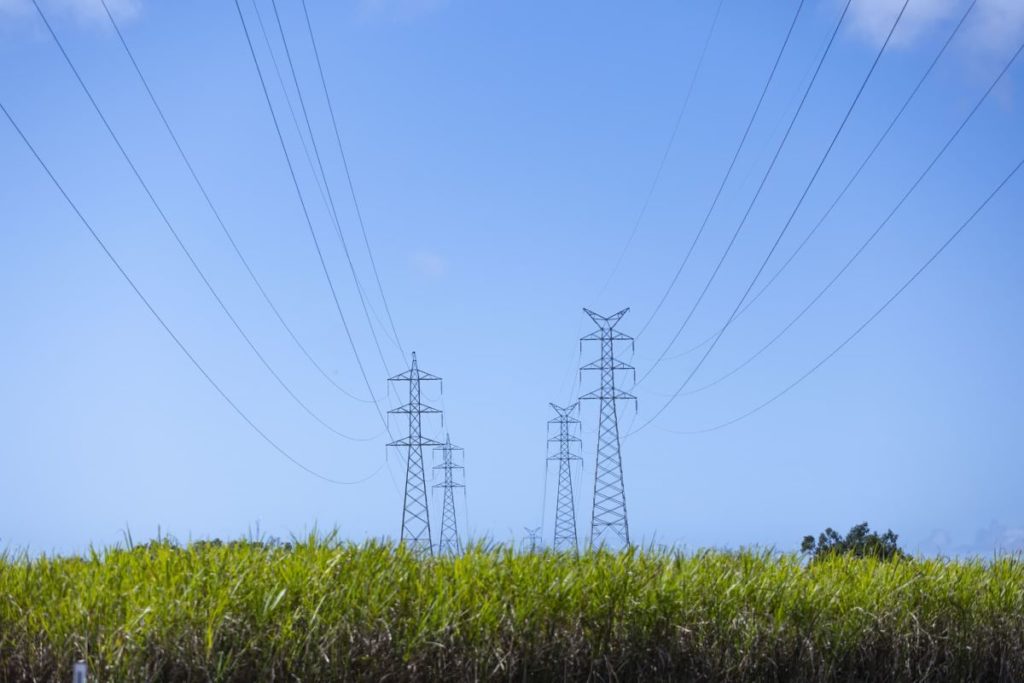
The project, led by state-owned network operator Powerlink, aims to deliver 840km of new electricity transmission from Mount Isa to Townsville, extending the National Electricity Market (NEM) into the North West Minerals Province, with approximately 200km of additional transmission line required to connect new renewable energy generators to the network.
The North West Minerals Province hosts deposits of fluorspar, vanadium, rhodium, uranium, copper, limestone, slate, phosphate, manganese, coal and nickel, making transmission access to the region a priority for both mining expansion and renewable energy development.
A project repeatedly rescoped
CopperString’s cost estimates have moved considerably since the project was first proposed. In 2024, the then-Labor government broke ground on the project at an estimated cost of AU$5 billion, describing CopperString 2.0 as a project that would unlock 6GW of renewable energy capacity for the North West Minerals Province, with AU$500 million expected to come from coal royalties.
That estimate proved short-lived. By the time the Crisafulli government took office in late October 2024, the project’s projected cost had risen sharply, with total figures including network connections reaching as high as AU$13.9 billion under the prior administration’s plans.
The current government responded by rescoping the project. The Eastern Link was reverted from a planned 500kV configuration back to its original 330kV scope, a change the government says identified AU$2.1 billion in savings. Queensland Investment Corporation (QIC) was brought in to assess the project and explore private sector co-investment options for delivery.
Early works on the AU$225 million Flinders Substation, which connects future renewable energy generation at Flinders to the NEM, began in the 2025-26 financial year, with the broader AU$225 million Hughenden Hub also progressing.
The Western Link, connecting Hughenden through to Mount Isa, remains at an earlier stage of development. To support energy solutions in the towns along that corridor ahead of any transmission connection, the government established the AU$200 million North West Energy Fund.
As PV Tech reported last week, the fund is intended to support bespoke solar PV and battery storage solutions at Mount Isa, Cloncurry, Julia Creek and Richmond while assessment of the Western Link continues, with QIC managing the proposal process and Investment Guidelines published for prospective developers.
Renewable energy implications
CopperString’s significance for Queensland’s renewable energy sector lies in its role as the connective infrastructure that would allow new generation capacity in the state’s north and north-west to reach the NEM.
Without that transmission link, solar and wind projects in the North West Minerals Province have limited ability to export power beyond local, islanded networks that currently rely heavily on diesel and gas generation.
The AU$3.2 billion commitment, alongside the parallel North West Energy Fund process now underway, represents a two-track approach. This includes building toward eventual NEM connection via the Eastern and Western Links, while using nearer-term funding mechanisms to support local generation and storage projects in the towns the Western Link would eventually serve.
The Eastern Link’s 2032 completion target, if met, would align with the broader timeline for renewable energy zone (REZ) development across Queensland, where the government has outlined plans for 22GW of additional renewable energy capacity by 2035 across twelve zones spanning Southern Queensland, Central Queensland and the North and Far North.
The increase from AU$2.4 billion to AU$3.2 billion in successive budgets indicates the project remains a budget priority for the Crisafulli government, even as the broader cost profile of CopperString continues to be managed down from the peak estimates reached under the previous administration.