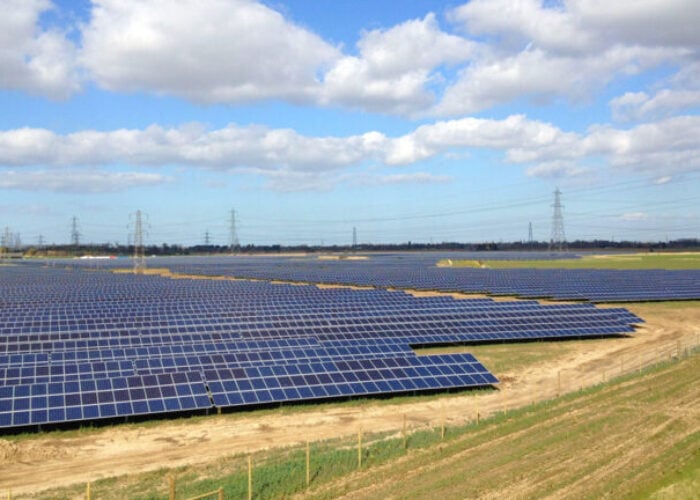
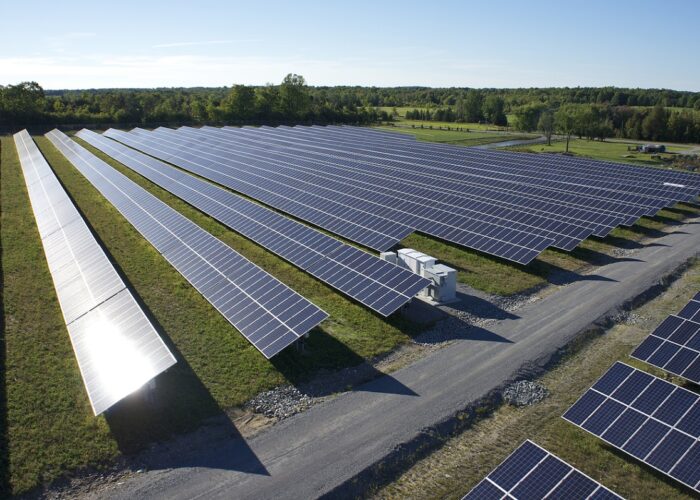
Four conservation groups – Defenders of Wildlife, The Sierra Club, Audubon California and the Natural Resources Defence Council – have announced their support for large-scale solar power projects Mt. Signal, Calexico I and Calexico II. The projects, being developed by 8minute energy, satisfy the needs of the conservation groups to deliver clean energy from well-located sites, create union jobs and to consider local wildlife concerns.
On completion, the three Californian solar projects will produce a combined total of around 600MW of electricity each year, enough to power an estimated 200,000 local homes. The private land designated for the projects is currently used to produce highly water-intensive landscaping grasses. The biological effect on the land proposed for this development would be significantly lower when compared to many other comparable renewable energy projects on environmentally important public lands.
Unlock unlimited access for 12 whole months of distinctive global analysis
Photovoltaics International is now included.
- Regular insight and analysis of the industry’s biggest developments
- In-depth interviews with the industry’s leading figures
- Unlimited digital access to the PV Tech Power journal catalogue
- Unlimited digital access to the Photovoltaics International journal catalogue
- Access to more than 1,000 technical papers
- Discounts on Solar Media’s portfolio of events, in-person and virtual
Much of the conservation interest in the project pertains to the fact that the vulnerable burrowing owl has populations within the proposed development area.
Bill Corcoran, Western Regional Campaign Director for the Sierra Club's Beyond Coal Campaign, commented, “After close examination, the Sierra Club decided to support these projects due to the developer’s willingness to provide support and funding for a program that should provide a higher level of protection for the imperilled burrowing owl, a species potentially affected by the large-scale development of solar. We strongly support moving the development of large-scale clean energy projects away from pristine lands, and 8minutenergy’s proposal is an appropriate balancing of solar energy production with the protection of our natural legacy.”
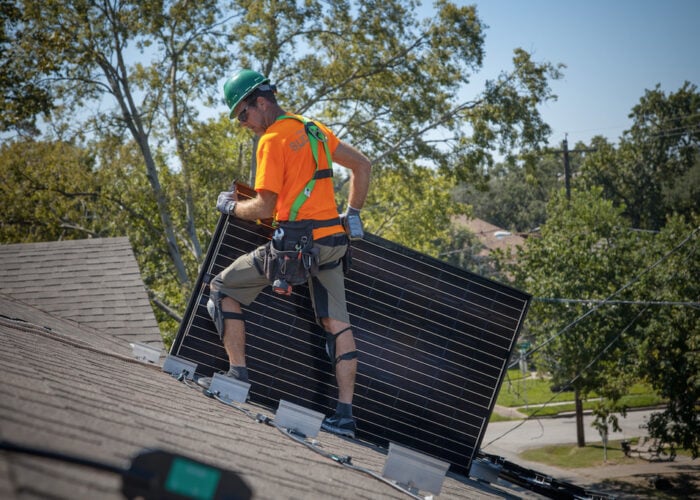
Another important factor in the conservation organizations backing of the projects' was the potential economic benefits to the local area. Imperial County has the highest unemployment rate of any county in California (27%) and the project would bring much-needed jobs to the area. The Sierra Club conservation group played an important role in ensuring the jobs went to local workers by introducing the project developer to the International Brotherhood of Electrical Workers which helped to finalize a Project Labor Agreement.
Infrastructure for the project, such as transmission lines, will likely be shared with other solar developments in the area, helping to further reduce the effect on the immediate environment.
Garry George, Renewable Energy Project Director with Audubon California, said, “The Imperial Valley is an Audubon Important Bird Area of global significance, and sensitive species of birds depend on the agricultural lands for nesting, foraging and roosting. This project developer is sitting it right by carefully choosing the lands that have the least impact on birds, and by working with the California Department of Fish & Game and Audubon to avoid, minimize or mitigate for the species affected by the project.”
8minute energy has already signed a 25-year contract to sell 200MW from the Mt. Signal project to San Diego Gas and Electric (SDG&E).