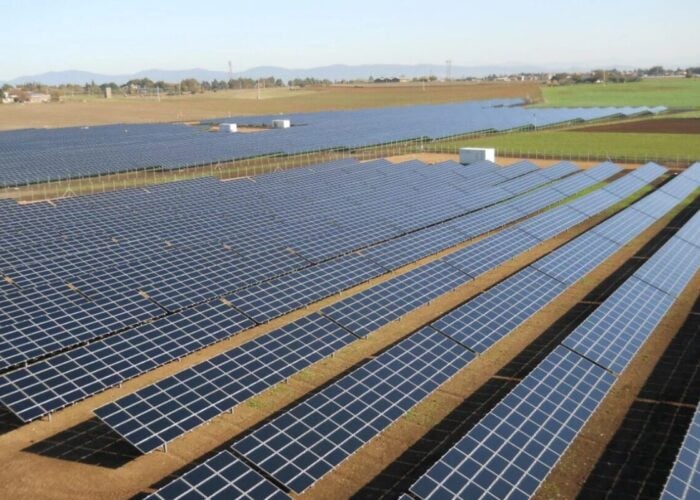
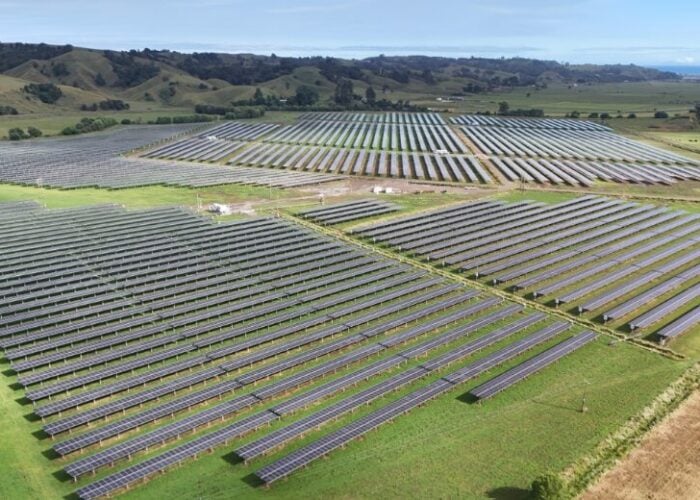
First Solar has completed the installation of a 250kW solar PV system donated to the Frank Lloyd Wright Foundation and installed at the Taliesin West campus. This marks the completion of the first phase of the Energizing Taliesin West initiative, which aims to transform the historic landmark into a “net zero” energy customer. The PV system is expected to produce over 500MWh of electricity per year.
Tonga Power’s General Manager, John van Brink, advised that the country’s first solar farm is expected to be in full operation by August. Developed by Meridian Energy, the 1MW Popua Solar Farm is the first renewable power station for the Tonga and will provide around 4% of the energy requirements for the main island of Tongatapu.
Citing the potential destruction that a war with Iran would produce, Hans Josef Fell and Omid Nouripour have submitted a proposal to Germany’s Foreign Minister, Guido Westerwelle, urging him to support the establishment of a solar program in Iran and the elimination of the country’s nuclear energy development. The document contends that Iran has an extensive supply of fossil fuels, but, further, that it has a large potential for renewable energies.
Following S&P’s downgrade of MEMC Electronic Materials senior debt to a B+ rating, the company issues a short statement regarding the decision. “We are disappointed with the rating change by S&P,” commented Brian Wuebbels, MEMC’s chief financial officer, “but we are comfortable that our cash and liquidity position is sufficient to meet our current cash needs. The credit downgrade by S&P today will not adversely affect our current access to our existing non-recourse construction revolver for SunEdison construction activities.”
The California Public Utilities Commission (CPUC) voted 5 to 0 on the passing of a new rule regarding net metering, chiefly to refine the calculation for California’s 5% net metering cap. The Solar Energy Industries Association (SEIA) worked with members and stakeholders as part of the Coalition for Solar Rights petitioning the CPUC to review the calculation of the cap, which is anticipated to be reached as early as next year by some utilities. The CPUC vote essentially clarified the net metering calculation while also calling for further studies into the process.
Swiss-based VHF-Technologies, better known under its product branding as Flexcell has stopped production of its flexible thin-film products and reduced its headcount to around 50. The move is designed to preserve cash, after being thrown a financial lifeline by Capricorn Capital to the tune of CHF8.5 million (US$8.9 million).
Swiss silicon thin-film firm, Pramac has been forced to file for insolvency after shareholders rejected management proposals over restructuring the company after posting losses (net) of over €94 million in 2011. The diversified firm had been a customer of Oerlikon Solar since 2008. Pramac had a 30MW end-to-end turnkey line using Oerlikon’s ‘Micromorph’ technology.
The former BP Solar module assembly plant, originally closed in 2009 but resurrected by Silex Systems to provide modules in the Australian market has also closed the facility. The company said that it couldn’t operate the facility on a profitable basis as market demand in Australia had waned.
Azure Power has received a US$70 million loan from the US Export Import Bank to construct a 40MW PV plant in Nagaur, Rajasthan. The project will be an expansion of Azure’s already existing 5MW plant in Nagaur. The PV plant, which is expected to be the largest plant in a single location that is part of the National Solar Mission, is expected to commence commercial operation in February 2013.
China’s Chamber of Commerce Import and Export of Machinery and Electronic Products (CCCME) has released details on why the US Department of Commerce’s preliminary determination is false and unwarranted.