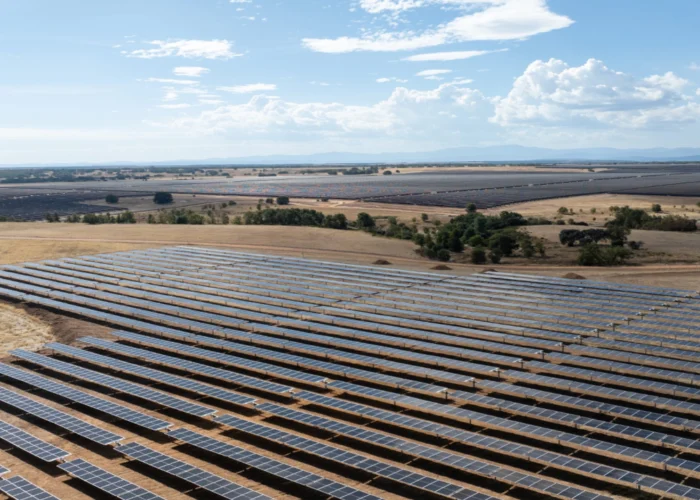
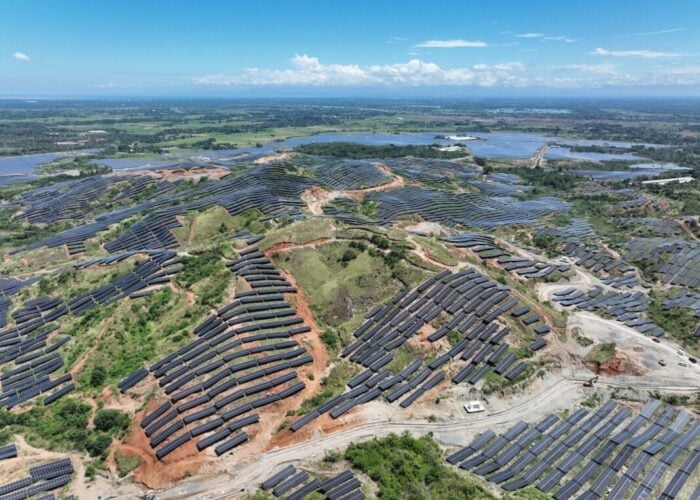
Further evidence has been delivered of the rapid fall in the cost of utility-scale solar in the US, which dropped to an average of US$0.05 per kilowatt hour, according to a new report by Lawrence Berkeley National Laboratory.
The price of power purchase agreements (PPAs), long-term contracts between project developers and utilities, has also declined 70% in the past six years since 2009, with installed project costs also falling by 50% since then.
Try Premium for just $1
- Full premium access for the first month at only $1
- Converts to an annual rate after 30 days unless cancelled
- Cancel anytime during the trial period
Premium Benefits
- Expert industry analysis and interviews
- Digital access to PV Tech Power journal
- Exclusive event discounts
Or get the full Premium subscription right away
Or continue reading this article for free
The report, ‘Utility-Scale Solar 2014’, looked at nearly 200 PV projects as well as a handful of CSP and CPV projects. The report’s authors, Mark Bolinger and Joachim Seel, defined utility-scale as any project over 5MW capacity.
Bolinger and Seel looked at empirical data from the sector, comparing installed project prices, operation and maintenance (O&M) costs, performance of systems and other metrics, as well as the PPA prices.
Utility-scale solar development has, from a historical base in the south-west of the country and mid-Atlantic states, which span from New England in the northern East Coast to the south-Atlantic states, spread to the south-east. Meanwhile, projects in the eastern US are primarily fixed-tilt installations and those in the southwest more commonly using trackers. Thin-film is also on the increase in the south-western US, where the lowest PPA prices in the country are regularly being signed, partly due to the region having the country’s richest solar resources. Even in non-southwestern states such as Arkansas and Alabama however, some PPAs were signed at prices of around US$0.05/kWh or US$0.06/ kWh.
Overall, the drop of 50% in installed project costs was driven by the fall in median upfront project costs from US$6.3 per watt in 2009 to an average of US$3.1 per watt for projects completed in 2014. In terms of performance, AC capacity factor reached 29.4% by the end of 2014, up from averages of 26.3% and 24.5% respectively for projects constructed in 2011 and 2012, with those readings also taken during the 2014 study.
By the end of 2014, the country had a solar project pipeline of 45,000MW at various stages of awaiting interconnection – including a large number of projects outside the traditionally strong regional markets like California and the southwest.
Bolinger and Seel point out that the investment tax credit (ITC), which offers 30% tax breaks to all scales of solar in the US, had played a major part in this cost-reduction drive. Efforts by industry groups and solar advocates are ongoing at present to attempt to extend the period of support at its current level. It is scheduled to drop to just 10% at the end of next year, leading many to speculate the looming deadline will slow down progress as it approaches and then passes.
The report demonstrates just how quickly prices – and costs – are falling. To put it in context, just a few months ago, a project in Dubai by developer ACWA Power was hailed as the “cheapest solar project ever”, which was bid into a competitive tender process at a price of US$0.0585/kWh.
Berkeley Lab’s report was funded by SunShot Initiative, the US Department of Energy’s solar cost-cutting programme. SunShot seeks to accelerate R&D activities with an overall aim of making solar at all scales competitive with other forms of generation by 2020. The director of SunShot, Minh Le, told PV Tech back in February that the programme had already reached 70% of its goal, aiming for a cost per kilowatt hour of US$0.06 across the entire sector – without any incentives.