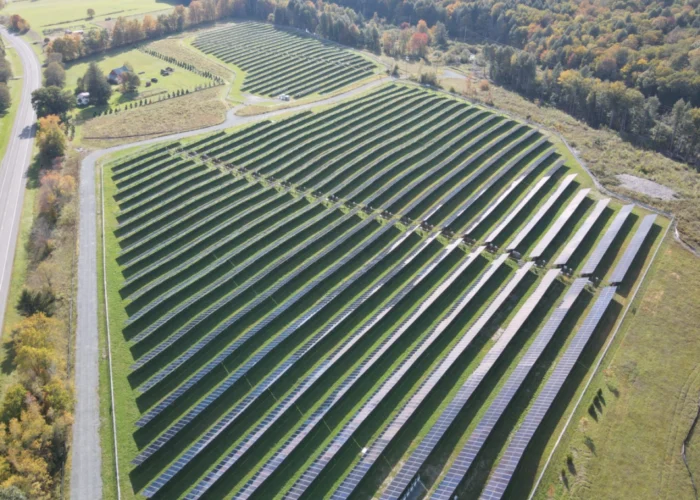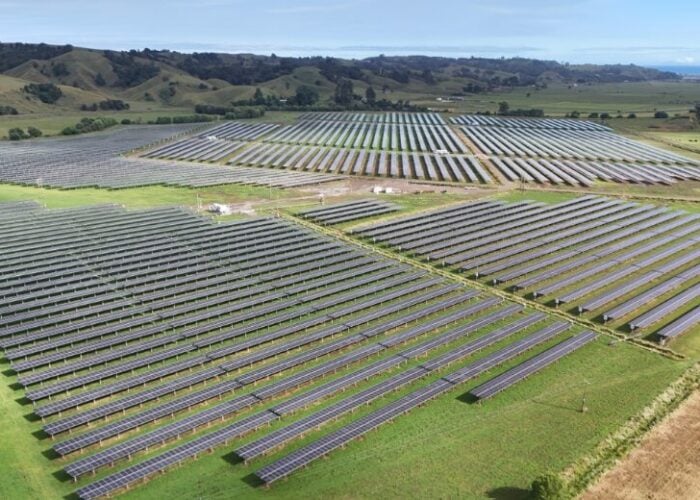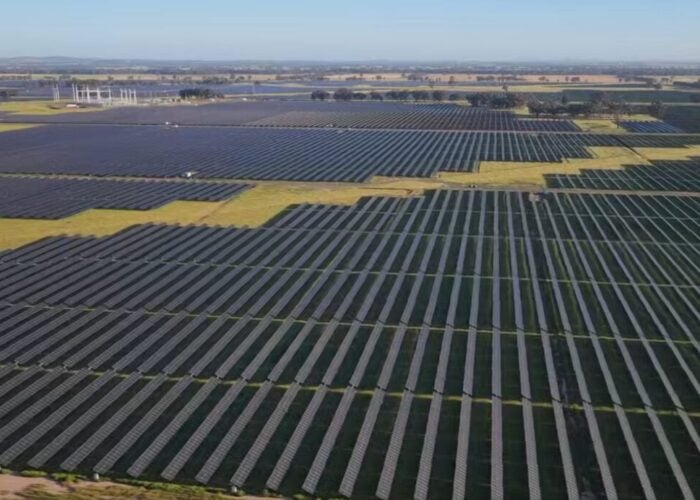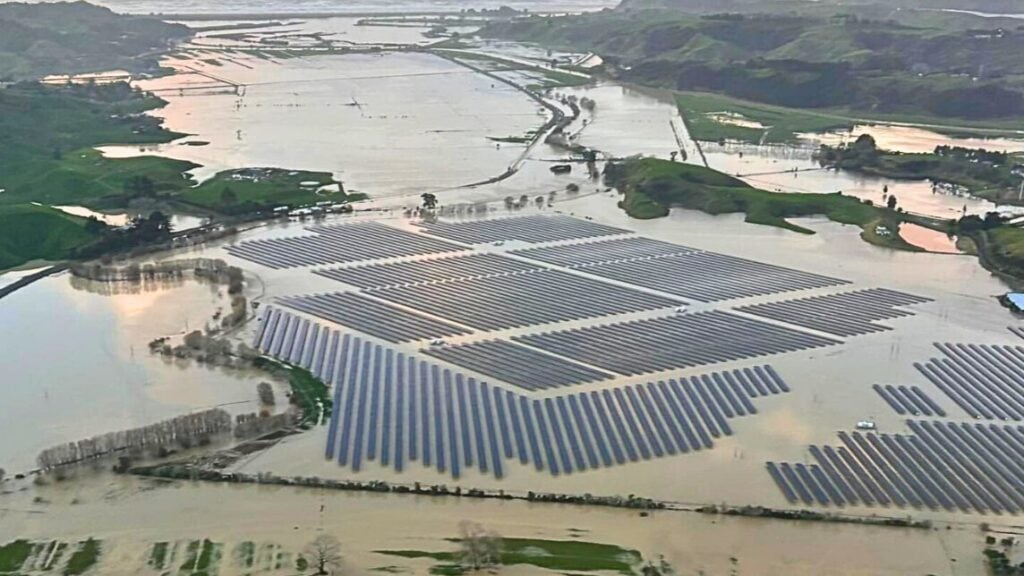
Despite severe flooding in the Waiotahe Valley in New Zealand, Lodestone Energy has confirmed that its 42MW Te Herenga o Te Rā solar PV power plant has continued operations.
Pictures released by Lodestone Energy on LinkedIn showed the solar PV power plant, which came online on New Zealand’s North Island in January 2025, mostly submerged in water.
Try Premium for just $1
- Full premium access for the first month at only $1
- Converts to an annual rate after 30 days unless cancelled
- Cancel anytime during the trial period
Premium Benefits
- Expert industry analysis and interviews
- Digital access to PV Tech Power journal
- Exclusive event discounts
Or get the full Premium subscription right away
Or continue reading this article for free
The solar PV power plant and the wider community in the valley were struck at the end of July and early August by a weather phenomenon called an “atmospheric river.”
An atmospheric river is a long, narrow band of concentrated water vapour in the atmosphere, resembling a river in how it transports moisture from one location to another.
These weather events often bring widespread rainfall, increasing the chances of flooding.
Lodestone Energy said the solar PV plant, which it claimed was the country’s first plant connected to the grid, had been designed to combat these extreme weather conditions.
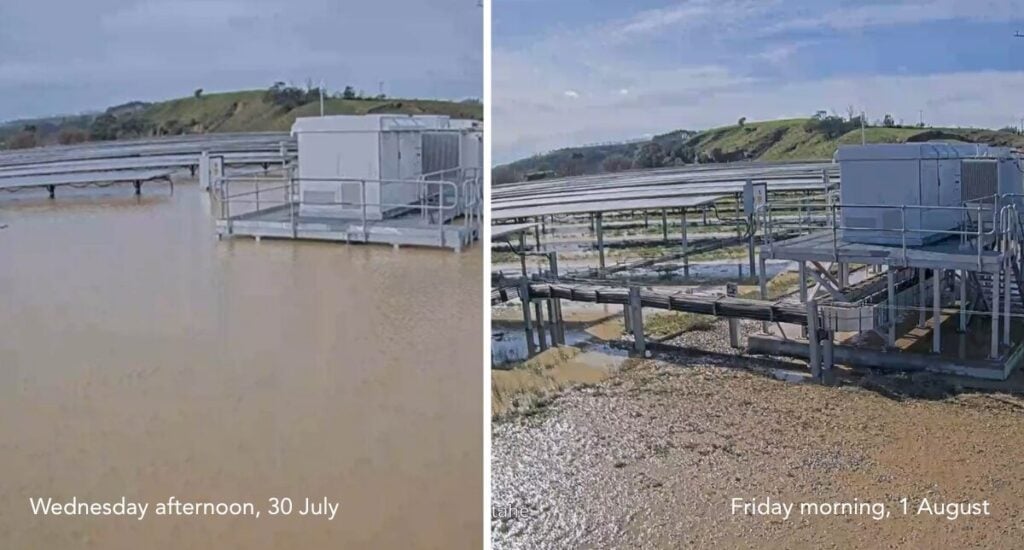
Indeed, despite being more costly than the average solar PV power plant, Lodestone Energy opted to raise the inverter stations and module connection boxes high above ground to ensure the plant could continue to operate in more than a meter of water.
The developer also adopted a special piling design that is more than 4 meters deep and has extra-high solar PV tables.
Through these measures, the 42MW Te Herenga o Te Rā solar PV power plant remained fully operational throughout the weather event. However, Lodestone Energy did note that its operations team decided, out of caution, to disconnect the plant from the grid when the rain had stopped and was assessing the plant.
Lodestone’s solar PV portfolio in New Zealand
Lodestone’s other operational solar PV power plants in New Zealand, the 33MW Kohirā in Kaitaia and the 32MW Rangitaiki plant, also situated near the Bay of Plenty, are connected to local distribution networks.
The company’s fourth solar PV plant, a 32MW development currently under construction in Whitianga, will connect to the Powerco distribution network.
The Rangitaiki PV plant incorporates agrivoltaics by featuring raised modules mounted on trackers, allowing sheep to graze beneath them. The modules in question are Trina Solar Vertex bifacial modules mounted on TrinaTracker’s Vanguard 2P tracker systems.
The Auckland-based company is also developing a 220MW agrivoltaics plant on New Zealand’s South Island.