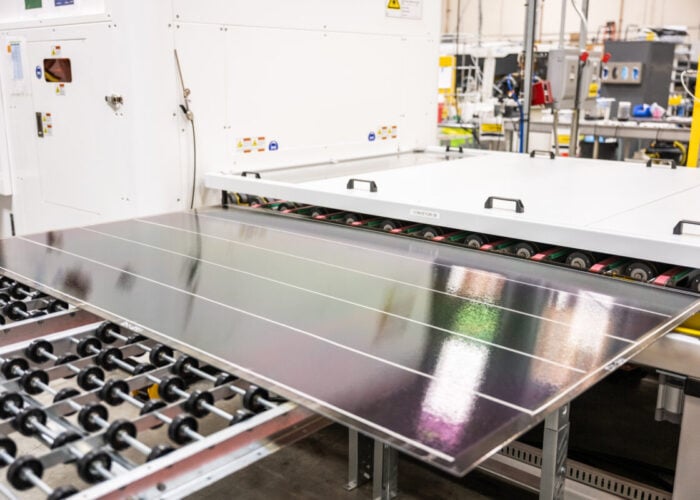
1366 Technologies said it has completed its National Renewable Energy Laboratory PV Technology Preincubator program six months ahead of schedule. The crystalline-silicon photovoltaic equipment company signed the contract with NREL in October 2009 for the development of its “Direct Wafer” technology, a “kerfless” approach which produces silicon wafers directly from the silicon melt without casting or sawing and has the potential to reduce wafer production costs by as much as 70%.
The $500,000 NREL preincubator grant was the first of two government awards received by the Lexington, MA-based company to develop Direct Wafer: the technology was also the only PV-oriented recipient of an award (worth $4 million) from the Department of Energy’s Advanced Research Projects Agency-Energy (ARPA-E) program.
Try Premium for just $1
- Full premium access for the first month at only $1
- Converts to an annual rate after 30 days unless cancelled
- Cancel anytime during the trial period
Premium Benefits
- Expert industry analysis and interviews
- Digital access to PV Tech Power journal
- Exclusive event discounts
Or get the full Premium subscription right away
Or continue reading this article for free
By completing the NREL program early, the company says that it was able to begin its ARPA-E efforts in March, positioning the company to start building a factory in 2011.
Martha Symko-Davies, NREL’s senior program manager (pictured), said that “1366 Technologies was the first company to sign its contract and finished the program six months early, while exceeding their deliverables. Speed to market is critical for new technologies, and 1366 is on the fast track to commercialize its disruptive Direct Wafer process.”
1366 CTO Ely Sachs noted the importance of the NREL program, which has “allowed us to make key hires and accelerate technical development. With continued progress we have the potential to bring this disruptive manufacturing process to market quickly.”
The company has also made progress in commercializing its self-aligned cell (SAC) architecture. 1366 has secured two lead development customers and is selling the SAC equipment and process, which features innovative cell texturing and fine-line metallization to deliver higher efficiencies (up to 18%) with simple, low-cost solutions for PV cell manufacturers.