Solar energy has cemented its role at the centre of the US’ energy transition, but a new challenge is emerging: what happens when millions of PV modules reach the ends of their operational lives?
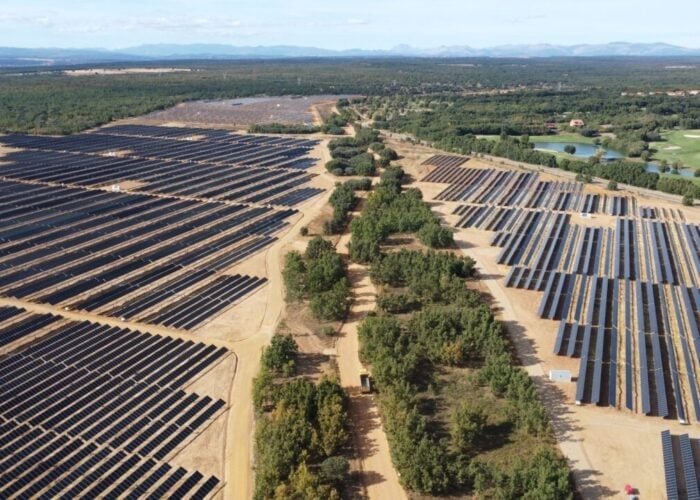
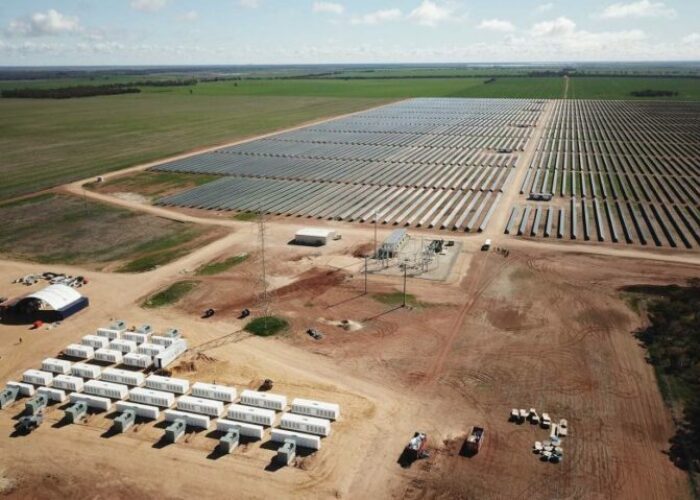
Figures from the US Solar Energy Industries Association (SEIA) highlight the scale of the Issue. As of the end of 2025, the US had 279GW of solar capacity in operation and expects capacity additions to reach 44GW each year for the next decade.
Try Premium for just $1
- Full premium access for the first month at only $1
- Converts to an annual rate after 30 days unless cancelled
- Cancel anytime during the trial period
Premium Benefits
- Expert industry analysis and interviews
- Digital access to PV Tech Power journal
- Exclusive event discounts
Or get the full Premium subscription right away
Or continue reading this article for free
But there is significant recycling potential. According to the ‘Solar Panel Recycling and Disposal’ report by the American Clean Power Association (ACP), around 95% of a panel’s materials are recoverable, with glass and aluminium making up 90% of the weight. Other materials like steel, copper, plastics and even critical metals, such as tin, can also be recycled.
Yet by 2050, solar panel waste could reach 54-160 million metric tons, a fraction of total municipal or plastic waste but a growing concern for the industry.
PV Tech Premium spoke to Corrado DeGasperis, CEO of US-based solar panel recycler Comstock Inc, and Fortunato Villamagna, president of Comstock Metals Corporation, about the practical challenges of solar recycling, current policies, and what it really means to be a recycler in the US.
A young industry with a mounting wave of ageing panels
According to the US Department of Energy (DoE), millions of solar installations are now connected to the grid, with hundreds of millions of panels in operation. The International Renewable Energy Agency (IRENA) projects cumulative PV waste could reach one million metric tons by the end of the decade.
“We’re well established in terms of the portion of the grid with 1.4 billion panels in deployment and three or four million coming out last year,” says DeGasperis. “We expect 30-35 million to come out in 2030. To recycle this amount, it would take tenof our plants to handle just that market in 2030 alone. And that market is about this much a tip of the iceberg.”
“Arizona, Nevada and California, by far, account for over 50% of panels reaching end of life,” highlights DeGasperis.
“In the next five years, the Southwest region of the US represents the bulk of this. That’s a huge deployment in a relatively small region. Northern Nevada, where our current facility is being commissioned and where we’ve been operating a small facility for multiple years, and Southern Nevada, where we’re finalising the second facility has seen a significant rise.”
“Then, of course, there’s Texas, Georgia, Florida, North Carolina and the Ohio Midwest. This essentially means that in the last three years, there’s been a massive expansion and deployment of solar panels across the US,” DeGasperis.
However, according to him, the dilemma is that these millions are quickly becoming tens of millions, but the US has zero capacity to recycle them.
Recycling capability beyond shredding
According to ACP, by 2030, the value of recoverable materials from decommissioned panels could reach US$450 million, rising to $15 billion by 2050—enough to produce two billion new panels.
While six recyclers currently report a combined capacity of 1,000-50,000 tons per year, actual recycling rates may be higher, with more than 30 US companies accepting panels or recovered materials. However, questions remain as to the robustness of this process.
“Many companies claim to recycle panels, but true recycling means complete material recovery,” says Villamagna. “Simply removing frames and sending the rest to landfill leaves an environmental burden for utilities and owners.”
Most recycling today focuses on easily reclaimed materials like aluminium frames, glass and copper. According to the US Environmental Protection Agency (EPA), glass makes up roughly 75 % of a panel’s mass and is readily recyclable, but extracting high‑value materials like silicon, silver or semiconductors remains difficult and often uneconomic under current processes.
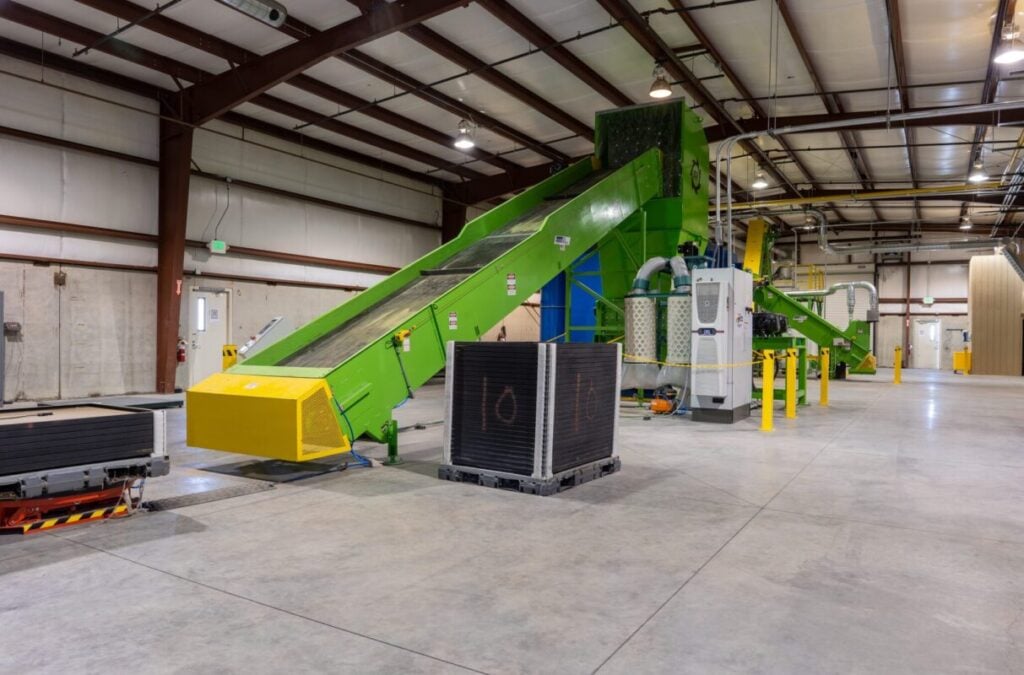
Comstock’s process produces three valuable streams: aluminium frames, recycled glass and a powder containing silicon and metals including cadmium, lead and precious metals.
According to Villamagna, comprehensive recovery while recycling is vital, otherwise these materials degrade or are lost to landfill, and fully eliminating harmful substances is the only way to achieve real recycling.
Building supply chain resilience
Additionally, recycling is also about supply chain resilience. According to the US DoE, PV modules and systems contain a variety of critical materials and minerals, so recovering the modules and system components presents an opportunity to bolster domestic supply chains.
Fortunato notes: “Today 12-13 % of the world’s mined silver goes into solar panels, a figure that sounds alarming given how much value it embeds in PV waste. Extracting such metals at scale can reduce dependence on mining and imported raw materials.”
“In terms of critical materials,” Villamagna adds, “if 10% of the global supply of a material is produced and then thrown away, that’s a problem. That percent represents a significant disruption.
“Urban mining will become a major factor over the next few decades, and recovering these materials is important—not for huge profits, as recovery has real cost— but because otherwise they’re unavailable. Resources are finite. From that perspective, this is a key component of critical materials management.”
State-driven regulations fill federal gap
The US currently lacks a comprehensive federal policy mandating the recycling of solar panels, relying instead on broader waste regulations under the US EPA’s framework. While end-of-life panels are governed by the Resource Conservation and Recovery Act, recycling itself is not required at the national level, leaving oversight largely to individual states.
Several states have introduced solar panel recycling policies, highlighting the fragmented nature of end-of-life PV regulation across the country.
“The leading states are clearly California, given its longer exposure, while Nevada has taken a more aggressive approach to regulation,” notes Villamagna.
“States such as Texas, Oklahoma and across the Midwest remain less advanced, though this is evolving as regulators play catch-up. Even in Nevada, agencies are a couple of years behind, with industry ahead and regulation still catching up. More developed marketsincluding California, Nevada, Arizona, Massachusetts and New Jersey—are further along, while others continue to follow.”
In 2024, New Jersey established a Solar Panel Recycling Commission, and North Carolina continues to develop regulatory frameworks, leaving most states reliant on general waste laws rather than solar-specific mandates.
However, there are disparities between how solar modules are treated in each state. In 2017, Washington passed the Photovoltaic Module Stewardship and Takeback Program, establishing a mandatory system requiring manufacturers to finance and manage end-of-life solar module recycling.
By contrast, California classifies panels under universal waste rules to streamline handling, while Hawaii is advancing end-of-life management, including a dedicated PV recycling facility on O‘ahu to address rising waste volumes.
Scaling recycling for a billion‑dollar future
The US solar industry stands at a crossroads. With installations now in the billions, end‑of‑life panel management can no longer be deferred. According to the Texas Solar Energy Society, capacity is set to grow, with a projected 22.3% compound annual growth rate.
The society also expects the value of the global solar recycling market is to rise from $333.5 million in 2024 to $2.4 billion by 2034, with North America contributing $150 million, or 46.3%, in 2024.
DeGasperis stresses that while Comstock has chemical and industrial expertise, scaling industry‑wide demands more than mechanical shredding.
“We’re not just talking mechanics—it’s chemistry at an industrial scale,” DeGasperis says. True recycling recovers and purifies materials with minimal environmental impact, at the speed and volume needed.
Both DeGasperis and Villamagna argue the solution isn’t a single innovation, but the introduction of an entire ecosystem, one that combines logistics, plant infrastructure, advanced recycling chemistry and regulatory alignment.