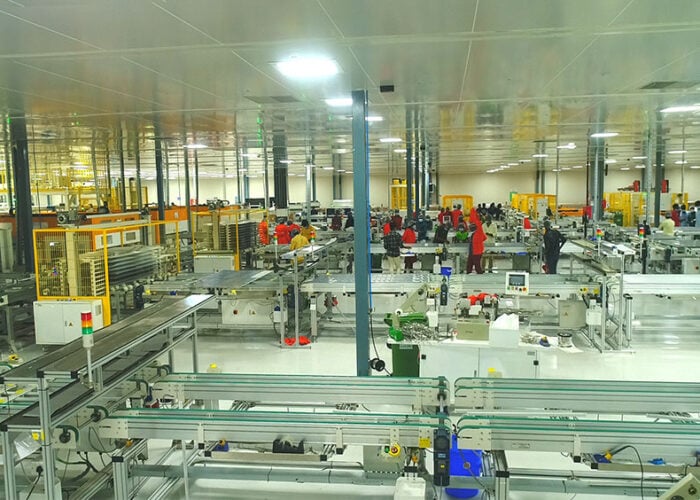
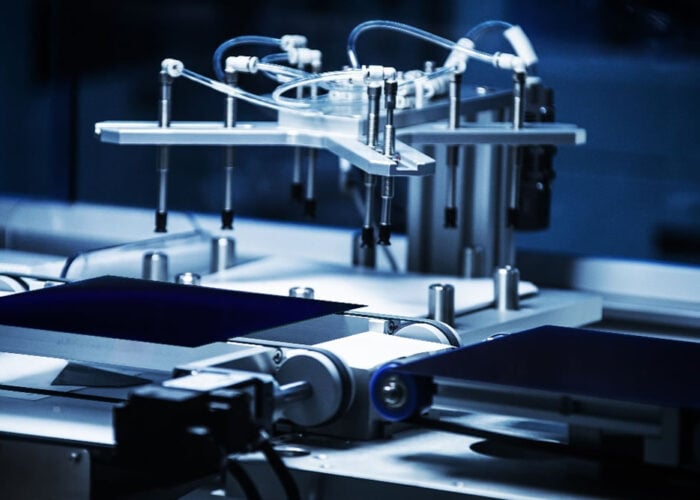
Product Briefing Outline: Applied Materials has introduced the ‘Applied E3’ advanced equipment and process control solution, intended to be a comprehensive factory automation (FA) software package for improving the productivity and reducing the costs of semiconductor, flat panel display and photovoltaic solar cell manufacturing. The modular packages utilize proprietary algorithms that are claimed to boost process capability by >30 percent, reduce unscheduled downtime, and shorten cycle time to achieve up to a 20 percent increase in overall equipment effectiveness. Applied Materials said the system has already been employed by multiple major manufacturers and is currently being used in volume production.
Problem: Due to continued migration to higher levels of factory-wide automation that includes both software and hardware implementation, there becomes a need to constantly gain improvements in productivity, throughput and cycle-time to reduce overall manufacturing costs and improve efficiencies. This results in greater automation complexity, higher implementation costs and overall increase in operating/maintenance cost burden that can contribute to higher costs, contrary to manufacturing goals.
Try Premium for just $1
- Full premium access for the first month at only $1
- Converts to an annual rate after 30 days unless cancelled
- Cancel anytime during the trial period
Premium Benefits
- Expert industry analysis and interviews
- Digital access to PV Tech Power journal
- Exclusive event discounts
Or get the full Premium subscription right away
Or continue reading this article for free
Solution: Using graphical development environment and pre-configured modules the Applied E3 solution is claimed to be quick to deploy and easy to update and extend, offering a faster and more cost-effective route to raise factory output. Equipment automation, data collection and logic handling simplify the construction, deployment, and maintenance of automated process control (APC) applications. Fault detection and classification (FDC) collects and analyzes equipment parameters to provide rapid feedback on process performance issues and avoid unexpected failures that decrease productivity. Run-to-run control (R2R) uses patented feedback algorithms to reduce process variability by adjusting processing parameters in real time, enabling more consistent output, higher yield and greater productivity. Equipment performance tracking (EPT) monitors every processing tool in the factory and provides visual and statistical reporting tools to identify bottlenecks and improve factory performance.
Applications: Semiconductor, flat panel display and photovoltaic solar cell manufacturing.
Platform: The Applied E3 system is part of a broad portfolio of manufacturing automation solutions and services designed to help companies improve their factories’ productivity and reduce costs by managing, controlling and automating all aspects of their factory and tool operations.
Availability: July 2008 onwards.