Arizona’s TEP proposes new punitive rate structure for rooftop solar customers

Facebook
Twitter
LinkedIn
Reddit
Email
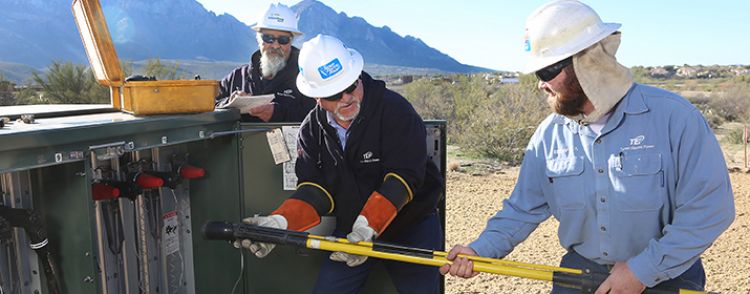
The new proposals see surplus fees for solar users, and a decline in credits for excess solar power. Source: Tucson Electric Power

Arizonan utility Tucson Electric Power (TEP) has proposed a new rates structure for rooftop solar customers that would cut solar credits and instate time-of-use (ToU) rates.

This proposal is the second instalment of a rate case the utility filed with the Arizona Corporation Commission (ACC) in February. The first part proposed a US$8.50 increase on an average electricity bill compared to November 2015 rates.

This article requires Premium SubscriptionBasic (FREE) Subscription

Try Premium for just $1

  • Full premium access for the first month at only $1
  • Converts to an annual rate after 30 days unless cancelled
  • Cancel anytime during the trial period

Premium Benefits

  • Expert industry analysis and interviews
  • Digital access to PV Tech Power journal
  • Exclusive event discounts

Or get the full Premium subscription right away

Or continue reading this article for free

This new proposal attempts to come up with new pricing options for solar customers, after net metering was formally ended in the state in December last year. In its filing TEP proposed an export rate of 9.7 cents/kWh for excess solar power, compared with the current rate of around 11.5 cents/kWh – with the retail rate standing at around 13-14 cents/kWh.

The utility also proposed demand charges and a US$4 meter-reading charge for solar customers, as well as a ToU rate structure. ToU rates are based on the time of day electricity is used and the cost of supplying electricity to a consumer at that time. If electricity is used during off-peak hours, the rate will be lower than the standard flat rate. Likewise, on-peak hours will cost more than the standard rate.

Customers will be forced to choose between a ToU rate with a monthly grid-access fee of US$3.50/kW or a ToU rate coupled with a demand charge based on their highest hourly energy usage during the month.

Last summer, fellow Arizonian utility APS submitted a request to implement a mandatory demand charge for residential customers.

The utility says that the changes to existing rate structure and pricing are needed to fairly bill solar customers for their use of the grid. Whilst TEP argues that the changes would “allow customers to realise significant savings by going solar”, according to TEP spokesman Joe Barrios, industry advocates say the changes fail to take into account the full benefits of solar.

“Solar customers are investing their own money to do something that benefits everybody, so it doesn’t make sense to go out of our way to charge them exorbitant fees,” said Court Rich, vice president of the Arizona Solar Energy Industries Association.

The proposals are subject to approval, rejection or modification by state regulators. 
16 June 2026
Napa, USA
PV Tech has been running PV ModuleTech Conferences since 2017. PV ModuleTech USA, on 16-17 June 2026, will be our fifth PV ModulelTech conference dedicated to the U.S. utility scale solar sector. The event will gather the key stakeholders from solar developers, solar asset owners and investors, PV manufacturing, policy-making and and all interested downstream channels and third-party entities. The goal is simple: to map out the PV module supply channels to the U.S. out to 2028 and beyond.
13 October 2026
San Francisco Bay Area, USA
PV Tech has been running an annual PV CellTech Conference since 2016. PV CellTech USA, on 13-14 October 2026 is our fourth PV CellTech conference dedicated to solar manufacturing in the USA. From polysilicon, wafers, ingots, cells and modules, to critical component suppliers including glass and frames, the event connects every stage of the value chain under one roof. PV CellTech USA also brings together investors, innovators, manufacturers and industry stakeholders to collaborate and strengthen domestic solar manufacturing across the United States.

Read Next

June 5, 2026
Tech giant Google and US renewable energy developer Intersect have partnered to develop a new data centre and energy complex in Texas.
Premium
June 4, 2026
Australian NEM solar generation fell 21.2% to 3,038GWh in May 2026, while a sharp mid-month pricing spike reversed April's stabilisation trend.
June 4, 2026
As solar imports to the US face increasing restrictions, domestic manufacturers are racing to build upstream production capability. With 66GW of module capacity chasing just 11GW of domestic cells, the supply chain crunch is reaching a critical inflection point, write Moustafa Ramadan and Joe Hennessy.
June 4, 2026
US-based solar manufacturer Thornova Solar has signed a strategic cooperation agreement with PV solutions provider Nextpower to incorporate steel frames into certain modules.
June 3, 2026
Avangrid has completed construction of its 166MWdc Tower Solar project in Oregon and connected the facility to the regional transmission grid.
June 3, 2026
Damp heat testing of solar PV modules yielded 11% 'red flag' results in RETC's latest PV Module Index Report.

Upcoming Events

Solar Media Events
June 16, 2026
Napa, USA
Media Partners, Solar Media Events
June 30, 2026
Sacramento, California
Media Partners, Solar Media Events
August 25, 2026
São Paulo, Brazil
Media Partners, Solar Media Events
September 1, 2026
Mexico City, Mexico
Media Partners, Solar Media Events
September 9, 2026