Aggressive capacity expansion plans at Asia-based solar cell manufacturers has forced centrotherm photovoltaics to raise its revenue guidance to between €580 million to €600 million for 2010. Centrotherm had previously projected revenue growth of between €550 million and €580 million. Revenue in the first six months of 2010 increased 5.4% to €278.3 million.
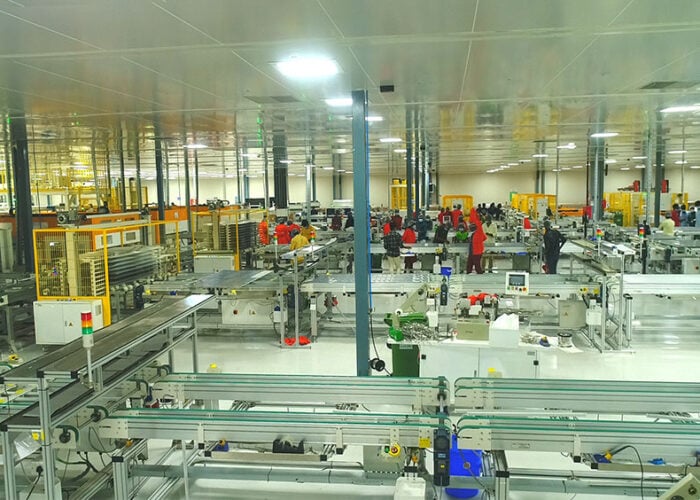
Its ‘Solar Cell & Module’ segment reported the best operating result in the company’s history, with 23.4% EBIT margin for the first six months of 2010, and 27.2% in the second quarter. Revenue in the segment was up by 13.6% to €90.7 million.
Try Premium for just $1
- Full premium access for the first month at only $1
- Converts to an annual rate after 30 days unless cancelled
- Cancel anytime during the trial period
Premium Benefits
- Expert industry analysis and interviews
- Digital access to PV Tech Power journal
- Exclusive event discounts
Or get the full Premium subscription right away
Or continue reading this article for free
Total order backlog amounted to €864.0 million, more than one and a half times the 2009 revenue level.
“It is particularly the premium cost leaders among solar cell and module providers who are increasingly opting for our technologies and systems,” noted Robert Hartung, CEO of centrotherm photovoltaics. “This is why we are also thriving in a solar cell and module market that is characterized by overcapacities.”
The company noted that as a result of a contract with Qatar Solar Technologies (QST) worth around €150 million and the continued high demand for single equipment items to produce crystalline solar cells and modules, new order inflow amounted to €275.3 million in the April to June alone. A service and sales company will soon go into operation in Qatar.
Highlighted developments at centrotherm photovoltaics included the successful ramp-up of two turnkey lines for crystalline solar cell production at LG Electronics. The company said that Korean electronics group is planning a further capacity expansion.
However, its ‘Thin Film Module’ segment saw revenue fall to €7.2 million, compared to €26.8 million in the same period a year and reported a loss of €16.2 million compared to a loss of €2.9 million in the previous period.
The increase in losses were said to be due to project costs, and process and technology development costs as part of the CIGS thin-film project for a Taiwanese customer.