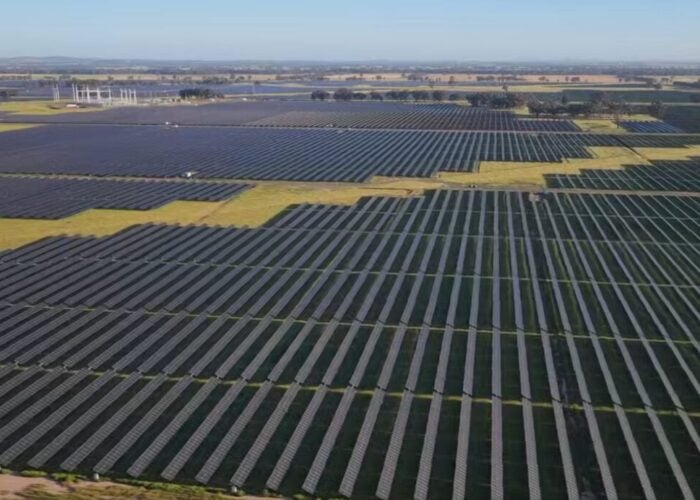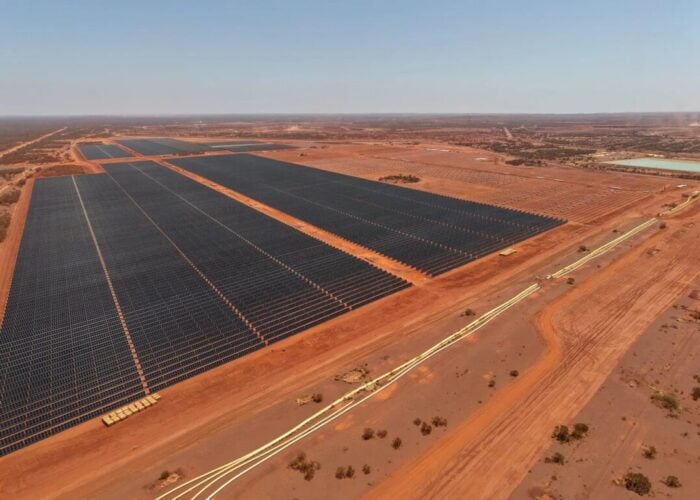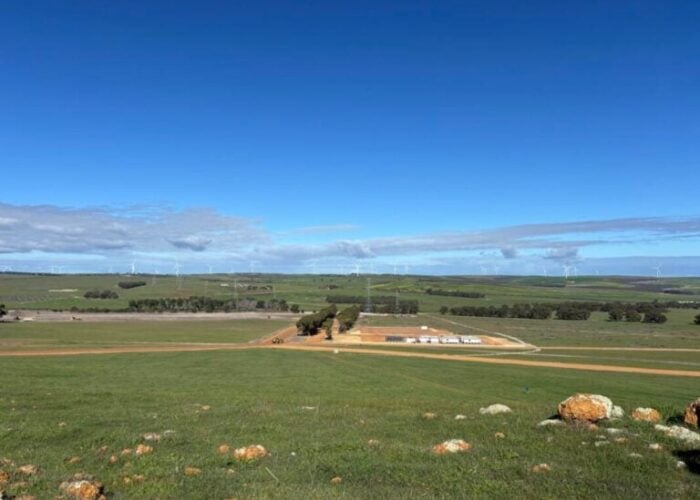
The Australian government has extended a capital gains tax (CGT) concession for foreign investors in wind, solar and battery storage assets by a further decade, pushing the deadline from 2030 to 30 June 2040.
It comes after pressure from the Greens and crossbench MPs during debate on the enabling legislation in federal Parliament.
Try Premium for just $1
- Full premium access for the first month at only $1
- Converts to an annual rate after 30 days unless cancelled
- Cancel anytime during the trial period
Premium Benefits
- Expert industry analysis and interviews
- Digital access to PV Tech Power journal
- Exclusive event discounts
Or get the full Premium subscription right away
Or continue reading this article for free
The amendment softens a broader package of CGT reforms Treasurer Jim Chalmers first proposed in the 2024-25 budget, aimed at clarifying and broadening the range of Australian assets, including renewable energy infrastructure, telecommunications, rail, ports and airports, on which foreign residents are liable for capital gains tax when they sell.
Legislation formalising those changes was introduced to Parliament in early July 2026, offering a 50% discount on the new CGT liability for renewable energy assets through to 2030 as a transition measure.
The amendment passed this week extends that 50% discount period to 2040, specifically for the renewables sector.
The extension follows a rockier path for the underlying reform. When Chalmers first outlined the broadened CGT regime in April 2026, draft legislation proposed making the changes retrospective to December 2006, a move that would have overridden two Federal Court rulings favouring mining company Newmont and Malaysian conglomerate YTL Power on the tax treatment of past Australian asset sales.
The Clean Energy Investor Group (CEIG), which represents developers and investors holding roughly 18GW of renewable energy capacity across the National Electricity Market (NEM), argued in its submission to Treasury that the reforms risked chilling the greenfield investment needed to replace retiring thermal generation.
The group warned that failing to grandfather existing assets not yet sold could deter the low-cost capital the government’s own energy transition targets depend on.
The group also argued for a regime that would tax domestic and foreign investors at equivalent rates rather than treating renewables assets differently from other sectors.
The version of the bill that reached Parliament in July had already dropped the retrospective backdating and introduced the initial four-year, 50% discount period through to 2030, a partial concession to industry concerns.
This week’s amendment extends that concession window by a further decade, giving foreign investors in Australian renewables a longer runway before the full CGT liability applies.
For a renewables investment market that has relied heavily on foreign capital to fund utility-scale wind, solar and battery storage projects, the extended timeline reduces near-term uncertainty around exit values for assets sold after 2030, a factor that had featured prominently in industry warnings about the original proposal.