“We need to be deploying about 3GW of rooftop solar PV and between 6-7GW of utility-scale renewable energy a year,” Kane Thornton, chief executive of Australia’s Clean Energy Council, tells PV Tech in the last edition of the PV Talk series.
The Clean Energy Council is a well-known trade association in Australia and also plays a role in the country’s regulatory environment for solar PV products. It influences key policies and legislation to help spearhead the renewable energy revolution in one of the world’s sunniest countries.
Try Premium for just $1
- Full premium access for the first month at only $1
- Converts to an annual rate after 30 days unless cancelled
- Cancel anytime during the trial period
Premium Benefits
- Expert industry analysis and interviews
- Digital access to PV Tech Power journal
- Exclusive event discounts
Or get the full Premium subscription right away
Or continue reading this article for free
The organisation has nearly 1,000 member companies and represents various technologies, including solar PV, wind energy, battery energy storage and more. It also includes key bodies such as investors and network operators, all of which are collaborating to support Australia in becoming a “renewable energy superpower”, a term frequently used by varying Federal government members.
Thornton believes that, although the surge in popularity of renewable energy technologies such as solar PV has grown significantly in the last half-decade, Australia has always had a “long history and pedigree” regarding both utility-scale and rooftop solar PV.
“I think we lead the world in terms of the penetration of rooftop solar. We are a very sunny country, and I think Australians enjoy the independence of rooftop solar PV,” says Thornton.
Coal-fired power plant closures spearhead utility-scale and rooftop solar deployment
The figures from various reports over the past few months back up Thornton’s beliefs. Not-for-profit organisation Climate Council recently said Australia could add a further 26.4GW of rooftop solar PV capacity by the end of 2024, bringing the cumulative total to 49.4GW. If this happens, then installed rooftop solar PV capacity would overtake coal-fired power in Australia, a remarkable feat.
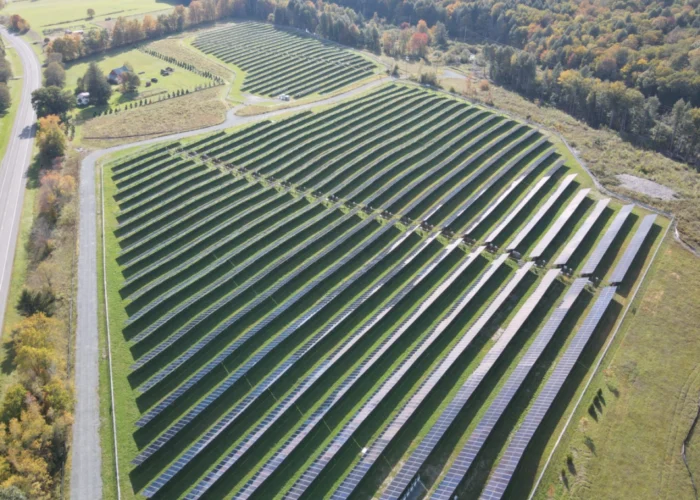
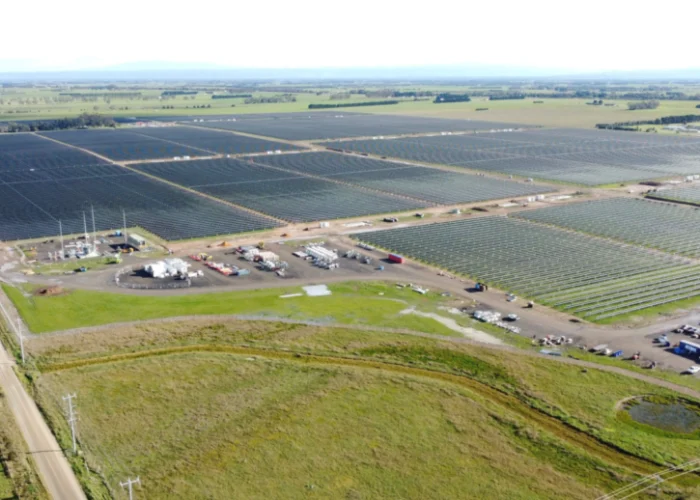
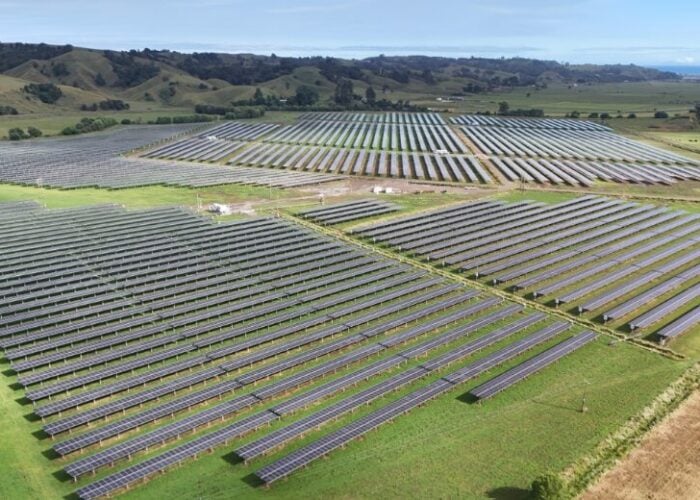
Although rooftop solar PV is doing much of the heavy lifting, attention is now shifting towards utility-scale solar, which Thornton says has “built momentum” over the last 10 years. The reason? Favourable energy market economics.
“We have got a growing portfolio of utility-scale solar projects that have built momentum over the last 10 years,” Thornton says. “Again, Australia’s a very sunny country with great irradiation, great resources, and has a strong industry, but adding to that, coal generation is closing, and gas has become increasingly expensive. The economics and the motivation for deploying utility-scale solar have just been building.
“Over the last five years, we have gone from about 15% of our energy system coming from renewable energy to now over 30% and 40%, and now we are heading towards 50%. It’s been a big acceleration over the last years, and rooftop and utility-scale solar have played a big role in that.”
Thornton explains that the closure of coal-fired power stations up and down Australia has incentivised the industry to rapidly scale utility-scale solar PV projects.
Previous estimates by the Australian Energy Market Operator (AEMO) indicate that all of Australia’s remaining coal-fired power stations should be withdrawn by 2038, and Thornton agrees with this prediction.
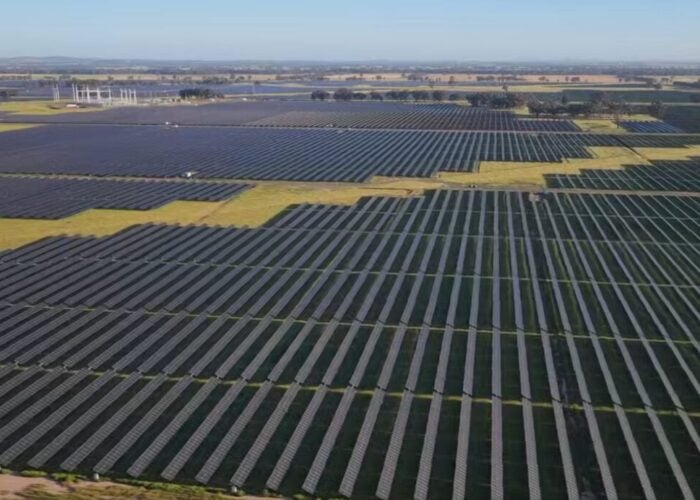
“That’s pretty much our expectation. Historically, on the utility side, there has been a split of around 50:50 between wind and solar PV deployment. That’s what we expect in the future as well. When you do the maths on that, we should be deploying about 3GW of utility-scale solar each year,” Thornton tells PV Tech.
As explained by Thornton, although there is an expectation that utility-scale solar PV must be scaled to reach 3GW a year, there will also need to be a 50:50 split with other large-scale renewable energy generation, such as wind farms and hydroelectric generation, to reach the previously touted 7GW per year figure.
‘Australia is at the forefront of global solar R&D’
Another aspect Thornton keenly mentions is the pedigree of Australia’s research and development (R&D), which has helped spearhead global developments in the solar industry and emerged as a leading force in the 1980s and 1990s.
“Australia was at the forefront of R&D and the development of the global solar industry – and it still is,” Thornton begins. “Many of the leading solar manufacturers and people were developed out of Australia in the 1980s and 1990s. That is something we’re very proud of.
“Having said that we don’t really have a domestic manufacturing sector today in Australia, be that panels or inverters. Although we have a couple of very local manufacturers and companies in those two areas, there’s definitely an opportunity for Australia.”
Despite Australia’s status as a renewable energy powerhouse in the global market, a lack of domestic manufacturing and supply chains has dampened the economic value that could be presented to Australia through the energy transition. The Federal government has attempted to stimulate investment in local solar manufacturing via the Solar Sunshot programme, which launched earlier this year. You can find out more about the initiative in a PV Tech Premium article featuring ARENA’s Darren Miller and Tindo Solar’s Richard Petterson.
Thornton believes that the government’s emphasis and push to develop local supply chains and domestic manufacturing will bear fruit for Australia.
“With these figures I’ve mentioned – the 3GW of rooftop solar and about 3GW of utility-scale solar – there’s an incentive for a more local supply chain. The Australian government is quite focused and motivated to develop more of the supply chain locally,” Thornton says.
“Here in Australia, we have a strong manufacturing history, and that’s still there. But I think it’s fair to say that Australia has much to do to develop a genuine capability. There’s a lot of work going on at the moment to assess that and ensure that we’re clear and strategic about Australia’s role.”
‘Enormous’ growth in hybrid projects
Like many global markets, Australia is beginning to see a rise in potential for hybrid projects, primarily the combination of solar or wind and energy storage. This maximises the economic opportunity of the projects by storing the variable renewable energy generation for times when there is a spike in demand or when it is more lucrative to sell back to the grid.
Recent solar-plus-storage projects in Australia include the 360MW Mortlake project in Victoria, which was recently fast-tracked by the state government for development, and Acen Australia’s 600MW Birriwa project in New South Wales. Thornton believes we will see more of these projects to provide extra resiliency to Australia’s grids.
“There is a real move towards hybrid projects, particularly solar and battery. There is a lot of technology and a lot of innovation going in as to how they work, and particularly how they interact with the grid,” Thornton says.